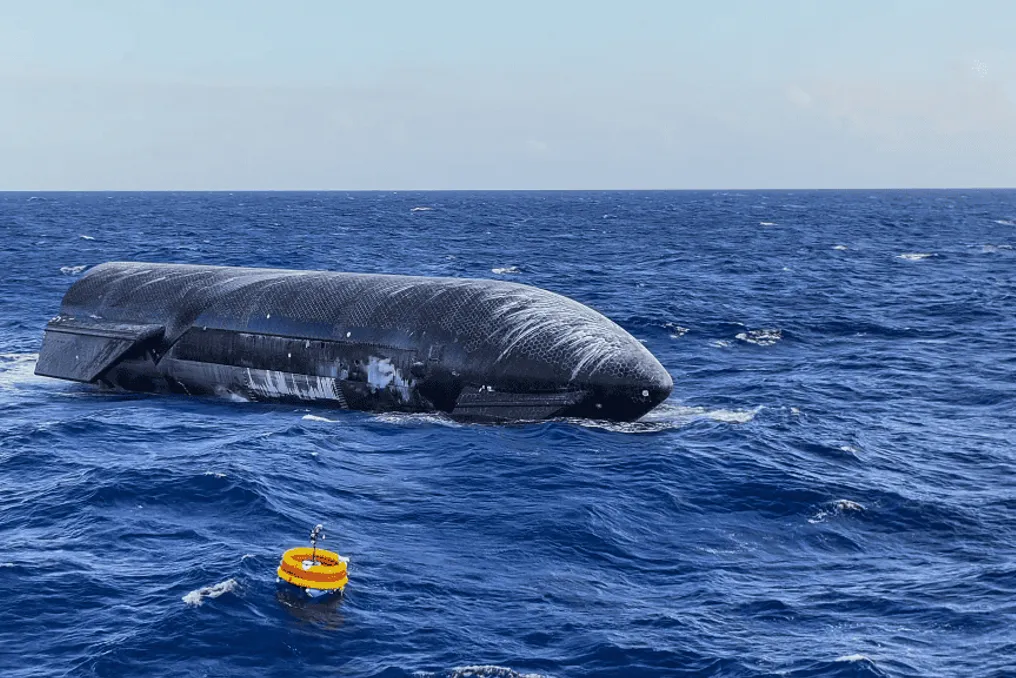
Starship completed its 13th flight, landed in the sea without exploding, and was recovered almost intact for the first time
Read more
Olhar Digital
olhardigital.com.br

Starship completed its 13th flight, landed in the sea without exploding, and was recovered almost intact for the first time

The 13th test flight of the Starship rocket, developed by SpaceX, held on July 24th, marked a significant milestone in space exploration. Unlike previous attempts, the spacecraft did not explode upon hitting the waters of the Indian Ocean.

This vehicle, which is 52 meters tall, equivalent to a 17-story building, withstood the ocean impact and remained fully afloat, enabling an unprecedented recovery for aeronautical engineering. In preceding tests, contact with the sea resulted in extreme pressure variations in the tanks, leading to immediate fuselage rupture and an explosion.

This time, SpaceX managed a smoother landing, maintaining the integrity of the ship despite expected damage to the thermal shield. This event created a unique opportunity for aeronautical engineering: recovering a vehicle shortly after its return from space.

During the Space View program, broadcast the previous Friday (21st), aeronautics specialist Pedro Pallotta, founder and CEO of the Space Orbit channel, analyzed the combination of technical factors and luck that led to the test's success. According to him, the crucial factor in preventing the ship from turning into a fireball in the water was the pressure relief and the draining of remaining fuel during the final moments of descent.

Pallotta explained that SpaceX modified the procedure compared to past missions, draining both the main tanks and the two upper tanks. He commented: 'As I mentioned, probably low pressure inside the tanks, or because they have somehow worked on this depressurization relative to the previous flight.' He added that in the final moments, the drop in pressure in the main tanks is intensified to prevent an explosion, and removing propellant from the upper tanks helps in this process, being a combination of luck and correct handling, something surprising even for those following the SpaceX broadcast.

The complete recovery of the ship considerably alters SpaceX's development and testing plans. Previously, Elon Musk's team planned to inspect an entire Starship only after capturing it in the air using the mechanical arms of the Mechazilla launch tower, located at Starbase in Boca Chica, South Texas.

The ability to physically examine the spacecraft provides information that remote telemetry could not provide. Pallotta emphasized that the current technical priority is to verify the actual condition of the heat shield and the lower ablative thermal blanket. A major challenge of reusability is ensuring that the ship can perform new flights quickly, without depending on expensive or time-consuming repairs after each mission. Furthermore, the company's engineering must confirm whether the longerons, which are the stainless steel structural beams, and the landing support system suffered any deformation due to deceleration.

For Pallotta, having the entire vehicle available avoids incorrect diagnoses when designing future versions of the spacecraft. He argued: 'Even if it exploded, they could analyze some things, but the explosion ends up permanently damaging several other areas. You can even identify what was caused by the explosion and what was caused by re-entry, but not on the whole vehicle. Now, with it whole, you can get a good idea of what happened during the entire return, avoiding false positives and even wrong interpretations about the vehicle's structure.'

The recovery operation of the metallic structure involved attaching tow cables in the engine area, considered the most robust part of the fuselage. Pulled back by the waves to Christmas Island, the Starship turned the event into a practical lesson on how to manage large-scale unforeseen events at sea. As Pallotta summarized, this unprecedented effort compensated for all the miles traveled. 'Any data that can be collected from the unaltered item there is a huge benefit. SpaceX had this opportunity and embraced it.'
Similar stories

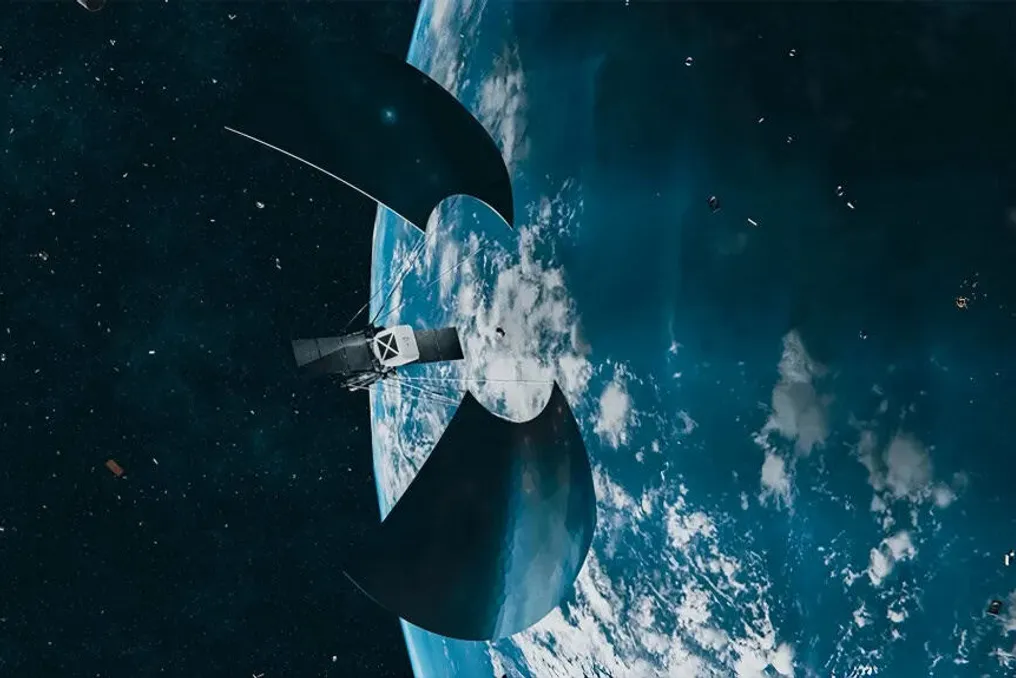
NASA supports Gravitics project for orbital hangar aiming to accelerate return of cargo to Earth
Read more
olhardigital.com.br

NASA supports Gravitics project for orbital hangar aiming to accelerate return of cargo to Earth

NASA has selected the space company Gravitics to develop the concept of an orbital hangar. This hangar would be designed to receive vehicles that transport materials from space back to planet Earth. This initiative is part of an award from the Small Business Innovation Research program, in the initial phase scheduled for 2026.

The project was named Multiple-Downmass Hangar and aims to create a structure capable of housing several return vehicles. This would allow cargo collected or produced in orbit to have a more frequent option for delivery to the surface.

The need for this proposal arises due to the growing expectation of more missions returning space samples and materials. In addition to future trips to other celestial bodies, the solution also meets the demands of companies planning to conduct research and manufacturing in the orbital environment.

Traditionally, sample return missions require a spacecraft to travel into space, collect the desired material, and make the journey back. The model conceived by Gravitics proposes to dissociate this need from an exclusive mission, establishing a concentration point for vehicles ready to descend within the orbital environment itself.

The hypothetical structure would have the capacity to accommodate an unspecified number of return vehicles. These equipment would remain in the hangar until the opportune moment to transport their cargo to the surface, which could eliminate the wait for an operation dedicated solely to material recovery.

This idea responds to a gap that becomes more relevant with the expansion of commercial activity beyond Earth. Companies involved in orbital operations might need a practical method to return their results, products, or materials to the planet without depending on a specific mission for each return.

Gravitics already operates in the manufacturing of modules for space stations and other equipment intended for the orbital environment. With NASA's support, the company must now evaluate whether its architecture can offer a more economically advantageous and compatible alternative with a regular cadence of returns.

The contract was granted within the SBIR Phase I of 2026. In this phase, the company needs to prove that the concept has technical merit and that its implementation is feasible, in addition to studying a configuration that could have a lower cost than other ways of transporting cargo back to Earth.

NASA has not yet disclosed the amount allocated to the project, nor has it defined which vehicle model will be used to occupy the hangar and execute the cargo descent. The concept is not limited only to commercial activities in low Earth orbit; the history of space exploration includes 18 missions returning materials from other celestial bodies.

Six of these operations were crewed, covering the Apollo 11, 12, 14, 15, 16, and 17 missions. The remaining ones were conducted by robotic systems. During these initiatives, samples were brought back from the Moon and the asteroids Itokawa, Ryugu, and Bennu.

Although new projects of this type are expected, the Mars Sample Return initiative has not yet been defined. Simultaneously, the expansion of private activities in space generates another demand for systems capable of transporting materials back to the planet. It is in this context that the orbital hangar proposed by Gravitics gains importance, seeking to gather different vehicles in orbit to offer a higher frequency infrastructure, instead of relying solely on a return operation prepared for a specific cargo.

The American agency's support does not imply that the system is ready to operate. The first phase of the program focuses on verifying the technical functionality of the proposal and whether it achieves the stipulated economic goal. Among the points to be analyzed is the possibility of creating a more accessible system that maintains the capacity to support periodic returns.

The project is still in its initial stage, leaving crucial questions open. The exact quantity of vehicles the hangar can receive and the type of vehicle responsible for transporting the cargo to the surface have not yet been communicated. If the proposal moves forward, the structure could change the organization of space material returns, especially in a scenario where scientific missions and commercial activities demand more recurrent solutions to bring cargo back to Earth.

Popular