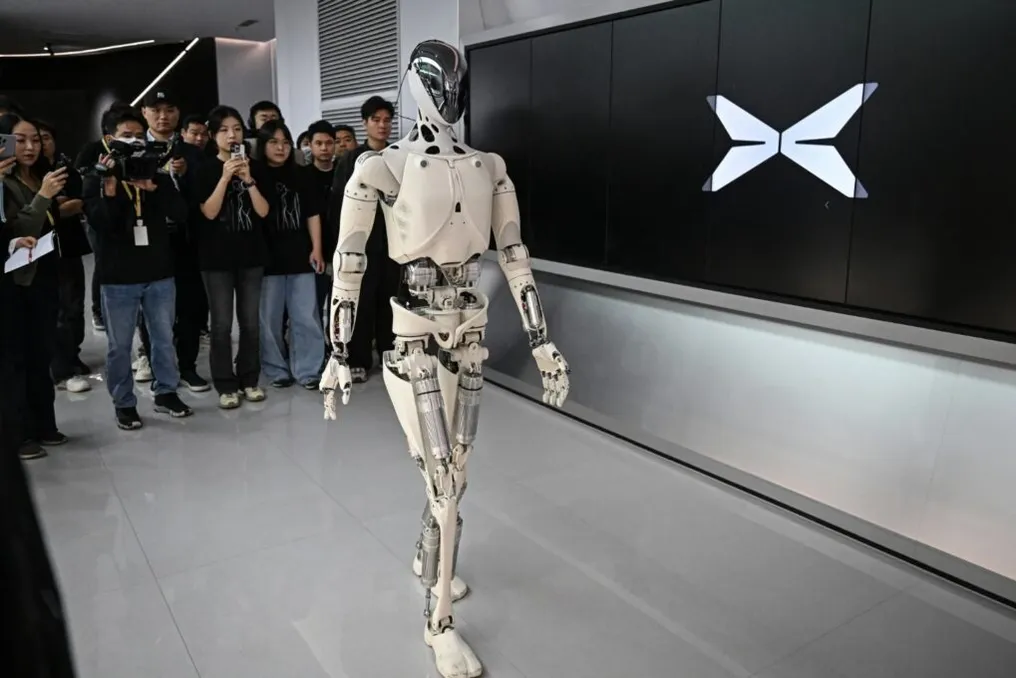
Most existing humanoid robots remain laboratory developments because they are too expensive, move clumsily, and cannot be mass-produced. For a robot to function in a store or on a factory floor, significant computing power and real-world data are required.
In this regard, Xpeng Robotics has raised $900 million for the mass production of humanoid robots and to stay ahead of competitors in manufacturing facilities. The funding round was led by IDG Capital, with Tencent and Alibaba among other participants. This sum values the robotics business at over $6.3 billion.
This became the largest private financing deal in China's 'embodied AI' sector. This industry focuses on artificial intelligence that is integrated directly into physical robots, rather than just running on a computer.
For comparison, startup TARS Robotics raised $455 million in April, which was a record at the time; Xpeng doubled that amount.
The $900 million raised will be directed towards solving the most serious bottlenecks in robotics. The company plans to improve the robots' designs, limbs, and control systems. The funds will also be used to train robots in movement and operation by training AI models on real-world data.
Another goal is to collect video materials demonstrating human work so that robots can learn. Furthermore, the company plans to establish production capacities capable of ensuring large-scale robot manufacturing, as well as expanding its business beyond China.
The company's first humanoid robot is called Xpeng IRON. The company's plans are highly ambitious: mass production is scheduled to begin by the end of 2026. Initially, the IRON robots will be used in their own locations, such as in retail stores to assist customers and in industrial campuses to perform factory tasks.
Commercial sales and deliveries, both in the domestic Chinese market and in foreign markets, are planned for 2027. CEO He Xiaopeng personally oversees this direction, which he announced in June. This underscores the importance of robotics to Xpeng, which views it as a second core business area alongside electric vehicles.
For automakers, developing a robot is comparable to creating an intelligent vehicle: it requires vision sensors, software for command configuration, batteries for operation, and production lines for mass output. This is where Xpeng has an advantage, as it already produces electric vehicles, possessing ready technologies and supply chains. Thus, the company already knows how to create complex hardware systems, manage batteries, and software, making robots a logical next step.
Consequently, there is growing interest from automotive companies. If a company can create a self-driving car, there is a high probability that it can develop a robot for a warehouse or store. China aims to become a leader in embodied AI, and investments are actively flowing in, with the $900 million Xpeng round setting a new standard.
If IRON enters mass production in 2027, Xpeng could potentially become the first company to sell humanoid robots on an industrial scale and transform the operations of stores and factories. However, currently, the technology requires testing with real people and must be affordable enough for companies to purchase. At present, the company prides itself on its funds, brand, and production capabilities.