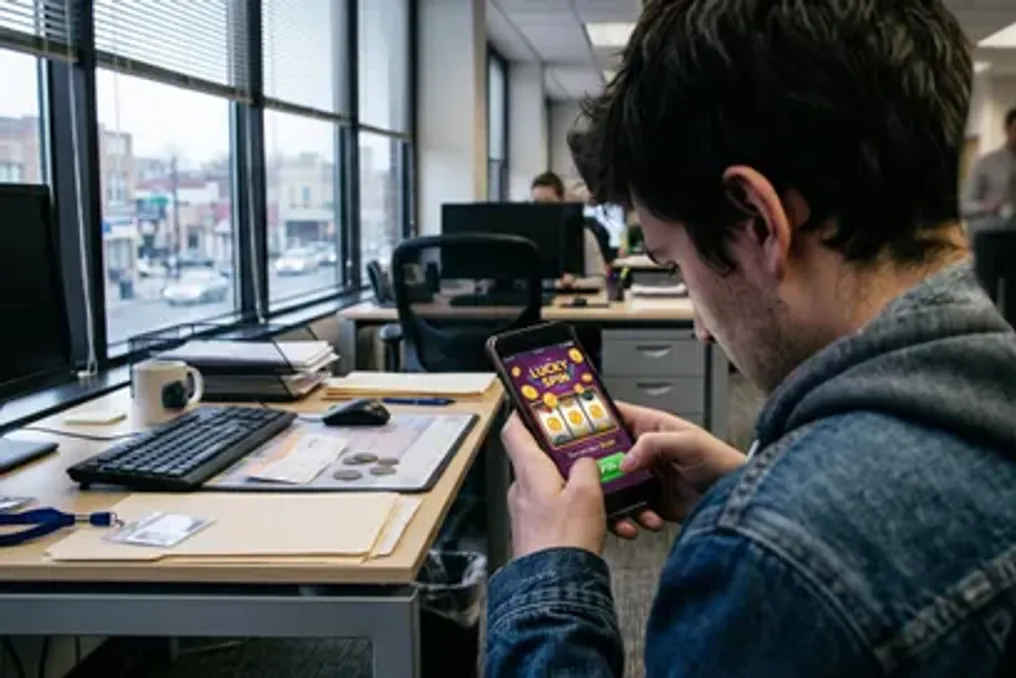
Against the backdrop of rising unemployment in South Africa, the National Gambling Board (NGB) warns citizens against using gambling as a financial solution. The story of a young man struggling with addiction highlights the risks of gambling during economic difficulties.
Following the publication of the Quarterly Labour Force Survey by Statistics South Africa (Stats SA) for the second quarter of 2026, the NGB urged the public to be careful with their family finances and exercise caution when participating in gambling. According to Stats SA data, the official unemployment rate in South Africa increased from 32.7% in the first quarter to 33.6% in the second quarter, indicating a challenging economic situation for millions of people.
Young South Africans are particularly vulnerable: the survey showed that 36.4% of individuals aged 15 to 24 were unemployed, lacked education, or training. Against this background, the NGB emphasized that gambling should not be seen as a financial lifeline.
The NGB's 2023/24 study on the socio-economic impact of gambling in South Africa revealed that 55% of identified problem gamblers were between the ages of 25 and 34. A young South African resident shared his difficult story of gambling addiction, shedding light on the financial and emotional burden it places on individuals and families amidst rising unemployment.
For a 22-year-old recovering gambler from Durban, the consequences of gambling became increasingly serious after what initially seemed like harmless entertainment. This young man, who works in the financial sector, requested anonymity due to the personal nature of his experience. He stated that he started gambling shortly after the COVID-19 pandemic while still in high school.
He recounted: 'At first, it wasn't a serious habit. It was something I did for fun. Growing up with a love for sports, I thought it was an easy way to earn a little extra money while I was still studying.' Initially, his bets were random, made once every week or two. The situation changed after he suffered significant losses. At the time, he was unemployed and attending university. Instead of accepting the loss, he started gambling in an attempt to win back the money.
He noted: 'What started as an attempt to quickly recover that loss quickly turned into an addiction.' Paradoxically, a subsequent big win reinforced his belief that he could continue to gamble successfully. 'That one big win ultimately became my biggest loss. It created a false sense of confidence, making me believe I could always win back or recoup my losses. In reality, losses almost always exceeded winnings.'
What began as leisure and an attempt to earn extra income eventually led him to gamble money intended for more important priorities. 'When I started gambling money that was meant for more important things related to my future, I realized I had a problem,' he said. He admitted that the realization came too late, as gambling eventually began to affect his daily life.
The recovering gambler now stated that one of the most destructive aspects of gambling addiction was the constant mental focus on the next potential win. 'When I was gambling, I often started the day excited because I already had plans for money I hadn't even won yet,' he shared. Instead, he often ended days with stress and anxiety. 'It's hard to concentrate on anything else. You are constantly checking accounts, races, tips, and results.'
This distraction affected his ability to concentrate on other areas of life, including studies and work. For him, motivation gradually became less about entertainment and more about money. 'In the beginning, gambling was enjoyable when it was just a form of entertainment, and there were no losses to make up for. However, once the addiction takes over, everything comes down to money,' he explained. 'When you find you are short on cash, you start risking the last cent hoping to change the situation because you feel you have no other options.'
He warned that this is precisely when gambling can become most dangerous. 'When you look at the big picture, it is the worst decision you can make. You will almost always end up in a worse financial position.'
He explained that gambling created a cycle where money intended for household basic expenses could go into the next bet. 'For example, you might tell yourself: 'I don't have enough food this month. Let me use the money I saved for electricity and try to make a profit. The electricity bill is only due in the middle of the month.'' But as soon as that money was lost, the financial pressure became even greater. 'Before you realize it, that money is gone too. Now you have no money for food or electricity. As a result, you start borrowing or taking out loans, creating an even bigger problem for yourself.'
He added that his own gambling consumed money he had saved for the future, including education and emergencies. 'There was absolutely no reason to touch that money, but I did. As a result, I had to start from scratch, which put me in significant financial difficulty.'
This experience caused him particular concern regarding the impact of gambling when the cost of living is already putting pressure on households. 'With the rising cost of living, life was already expensive enough without the exacerbation caused by gambling,' he said.
One of the biggest problems he faced was the desire to win back already lost money. 'Human nature strives to get back what was lost. However, when it comes to gambling, it is much better to admit defeat and seek help before the situation worsens.'
He noted that attempts to recover losses can last for years, while the gambler becomes increasingly financially vulnerable. 'You can spend years trying to win back your losses only to create even bigger problems for yourself. The house always wins.'
Ultimately, his gambling created significant financial strain for both himself and his family. 'My attempts to recover losses created financial strain for both me and my household, which we had never experienced before. Our entire lifestyle had to change, and we had to sacrifice a lot.'
The consequences extended beyond finances. He reported that gambling also damaged relationships and eroded trust among loved ones. 'You lose the trust of friends and family when gambling starts controlling your life,' he said. 'People will help you at first, but when you find yourself in the same situation again and again, you may start lying to get money or avoid difficult conversations.' 'In the process, you lose trust, respect, your reputation, and sometimes even important relationships. That's what happened to me,' he added.
Addiction also affected his education and career. He mentioned instances of gambling during university lunch breaks and later at work. 'Once you place a bet, you get distracted. You are constantly checking your phone for results and accounts.'
He stated that the emotional highs and lows associated with gambling negatively impacted his well-being, concentration, and productivity. 'Most of the time, things don't go as planned, and the emotional roller coaster that follows affects your well-being, concentration, and productivity in all aspects of life.'
He described the constant search for money to fund the next bet as the defining characteristic of his addiction. 'Many players will understand when I say: 'There is always a plan for the next bet.' As a gambler, you always find a way to get money for the next bet, and you often have plans for winning even before you win it.'
In his case, he repeatedly convinced himself that the next win would provide the money needed to pay off debts and overdue bills. 'However, as I said, the house always wins. These bets never paid off. Instead, I drove myself into a deeper hole from which I couldn't climb out.'
Eventually, he reached a point where he could no longer continue. 'I was emotionally, mentally, and financially exhausted. Enough.'
His recovery began when he admitted he had a gambling problem and sought help. 'I admitted defeat. It takes real courage to admit defeat.'
Although admitting the addiction was painful, he said accepting the problem was the first step toward reclaiming his life. He joined Gamblers Anonymous and has remained sober since. 'The meetings have had a significant impact on my life. Every day I reflect, learn, and strive to be a better person.'
He believes his recovery would have been impossible without acknowledging that he needed help. 'None of this would have been possible if I hadn't admitted defeat and sought help.'
The recovering gambler advised people struggling with gambling not to be ashamed to seek support. 'There is always someone who has overcome even greater difficulties, so seeking help is so important.'
He stressed that support doesn't necessarily have to take the form of financial aid. 'Sometimes just listening to another person's story and sharing your own in a room where no one judges can change a life.'
His advice to those concerned about their gambling is to conduct an honest assessment of what this activity truly cost. He urged players to ask themselves two questions: 'What have I truly gained from gambling, and what have I truly lost because of gambling?' He believes that an honest answer to these questions can change a person's perspective on their gambling behavior.
The young man's experience serves as a personal illustration of the broader warning issued by the NGB while unemployment remains high and many households are under financial pressure. His message is simple: gambling should never be viewed as a way to solve financial problems. 'I also want people to know that there is nothing shameful about admitting defeat and asking for help,' he said. 'You are already losing money every day because of gambling. Instead, take one difficult step that can ultimately be your greatest victory: overcoming addiction and rebuilding your life.'
He stated that he is willing to help others who may face similar struggles. 'I am always ready to help others who may face the same struggle,' he concluded.