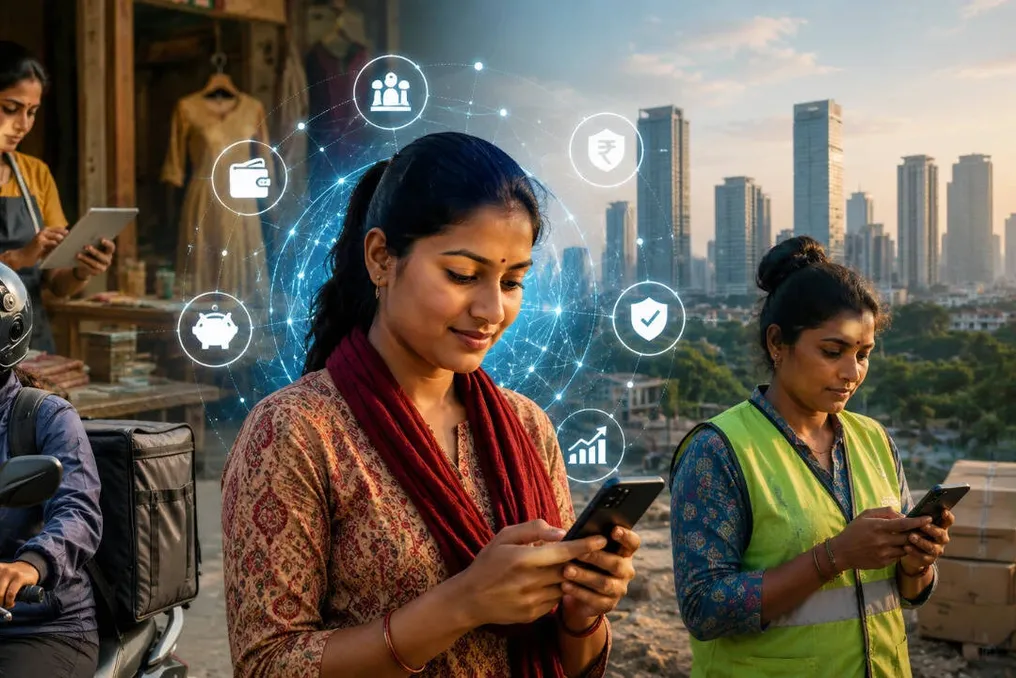
According to an ILO-NCAER analytical note, despite the flexibility offered by the gig platform, women's participation in India's growing platform economy remains limited. The main obstacles are insufficient access to formal financial services, digital literacy gaps, security concerns, and restrictive social norms.
The document, titled 'Promoting Digital Financial Inclusion for Women in the Platform Economy,' emphasizes that women require access to a wide range of financial services throughout their work on platforms. These services include seed capital, short-term loans, insurance, savings tools, and financial planning.
Lending based on cash flows was noted as a key lever for ensuring accessibility, especially since women less frequently own land or property that can be used as collateral. Digital records of payments through platforms can provide lenders with verifiable proof of income and repayment capacity.
During a round table on the release of this analytical note, NCAER CEO Suresh Goyal stated that 'a woman's best protection is small personal savings, and access to credit and mobility are crucial conditions for improving women's employment opportunities. The platform economy has provided this opportunity.'
The analytical note identified two ways to utilize women's digital footprint: applying India's Open Data Infrastructure, including the Account Aggregator system, to ensure financial data portability; and enabling platforms to collaborate with lenders by offering loans, savings, and insurance through their applications.
ILO Country Director Michiko Miyamoto noted that 'digital financial inclusion must enable women to build financial security, resilience, and viable sources of income.'
Senior ILO Specialist Radhika Kapoor pointed out that integrating open financial data infrastructure with e-Shram records could expand access, provided measures against algorithmic bias are implemented.
Furthermore, the note highlighted device ownership as a barrier, as women's digital access is often mediated by family members.
According to NITI Aayog estimates, the platform workforce in India could grow from 12 million in 2024–25 to 23.5 million by 2029–30. Professor Ratna Sahai, Director of the Gender and Macroeconomics Centre at NCAER, concluded that 'the digital footprint in platforms can radically change the situation for women in accessing credit, provided there is regulation that stimulates innovation while ensuring consumer protection and financial stability.'