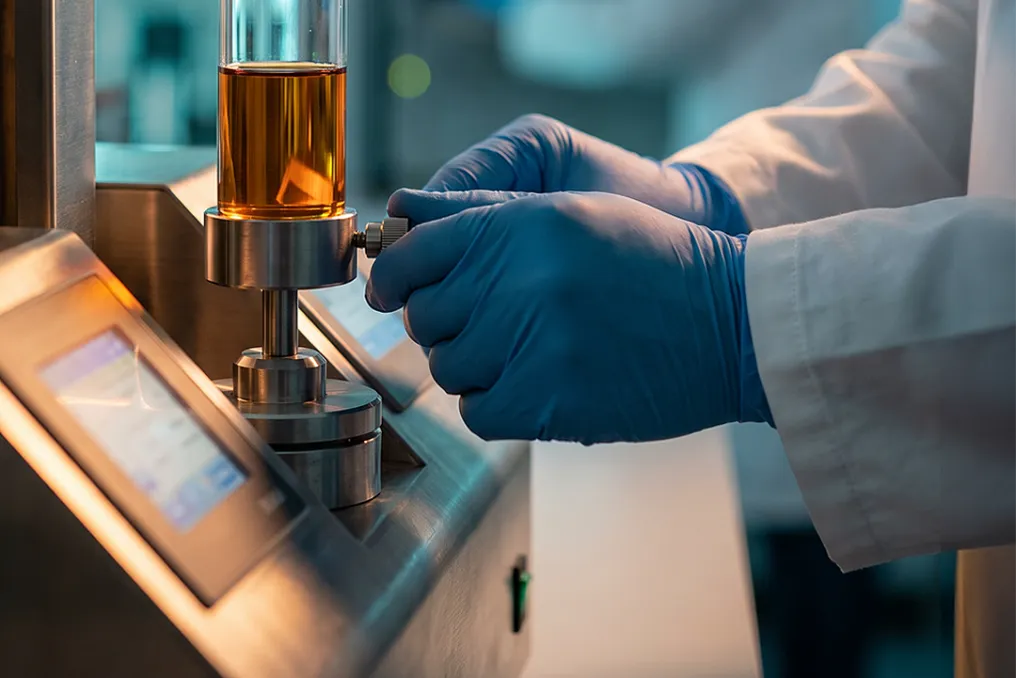
A new automated technology has been introduced in Dubai that reduces the time required to check the quality of oils and fats from two hours to just two minutes, while simultaneously increasing the daily testing throughput tenfold.
This technology was implemented in the Dubai Central Laboratory and allows for automatic analysis of samples without human intervention. Furthermore, it helps detect early signs related to the oxidation and quality of oils and fats during production and storage.
The system has increased the laboratory's daily capacity by 900 percent, raising the number of processed samples from six to 60, which ensures more efficient handling of large volumes. The system automatically generates results while maintaining the accuracy and reliability required to meet international standards. This allows for faster identification of potential quality issues and strengthens food safety control.
The technology also contributes to the transition towards more environmentally friendly laboratory practices, as it eliminates the need for chemical consumables required by traditional testing methods, thereby reducing resource consumption and environmental impact during laboratory work.
Hind Mahmoud Ahmed, Director of the Dubai Central Laboratory Department at the Dubai Municipality, noted that this development will increase the speed and efficiency of laboratory tests while maintaining the necessary accuracy to support food safety and protect consumers.
She emphasized that by increasing throughput and accelerating analysis, proactive regulatory processes can be strengthened, allowing for a more prompt response to changes in the food production sector. Moreover, the technology will help build consumer trust in the safety and quality of food available in Dubai, enabling authorities to quickly identify potential quality problems and ensure compliance with approved international standards and specifications.
This development comes amid the expansion of Dubai's capabilities in food safety control. Earlier this year, the Dubai Municipality launched the first laboratory in the UAE dedicated to detecting foodborne viruses. The ViruGenetics Laboratory at the Dubai Central Laboratory uses genomic technologies to process about 60 samples per day under normal conditions, with the capacity to increase this figure to 100 samples during emergencies.
The laboratory is capable of analyzing complex food samples, including dairy products, seafood, juices, and fresh produce, while maintaining accuracy even in the presence of substances that may interfere with traditional testing. All procedures are conducted in accordance with ISO/IEC 17025 standards.