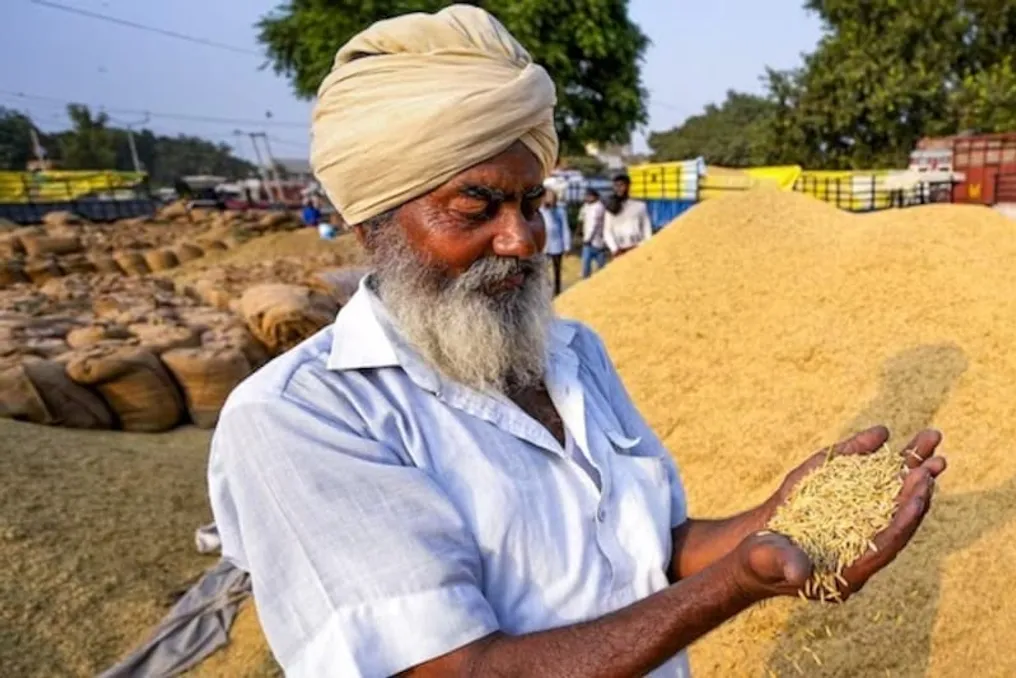
Within India's ethanol blending program, there is a paradox: the government's efforts to ensure energy security are closely linked to the food security system in a way that suggests a parasitic nature. Grain purchased by the government from taxpayers at the Minimum Support Price (MSP) and distributed among low-income segments is then sold to distilleries at a reduced price.
This situation raises questions because the final product—rice, which requires additional costs for transportation, milling, and storage—is sold at a price lower than the procurement cost of the raw material, i.e., rice derived from grain bought by the government at MSP. Consequently, rice produced from grain acquired by the state at MSP is transferred to ethanol production companies at an even lower price.
This raises questions about the mechanism of this scheme and its connection to the National Food Security Program. It is also important to understand the government's motives. The official position is that the National Ethanol Blended Petrol (EBP) program aims to reduce dependence on oil imports and preserve the country's foreign exchange reserves. At first glance, this argument seems sound, given that about 90% of India's energy needs are met through imports. Therefore, increasing the share of ethanol in petrol is seen as a vital step to reduce fuel import costs.
However, a serious problem confronts this overall strategy. The existing economic conditions do not appear entirely favorable for this model. This is where understanding the interrelationship between ethanol production, state food stocks, and the food security system becomes necessary.
For this economic reason, the government supplies surplus rice stored in the Indian Food Corporation (FCI) warehouses to ethanol production companies. The Ministry of Petroleum and Natural Gas stated in a July 31 announcement that the EBP program has had no impact on the country's food security system.
Despite this ministry clarification, several key questions remain unanswered. The main one is why rice procured under the National Food Security Program using taxpayer funds is provided to ethanol producers at subsidized rates. There is also an open question regarding the economic and political viability of using grain intended for food security purposes for energy production.
Sudhir Panwar, a professor at Lucknow University and an agricultural expert, noted in an interview with India Today Digital: 'In a country where about 800 million people depend on free rations, using grain for ethanol production is a huge sacrifice. In a country like India, food cannot be used as an alternative to energy.'
The need to reduce dependence on oil imports cannot be denied, but questions arise regarding the haste in achieving this goal through ethanol blended petrol. The government mandated the sale of E20 petrol, blended with 20% ethanol. Initially, the target date for achieving this was set for 2030, but India achieved the necessary ethanol production capacity five years earlier, by 2025.
Nevertheless, about 80% of vehicles operating on the roads at that time were not fully compatible with E20 fuel. This led to intensified discussions about the impact of E20 and the use of older vehicles. In an article published in The Indian Express on August 17, India's Chief Economic Advisor (CEA), V. Anant Nagheshwaran, proposed maintaining the availability of E10 petrol for older cars.
Nagheshwaran wrote this article jointly with Akash Pujari, an advisor to the Department of Economic Affairs. It also emphasized that before moving beyond E20, India should more carefully assess the 'cost trade-off between food and fuel.'
In fact, the government planned to move towards fuels with higher ethanol content, such as E25 and above, but these steps were halted after facing opposition. CEA Nagheshwaran also called for caution when rapidly transitioning to blends with higher ethanol content. His argument is that decisions related to changing agricultural practices and developing distillation capacity for ethanol production are difficult to reverse later. Therefore, assessing its economic and food impact in advance is crucial when determining future policy.
Another significant pressure on the government regarding the promotion of the EBP program is that a large number of ethanol production plants have already been built in the country. Significant funds were invested in constructing these facilities, and large loans were taken from banks for this purpose. Now, the time for repaying these loans is approaching. Under these circumstances, expecting a gradual increase in ethanol blending may be difficult for investors and banks. This is why the government is being pressured to accelerate the EBP program and increase ethanol consumption.