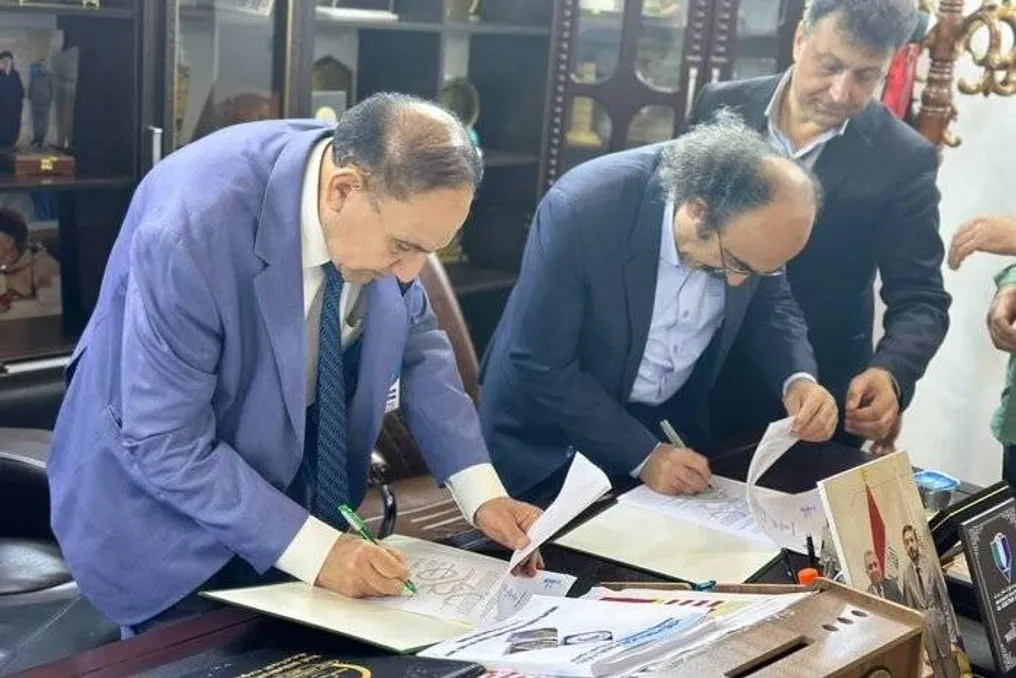
Mazandaran University from Iran and Kut University from Iraq signed a Memorandum of Understanding (MOU) to strengthen educational, research, and technological cooperation, as well as develop ties between the universities of the two countries.
Representatives from both universities presented their capabilities during a meeting held in Iraq, emphasizing the need to enhance academic exchange, according to the IRNA agency. The signed MOU provides for the exchange of students and faculty, joint courses, expansion of scientific and research programs, and the creation of joint educational specialties.
Among other discussed issues was strengthening ties in developing scientific and technological fields, including the implementation of joint research projects and the organization of common courses in artificial intelligence (AI), machine learning, and advanced materials.
Parallel to the meeting, Iranian officials visited the Persian Language Teaching Center at Kut University to learn more about the center's capabilities and activities, and to discuss ways to improve cooperation with it. Previously, Mazandaran University concluded an MOU with Basit University in Iraq to expand international scientific cooperation.
Iraq Seeks to Strengthen Scientific and Academic Ties with Iran
On August 6, Iraqi officials, in a meeting with the Minister of Science, Research, and Technology Hossein Simai-Sarraf, called for expanding scientific, academic, and technological cooperation with Iran. The Minister of Science met with the Deputy Minister of Higher Education and Scientific Research of Iraq, Haider Abd-Dahd Al-Rubai, the Minister of Health of Iraq, Abdul Hussein Al-Musawi, and the Acting Minister of Higher Education and Scientific Research, Abdul Hussein Al-Musawi, in Baghdad, according to IRNA.
During this meeting, both sides emphasized the importance of accelerating the implementation of previously signed Memoranda of Understanding (MOUs). The main areas of discussion included transferring Iran's experience in higher education development to achieve quantitative and qualitative goals, meeting the needs of Iraq's large youth population, attracting talented Iraqi students, and improving research collaboration.
Simai-Sarraf also met with the leader of the National Movement of Wisdom in Iraq, Sayed Ammar Al-Hakim. The parties, emphasizing the extensive scientific and academic potential of Iran and Iraq, exchanged views on strategies for advancing scientific cooperation, expanding joint research, and developing academic interaction between the higher education institutions of the two countries.
In April, Simai-Sarraf and Al-Aboudi highlighted the need to activate scientific and technological partnership between the two countries. Officials also discussed ways to develop joint work in the field of artificial intelligence using the capabilities of both nations, as reported by IRNA.
On April 18, in Tehran, Al-Aboudi announced that the issue of establishing a branch of the Tehran University of Medical Sciences in Iraq had been included in the agenda. For his part, Simai-Sarraf stated Iran's readiness to share its scientific, research, and educational achievements with Iraq to strengthen bilateral relations.
He noted that Iranian and Iraqi students have currently conducted a total of 350 joint research projects, which requires improvement given the available resources. Mentioning the upcoming Iran-Iraq Science Week planned in Isfahan and Fars provinces, Simai-Sarraf reported that the event was postponed due to the war imposed by the US and Israel, but will be held as soon as possible. As agreed by the two officials, AI and smart education will be topics of discussion at the Iran-Iraq Science Week, which is expected to serve as a basis for holding a joint AI conference in the near future.