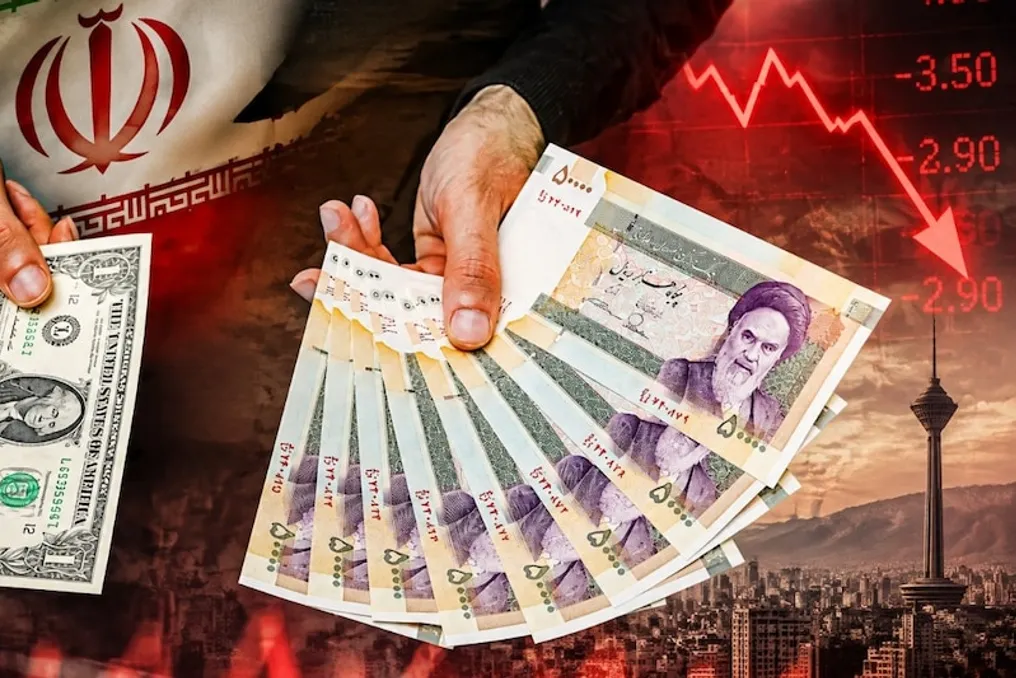
Iran's economy continues to deteriorate due to ongoing conflicts and sanctions from America. The Iranian currency, the rial, has reached a historically low level against the US dollar. This devaluation occurs against the backdrop of Washington's preparations to introduce new restrictions.
The United States has stated that the new sanctions will be an 'economic day of retribution' and will put additional pressure on an economy already severely affected by previously imposed restrictions and the naval blockade by the American fleet.
At the start of trading in the informal market, the rial fell to 20.2 million rials per one US dollar. The official exchange rate set by the Central Bank of Iran is around 15 million rials per dollar, but most Iranians conduct payments at the informal market rate.
Prior to this, the Iranian currency was already under pressure. Even before the attacks by the US and Israel on Iran on February 28, the country faced double-digit inflation and negative economic growth. However, the continuing military actions over approximately six months have had an even greater impact on the economy, and the rial constantly sets new record lows.
Despite this, US President Donald Trump has failed to secure concessions from Iran. Iran maintains strong control over maritime transport through the Strait of Hormuz. This vital waterway previously accounted for five percent of the world's oil volume transported regardless of conflicts. During the war, attacks, and threats from Iran seriously disrupted traffic movement along this route.
Iran and Oman, located on the other side of Hormuz, are in the final stages of negotiations on joint management of this waterway. Regional officials reported that this plan allows vessels to enter the Persian Gulf via a route controlled by Iran and exit via a route controlled by Oman.
Trump sharply criticized his ally Oman and threatened to bomb the country if it 'goes against' him. Oman's Foreign Minister was scheduled to visit Iran on Tuesday for new negotiations. To resolve the deadlock with Iran, US Treasury Deputy Secretary Scott Bassett promised to impose stricter restrictions than those previously in place. These measures include secondary sanctions against countries that continue to do business with Iran.
In an article published in the Financial Times on Sunday, Bassett wrote: 'President Trump has destroyed the Iranian economy to an unprecedented level, and inflation may never have been so high.' He added: 'Now the regime's last chance is self-deception by frightened countries that still believe that accepting aggression will ensure lasting peace.'
Following Trump's announcement regarding the Strait of Hormuz, tensions escalated, and Iran issued a warning. Last week, the United Arab Emirates announced the suspension of all trade operations with Iran. This statement followed just one day after a phone call between Trump and the UAE leader, Sheikh Mohammed bin Zayed Al Nahyan. The UAE was long the largest trading partner of Iran, serving not only as Iran's main source of imports but also as a key center for re-export and finance for Iranian businesses.
After Bassett's comments, Mohammad Rezaei, the radical leader of Iran's Supreme National Security Council, stated in a post on X that any action by countries supporting new US economic restrictions would be considered 'military action.'