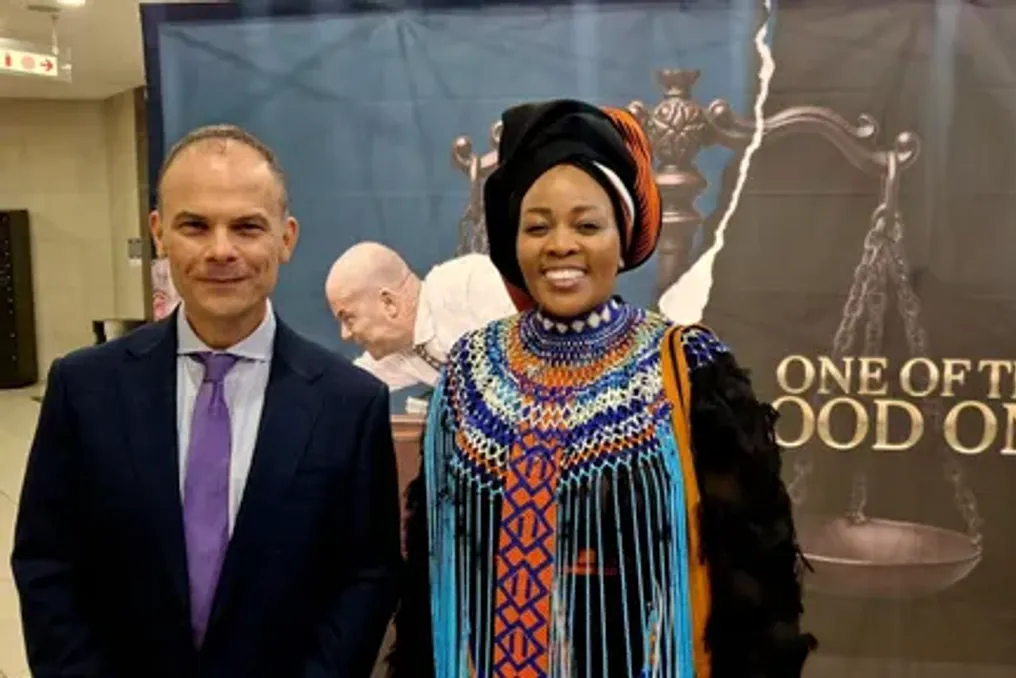
For Tom Paolotino, the film 'One of the Good' is more than just cinema. The lead actor and executive producer describes this project as the 'culmination' of his life, yet beneath this excitement lies a deeper theme—a narrative about justice, grief, forgiveness, and the decisions people make when life doesn't go according to plan.
Paolotino enthusiastically discussed the years of work on this independent crime-comedy drama and what he hopes South African audiences will take away from watching it. He emphasized that 'being one of the good means everything': family, principles, soul, comedy, and entertainment. It is the realization of a dream, overcoming difficulties, and serving as a beacon of hope and inspiration for the world.
The film 'One of the Good,' directed by Julie O'Hara, stars Paolotino, Susan Gallagher, Jacob A. Ware, and Amy Zubietu. It is based on Vincent Scarsella's book 'Lawyers Gone Bad' and inspired by real events from the Lawyers Disciplinary Office. The plot centers on Dean Alessi (played by Paolotino), an honest prosecutor from Buffalo, New York, tasked with holding corrupt and unethical lawyers accountable.
However, Alessi's pursuit of justice is deeply personal. His resolve is strengthened after his son is killed by a drunk driver who holds significant influence and wealth in society. Paolotino noted that he strongly related to his character's determination, stating: 'There is so much of that in me. What is usually a passion for justice, for Dean Alessi, is a passion for justice on steroids.'
Paolotino added that he shares a strong sense of justice, especially in the current time when global events can leave people feeling powerless. He expressed a desire to participate in finding solutions because he 'loves people and loves the world, and hates what is happening in the world today.'
Nevertheless, 'One of the Good' explores not only punishment as an act of justice. Paolotino believes the film's message also lies in how people react to betrayal, anger, and grief. He stated that 'grief is not an excuse for violence.' For him, forgiveness is not necessarily reconciliation; rather, it is a way to free oneself from the burden placed by another person. He explained: 'You need to forgive. It doesn't mean you have to interact with that person, but you free yourself through some forgiveness.'
This philosophical approach extended to the filmmaking process. Paolotino reported that assembling the team ultimately came down to finding the right people and creating a culture based on service, not status. He noted that he found people driven not by ego or fame, but by a desire to serve, which is felt in the film. This collaborative approach allowed ideas to be generated from any source; for example, an intern suggested adding trauma to the protagonist's past, which amplified his passion for justice and became part of his character.
Securing funding is a serious obstacle when making an independent film, but Paolotino decided to proceed as if making the film was never in doubt. He acknowledges the statistics but insists: 'Let's see what happens. Most of it depends on the story you tell yourself, and the story we told ourselves was that we were making this film, and that's all.'
He advised aspiring filmmakers: set a shooting date. According to him, 'if you are a filmmaker, set a date when you will shoot the film, and you will be surprised how the universe conspires to make it happen.'
Now that 'One of the Good' is available in South Africa, Paolotino hopes local viewers will come without prejudice. He prayed for this, wishing that South Africans would enter the theater with open minds and hearts, setting aside all their preconceptions about Hollywood, America, and the legal system, and simply be ready for a new experience.
Living in New York, Paolotino feels a special connection to South Africa and the sense of possibility he experienced in Johannesburg. He values the feeling of creation he experiences there, noting that they 'are broken down here, in South Africa, and figure things out together, and I love that.'
Perhaps the film is just the beginning. Paolotino's main goal is to turn 'One of the Good' into a television series, allowing the world and the team to evolve over several seasons. He sees enormous potential in the cohesion achieved during the few weeks of filming and envisions how collaboration would look in a five or six-season series. The production location for the series has not yet been determined—it could be America or South Africa.
However, he is firmly convinced that it will happen, just like the film. 'There is no Plan B. We are making a TV series called 'One of the Good'.' This conviction returns to the idea of integrity, which Paolotino believes is at the core of both the film and his own life. He concludes: 'The decision is to keep promises. When you are in your integrity, you are in your agreement, and things flow. People get along, you can work together, love, live, and collaborate, and enjoy life. So it starts and ends with integrity. At least, that's my experience.'