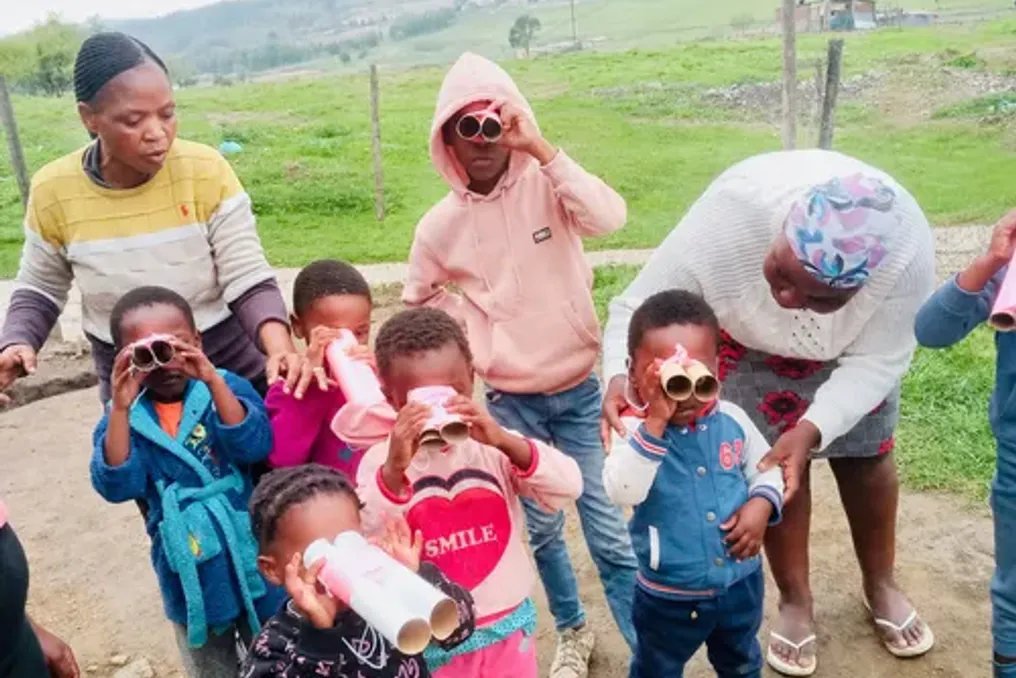
A new study aims to investigate how children in early development centers perceive climate change, as there is a near absence of data on how young children in South Africa are encountering or understanding this phenomenon.
This research is conducted with the participation of Midlands Community College in collaboration with Sesame Workshop International South Africa and is funded by the Grindrod Family Centenary Trust. It has been approved by the KwaZulu-Natal Department of Education.
The study focuses on determining how children aged 0 to 5, their caregivers, and Early Childhood Development (ECD) specialists in KwaZulu-Natal understand, experience, and react to climate change. This is in light of growing evidence that the impacts of climate change are felt most acutely by children in rural and underserved communities.
Despite existing climate policy commitments in South Africa, there is a lack of evidence on how climate change is already affecting the daily lives of the country's youngest citizens. Events such as floods, drought, and extreme heat disrupt attendance at early development centers, place burdens on caregivers, and remain undocumented in national data. The goal of this study is to create this baseline evidence so that the children's experiences influence the nation's response, rather than remaining a secondary aspect.
Questions the scientific inquiry will explore:
Researchers intend to find out how children, caregivers, and ECD specialists in KwaZulu-Natal conceptualize and interact with issues of climate change and environmental sustainability. It also examines which climate problems are most prevalent among families, how environmental concepts are introduced to children at home and in ECD institutions, and what barriers hinder climate-aware education in these centers.
Furthermore, the study will determine what resources are most needed by parents and specialists to help children manage climate-related risks. The work began in June 2026 and will continue until February 2027 in KwaZulu-Natal ECD centers.
Candi Goodlad from Midlands Community College noted that climate change is already shaping children's development through floods, droughts, and school interruptions, yet there is almost no data on how they or the adults raising and educating them understand or cope with this situation. She emphasized that this study aims to fill this gap and ensure that young children are viewed as a foundation for decision-making, not as a secondary element in South Africa's response to climate change.
Fatima Rawat from Sesame Workshop International South Africa stated that the organization has long believed in the capacity of children to be powerful agents of change when provided with joyful, age-appropriate learning. This partnership allows for the creation of a truly local evidence base for climate-focused early learning in KwaZulu-Natal.
The findings will provide baseline data for the entire ECD sector, including resource and training organizations, to strengthen climate-sensitive ECD programs. This includes developing contextually relevant educational materials, curriculum integration approaches, parent engagement strategies, and community-level interventions.
The study is also expected to deepen the understanding of how climate events, such as drought, floods, extreme heat, and severe weather, affect children's physical health, emotional well-being, and access to safe learning environments. Researchers believe that while children did not create the climate crisis, they are already living in it, and this study is the first step toward their experiences shaping the response, not just the consequences.