National Council on Gambling Warns Against Using Gambling as a Financial Solution
Read more
IOL
iol.co.za

National Council on Gambling Warns Against Using Gambling as a Financial Solution

The National Council on Gambling (NGB) cautions South Africans, particularly those aged 25 to 34, against relying on gambling as a means of supplementary income. Recent studies have revealed a growing prevalence of problematic gambling behavior within this age group, raising concerns about financial vulnerability and the impact of digital access to games.

NGB Executive Director, Lungile Dukwana, stated that the 2023/24 study showed that the 25 to 34 age group constituted a significant portion of participants across all major forms of gambling. According to the study, 53% of participants in online sports betting and other related activities were between 25 and 34 years old. This same age group made up 53% of retail sports betting participants and 49% of casino participants.

The study also found that 55% of identified players with problems belonged to this age group. However, Dukwana emphasized that one cannot directly link a specific type of gambling to problem gambling among young adults. He noted: 'Among players with problems overall, the most frequently preferred forms were lottery draws (56%), National Lottery (55%), and sports betting (50%).' He added that the study does not detail which specific form of gambling is responsible for problems in the 25–34 age group, so concluding that only sports betting is the cause would be incorrect.

NGB States That Betting Dominates the Gambling Market

Although NGB is cautious about attributing gambling behavior solely to unemployment or financial pressure, its research indicates that financial motives are an important incentive for participation. Dukwana reported that the study identified 'the possibility of winning a large sum of money and the need for additional income' as one of the main reasons people gamble. Furthermore, some respondents viewed gambling as a way to cover expenses or overcome financial difficulties.

Particular attention is paid to pressure on family budgets. According to the study, 54% of players reported using winnings to purchase essential household needs, and 43% to repay debts or pay bills. Participants also mentioned gambling to compensate for lost income. Dukwana strongly recommended against viewing gambling as a substitute for stable employment or income. He stated: 'Thus, the study gives us grounds to worry about financially vulnerable people who view gambling as a possible escape from economic hardship.' Nevertheless, he clarified that claiming that unemployment or the rising cost of living directly causes gambling would be inaccurate. The main message remains unchanged: gambling should never replace a stable income.

This warning came amid a rapidly expanding betting market. NGB industry statistics show that Gross Gaming Revenue (GGR) grew from approximately 35.9 billion rand in the 2023/24 fiscal year to 52 billion rand in 2024/25, representing an increase of 44.7% in just one year. Betting now accounts for about 69.8% of South Africa's total GGR, compared to 22.3% for casinos.

The rise of smartphones and digital platforms has fundamentally changed how South Africans access gambling. The NGB study found that 92% of players using online games did so via mobile phones. Online sports betting and racing were identified as the most frequently used form of online gambling; participants cited convenience, immediate access to funds, bonuses, and promotions as reasons for choosing online platforms. Dukwana noted that the rapid development of digital access creates serious challenges for regulators. He added that 'access via mobile phones and computers has led to an increase in illegal online gambling,' and the technological shift has also heightened concerns about 'compulsive and addictive gambling behavior.'

NGB is particularly concerned about the combination of accessibility, convenience, advertising, and continuous access via smartphones. However, he cautioned against assuming that smartphones themselves cause gambling problems. Instead, he explained that increased accessibility removes some practical barriers that previously limited gambling, reinforcing the need for effective consumer protection and responsible gaming measures.

Recent studies show a significant increase in both gambling participation and the number of identified problem gamblers compared to the previous NGB national survey. Overall gambling participation increased from 30.6% in the 2017 study to 65.7% in the 2023 study. The latter study classified 31% of players as problem gamblers, and another 29% as moderate risk players. NGB noted that these results should be interpreted cautiously when compared to earlier data due to differences in methodologies. The 2023 study used a combination of online and in-person surveys, whereas the 2017 study relied mainly on face-to-face interviews in rural and urban areas alongside online interviews. The report also noted that anonymous online surveys may reveal behaviors that respondents are less likely to disclose during personal conversations.

Dukwana concluded that the latest data demonstrates a significantly higher level of identified gambling problems, especially among people aged 25–34, but the figures should not be presented as a simple proportional increase compared to 2017. NGB also highlighted the growing influence of gambling advertising and marketing on social media. Dukwana stated that the proliferation of gambling advertisements has contributed to the normalization of gambling in society and may encourage harmful habits. He noted: 'High exposure to marketing from gambling websites and influencers, combined with the hope and need to win money, is one of the main driving forces pushing young adults toward gambling.'

Despite the existing legal framework containing recommendations on gambling advertising, NGB saw an opportunity to strengthen protection further and developed Norms and Standards for consideration by the relevant authority. Of particular concern is the situation where financially vulnerable consumers begin to perceive gambling as a solution to unemployment, debt, or household financial pressure. NGB warned that people should only gamble with money they can afford to lose and use reputable, licensed gambling operators. Dukwana warned: 'Using money needed for food, housing, transport, education, or debt repayment for gambling can exacerbate, rather than resolve, financial difficulties.' NGB believes that the answer to the gambling problem cannot be reduced to a simple call for responsible play. Its research defines the gambling problem as a broader social and public health issue requiring collaboration between sectors such as health, social development, education, and employment. The NGB program includes education, research, and treatment, providing free counseling and support. People struggling with gambling can also apply for self-exclusion, which includes counseling as part of the process. Dukwana noted that the economic circumstances causing people to feel they have no alternative means of earning money fall outside NGB's mandate and require broader governmental and societal intervention. Nevertheless, the regulator retains a clear duty to educate and protect the public, promote the use of reputable and licensed operators, strengthen responsible gaming measures, and ensure that people affected by gambling know where to seek help.

Similar stories

Young man from South Africa shares experience of battling gambling addiction
Read more
iol.co.za

Young man from South Africa shares experience of battling gambling addiction

A young man from South Africa shared his difficult story of battling gambling addiction, emphasizing the financial and emotional burden it places on individuals and families amid rising unemployment.

This 22-year-old man, who is currently recovering from addiction, from Durban, recounted how the consequences of gambling became increasingly severe after initially seeming like harmless entertainment. He works in the financial sector but requested anonymity due to the personal nature of his experience.

He started gambling shortly after the COVID-19 pandemic while still in high school. Initially, it was just a casual activity, with bets placed once every one or two weeks. However, the situation changed after he incurred significant losses while being unemployed and a university student. Instead of accepting the loss, he began gambling in an attempt to recoup the money.

“What started as an attempt to quickly cover that loss turned into an addiction,” he stated. Paradoxically, a subsequent major win reinforced his belief that he could continue playing successfully. “That one big win turned into my biggest loss. It created a false sense of confidence, making me believe I could always win back or recover my losses. In reality, the losses almost always exceeded the winnings.”

What began as leisure and an attempt to earn extra income ultimately led him to gamble money intended for more important life priorities. “When I started gambling with money meant for more important things related to my future, I realized I had a problem,” he said. The realization came too late, as gambling began to affect his daily life.

The recovering gambler noted that one of the most destructive aspects of gambling addiction is the constant mental focus on the next potential win. “When I was gambling, I often started the day excited because I already had plans for money I hadn't even won yet,” he shared. Instead, he often ended days stressed and anxious. “You can’t concentrate on anything else. You are constantly checking results, races, tips, and forecasts.”

This distraction negatively impacted his ability to concentrate in other areas of life, including studies and work. For him, the motivation shifted over time from entertainment to the pursuit of money. “Initially, gambling was enjoyable when it was just a form of entertainment and there was no need to cover losses. But as soon as the addiction takes over, everything becomes about money,” he explained. “When you run out of cash, you start risking the last cent hoping to change the situation because you feel you have no other options.”

He warned that this is precisely when gambling becomes most dangerous. “Looking at the big picture, it is the worst decision you can make. You will almost always end up in a worse financial position.”

He described a cycle where money intended for household basic expenses could go into the next bet. For example, one might decide: “I am short on food this month. Let me use the money saved for electricity and try to make a profit. The electricity bill is only due mid-month.” But as soon as that money disappeared, the financial pressure intensified. “Before you realize it, that money is gone too. Now you have no money for food or electricity. As a result, you start borrowing or taking out loans, creating an even bigger problem for yourself.”

He admitted that his own gambling consumed savings intended for the future, including education and emergencies. “I had absolutely no reason to touch that money, but I did. As a result, I had to start from scratch, which put me in severe financial difficulty.”

This experience caused him particular concern regarding the impact of gambling amidst the rising cost of living, which already puts pressure on households. “With the rising cost of living, life was already expensive enough, and gambling only exacerbated the situation.”

One of the main difficulties he faced was the desire to recover already lost funds. “Human nature strives to get back what has been lost. However, when it comes to gambling, it is much better to admit defeat and seek help before the situation worsens.”

He noted that attempts to recoup losses can last for years, during which the gambler becomes increasingly financially vulnerable. “You can spend years trying to get back your losses only to create even bigger problems for yourself. The house always wins.”

Ultimately, his gambling led both him and his family to significant financial strain. “My attempts to recover losses put both me and my household under financial pressure, something we had never experienced before. We had to change our entire lifestyle and sacrifice a lot.”

The consequences extended beyond finances. He reported that gambling also damaged relationships and eroded trust among loved ones. “You lose the trust of friends and family when gambling starts controlling your life,” he said. “People will help you at first, but when you find yourself in the same situation again and again, you may start lying to get money or avoid difficult conversations. In the process, you lose trust, respect, your reputation, and sometimes even important relationships. That is what happened to me.”

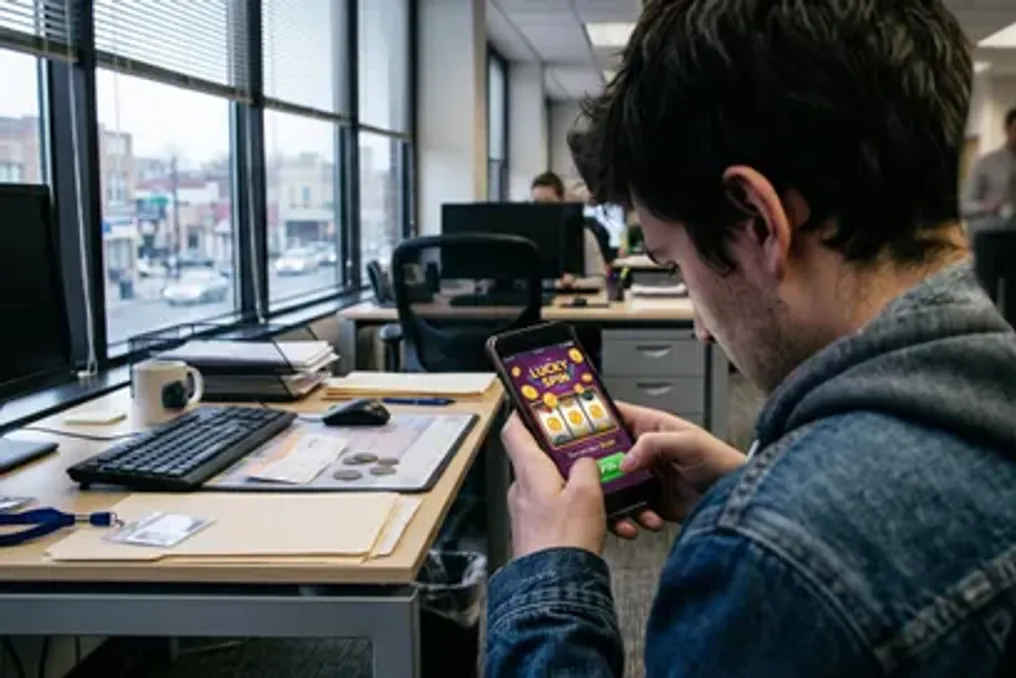
Addiction also affected his education and career. There were instances where he gambled during university lunch breaks and later at work. “Once a bet is placed, you get distracted. You are constantly checking your phone for results and bills.”

He added that the emotional highs and lows associated with gambling affected his well-being, concentration, and productivity. “In most cases, things don't go as planned, and the emotional roller coaster that follows affects your well-being, concentration, and productivity in all aspects of life.”

He described the constant search for money to fund the next bet as the defining characteristic of his addiction. “Many gamblers will understand when I say: ‘There is always a plan for the next bet.’ As a gambler, you always find a way to get money for the next bet, and you often have plans for winning even before you win it.”

In his case, he repeatedly convinced himself that the next win would provide the money needed to pay off debts and overdue bills. “However, as I said, the house always wins. These bets never paid off. Instead, I drove myself into a deeper hole from which I couldn't climb out.”

Eventually, he reached a point where he could not continue. “I was emotionally, mentally, and financially exhausted. Enough.”

His recovery began when he acknowledged having a gambling problem and sought help. “I admitted defeat. It takes real courage to admit defeat.”

Although admitting the addiction was painful, he said that accepting the problem was the first step toward recovering his life. He joined Gamblers Anonymous and has not gambled since. “Meetings have had a significant impact on my life. Every day I reflect, learn, and strive to be a better person.”

He believes his recovery would have been impossible without admitting he needed help. “None of this would have been possible if I hadn't admitted defeat and sought help.”

The recovering gambler advised people struggling with gambling not to be ashamed to seek support. “There is always someone who has overcome even greater difficulties, so seeking help is so important.”

He emphasized that support doesn't necessarily have to take the form of financial aid. “Sometimes just the opportunity to listen to another person's story and share your own in a room where no one judges can change a life.”

His advice to those worried about their gambling is to conduct an honest assessment of the real cost of this activity. He urged players to ask themselves two questions: “What have I truly gained from gambling, and what have I truly lost because of it?” He believes that an honest answer to these questions can change a person's view of their gambling behavior.

The young man's experience serves as a personal illustration of a broader warning issued by NGB during periods of high unemployment and financial pressure on many households. His message is simple: gambling should never be seen as a way to solve financial problems. “I also want people to know that there is no shame in admitting defeat and asking for help,” he concluded. “You are already losing money daily because of gambling. Instead, take one difficult step that can ultimately become your greatest victory: overcoming addiction and rebuilding your life.”

He stated that he is ready to help others who may face similar struggles. “I am always ready to help others who may face the same struggle.”

National Gaming Commission calls for responsible approach to gambling amid rising youth unemployment
Read more
iol.co.za

National Gaming Commission calls for responsible approach to gambling amid rising youth unemployment

The National Gambling Board (NGB) has appealed to South Africans to safeguard their family finances and exercise caution when participating in gambling. This appeal follows a study which revealed that 55% of individuals struggling with gambling are between the ages of 25 and 34.

The NGB emphasized that this warning is linked to the Quarterly Labour Force Survey by Statistics South Africa for the second quarter of 2026, which paints a worrying picture of the economic difficulties faced by many South Africans.

According to Stats SA data, the official unemployment rate increased from 32.7% in the first quarter to 33.6% in the second quarter. The total number of unemployed people reached approximately 8.5 million, which is 345,000 more than in the previous quarter. Meanwhile, the number of employed people decreased to about 16.7 million, which is 16,000 fewer than in the last quarter.

The study also found that youth have been particularly hard hit: 36.4% of South Africans aged 15 to 24 have neither employment, education, nor training.

The NGB reminded citizens that legal gambling is a regulated form of entertainment and should never be viewed as a source of income, a way to overcome unemployment, or a solution to financial problems. The Commission noted that its study on the socio-economic impact of gambling in South Africa for 2023 and 2024 reinforces the need to raise awareness among young South Africans.

The study established that participation in gambling is highest among people aged 25 to 34, with 77% of respondents in this age group reporting participation in games. Furthermore, it was found that 55% of identified problem gamblers are in the 25 to 34 age bracket.

The NGB warned that severe economic pressure can make the prospect of a quick return through gambling attractive. The study also revealed a link between gambling and household financial strain: over half (54%) of players reported using winnings to purchase essential household needs, and 43% used them to pay off debts or bills.

Additionally, some participants gamble to compensate for lost income, which is a concern among participants. The Acting CEO of the NGB, Lungile Dukwana, stated that the organization warns that gambling always carries the risk of financial loss, and chasing losses can worsen financial hardship.

Dukwana noted: 'The latest figures highlight the complex circumstances facing many South African households, and in such times, every rand counts.' He advised: 'Food, housing, transport, education, and debt repayment must come before gambling. If you decide to participate, only use money left after meeting your basic obligations, and only bet what you can afford to lose. Protect the money needed to support your family.'

The Commission expressed concern over the state of youth, who continue to experience disproportionately high levels of economic isolation. The organization urged young South Africans not to view sports betting and other forms of gambling as an alternative path to earning. Dukwana added: 'We recognize the heavy burden young people across the country face. Our message is not condemnation, but protection.' He concluded that 'Gambling is an uncertain activity, and there is no guarantee of winning. It should never replace the pursuit of sustainable employment, education, or other legitimate opportunities for economic participation.' Dukwana strongly urged the public choosing to gamble to do so responsibly and only through operators legally licensed in South Africa.

Popular