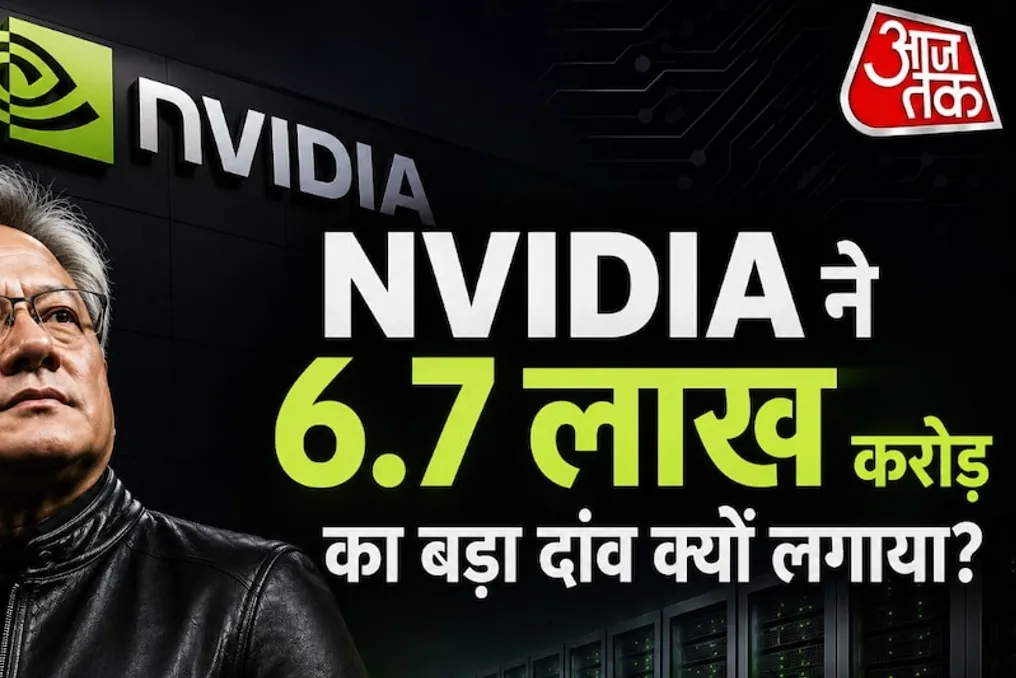
Nvidia, the largest player in the AI chip sector, continues to actively develop the artificial intelligence field, making new high-profile announcements that are causing significant resonance in the AI world. As part of this development, Nvidia is conducting a major deal with the AI startup Poolside, valued at approximately $7 billion.
This deal includes licensing Poolside's technologies worth $6 billion, as well as a direct investment by Nvidia into the company amounting to $1 billion. This move by Nvidia comes amid growing concern within the American AI industry regarding the successes of Chinese companies such as DeepSeek and Kimi.
Chinese companies have gained popularity due to their open-source AI models, which allow developers to freely download, modify, and use them for various tasks. In contrast, large American AI corporations have long focused on closed systems. Nvidia aims to fill this niche.
What exactly is Nvidia acquiring for $6 billion?
Nvidia is receiving a license for Poolside's technology, which is used to create AI models and which Poolside itself has termed its 'model factory.' According to available data, Nvidia may also attract over one hundred engineers from Poolside to work on the Nvidia Nemotron project.
Thus, Nvidia has acquired not just an AI model, but the entire technological foundation behind its creation, as well as highly qualified personnel for its mission in the field of AI.
Nvidia's Strategy: Developing its Own Nemotron Project
Nvidia is already developing its own open-source AI models under the name Nemotron. The company recently released Nemotron 3.5 Lightning, designed for running long-term AI agents and performing specific AI tasks. Nvidia has made its model weights, training data, and other necessary resources publicly available so that developers can adapt them.
By gaining access to Poolside's technologies and engineering talent, Nvidia will be able to significantly accelerate work on this project. According to a Wall Street Journal report, the company's goal is to create the Nemotron model within the next year, capable of competing with the most powerful global AI models.
DeepSeek Back in the Spotlight
In January 2025, DeepSeek's low-cost open models attracted the attention of the entire tech world. Following this, Chinese models such as Kimi and GLM emerged. These developments demonstrated that powerful AI is not the exclusive prerogative of large American corporations.
The situation is complicated by the government imposing export bans on high-performance Nvidia chipsets to China and other countries. This has allowed Chinese AI models to improve and expand their presence.
For Nvidia, this presents both an opportunity and a challenge. If developers worldwide begin using Chinese open models, the American AI ecosystem could fall behind in this area. Nvidia CEO Jensen Huang previously stated that US leadership in AI would be determined not only by the most powerful model but also by the country's ability to build a strong and open AI ecosystem.
Competition: Chip Sales vs. Developing Proprietary Models
Nvidia is a key technology partner for major AI companies like OpenAI and Anthropic, providing them with GPUs and computing systems for model training. However, by promoting Nemotron, Nvidia is strengthening its position in the world of AI models itself.
This means that Nvidia is simultaneously selling its chips and systems to other AI companies while creating its own AI models. Although it is premature to speak of direct competition with OpenAI or Anthropic, it is clear that Nvidia no longer wants to be merely a hardware supplier in the AI race.
Why Was the Deal Important for Poolside?
Poolside was attempting to gather massive computing power to create AI models. The company's main problem was securing thousands of expensive GPUs and extensive data centers required to build the largest AI models. According to Poolside's shareholder letters, the company failed to raise the necessary capital during a major funding round last year, facing difficulties in securing computational power.
The deal with Nvidia provided Poolside an exit from this pressure. Moreover, this deal has a hidden meaning: Nvidia earns not only by selling chips to AI companies but also by investing in them, licensing their technologies, attracting engineers, and strengthening its influence across the entire AI ecosystem.