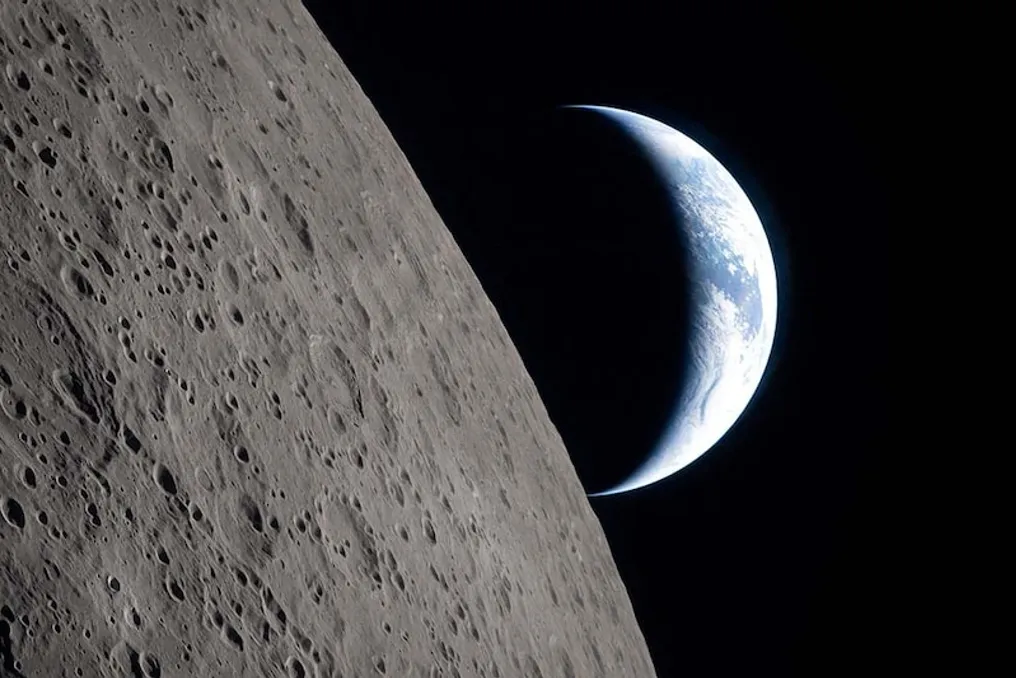
Human life on the Moon involves several difficulties, including the lack of an atmosphere, sharp temperature fluctuations, and exposure to intense solar radiation and radiation. However, a new study conducted by NASA found that some microorganisms from Earth are capable of surviving for a period on the lunar surface.
According to the study data, some of these organisms can maintain viability from several weeks to several months in specific locations. Scientists conducted this research by examining three sites on the Moon's south pole: Nobile Rim, Connecting Ridge, and De Gorles Rim. Data obtained from the Lunar Reconnaissance Orbiter and information on the radiation background on the Moon were used for the analysis.
Five types of microbes were tested in computer models: two species of fungi and three species of bacteria. The most resistant among them turned out to be the fungus Aspergillus niger, often called black mold and usually found in damp and warm places, and which was also discovered inside the International Space Station.
The second fungus studied was Fusarium, which typically inhabits soil and demonstrated the ability to survive in harsh conditions, although it was less resistant than Aspergillus. Among the three bacteria, Deinococcus radiodurans proved to be the most resilient; the other two bacteria—Staphylococcus aureus and Bacillus subtilis—were most affected by the Moon's ultraviolet radiation.
The main obstacles for microbes on the Moon are strong ultraviolet radiation, radiation, and extreme heat, as temperatures on the Moon can reach about 127 degrees Celsius during the day. Nevertheless, conditions are not uniform everywhere. In some craters on the Moon's south pole, there is no direct sunlight, which increases the probability of microbial survival for some time.
Modeling showed that in certain zones, these organisms can remain alive for several weeks to several months. It is important to note that this study concerned only the duration of survival, not the ability of the microbes to grow or increase their population.
Scientists hypothesized that if a microorganism is buried under the lunar soil, it may receive some protection from intense radiation exposure. Since water ice is also present on the Moon, it is crucial for scientists to understand whether microbes arriving from Earth will affect future studies related to lunar soil and water.
Preparation for NASA's Artemis missions includes sending humans to the Moon's south pole. In this process, terrestrial microbes may unintentionally reach the Moon with astronauts through spacesuits, equipment, or mechanisms. This could create a serious problem for future scientists: if a microbe is found in lunar soil or ice, it will be necessary to determine whether it was originally on the Moon or brought from Earth.
Therefore, scientists emphasize the need for complete documentation of microbes taken from Earth as part of lunar missions. This will aid in the subsequent correct analysis of samples collected on the Moon. The study does not mean that these microbes can live comfortably on the Moon; it only indicates that some small terrestrial organisms can survive longer than expected in specific locations on the Moon.