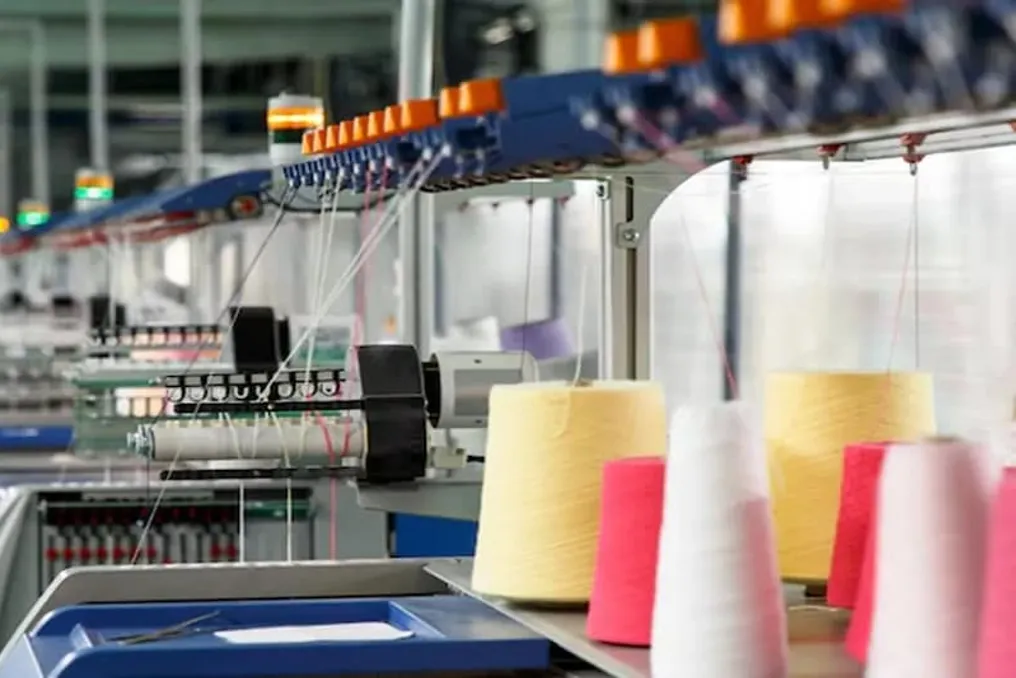
The pressure of rising costs in the weaving and spinning sectors of Surat has become evident. Approximately 150 thousand spinning production units have begun to reduce output. Many enterprises are suspending operations for two days each week, while some have reduced the number of working shifts.
Industry representatives report that this decision could negatively affect the income and employment of 40,000 – 50,000 workers. The main reason for this is the sharp increase in the cost of polyester yarn.
According to people connected with the spinning and weaving sectors, the price of polyester yarn has risen from approximately 112 to 140 rupees per kilogram in recent months. This has significantly increased the cost of fabric production, but the price of finished grey fabric has not risen proportionally.
Surat is a major center of the country's textile industry, boasting about 700,000 – 800,000 weaving units, most of which operate around the clock in spinning mode. Despite the rise in the cost of yarn and other raw materials, the prices of finished fabric in the market have only increased slightly.
Vishnubhai Patel, associated with the weaving sector, noted that entrepreneurs were purchasing yarn at high prices, but the market is unwilling to pay more for the finished grey fabric. According to him, the initial cost of grey fabric was about 16 rupees per meter. With the rise in yarn prices, there should have been an increase of about 5 rupees per meter, but the market accepted only an increase of 1–1.50 rupees per meter. This has made production difficult at current prices for weavers and put direct pressure on margins.
Industry representatives point out that ongoing conflicts in the Middle East and other geopolitical events have led to fluctuations in crude oil prices. This, in turn, has affected the cost of the main components of polyester yarn: purified terephthalic acid (PTA) and monoethylene glycol (MEG). PTA and MEG are produced from petroleum-based raw materials, so changes in their prices directly impact the cost of polyester yarn.
Nevertheless, some representatives of the weaving sector claim that the rise in yarn prices has exceeded the increase in input costs. They accuse yarn manufacturers of further increasing prices by 20–25 percent. Responses from the respective companies to these accusations are still awaited.
According to industry representatives, spinning units are not obligated to close; the decision to reduce production is voluntary. Some enterprises stop production for two days weekly, while others reduce one shift. The Gujarat Weavers Association (FOGWA) also recommended slowing down production for the next month. The organization believes this may help reduce pressure on yarn prices and restore the balance of supply and demand in the market.
Many people find employment in Surat's weaving sector. Industry representatives note that production cuts could affect about 40,000 – 50,000 workers. Of particular concern is the situation of workers whose income depends on the available volume of work and shifts. Production cuts can affect both working days and the earnings of these people. Furthermore, the industry is already facing labor shortages as many migrants from Uttar Pradesh and Odisha have not yet fully returned.
Ashok Jhiravala, chairman of the Gujarat Weavers Association, reported that the organization and other industry bodies have submitted their demands to the government. They demanded measures against the alleged artificial increase in yarn prices. The industry argues that the rise in yarn prices can be explained by the rise in crude oil prices, but they are concerned about the rapid increase in yarn prices without a corresponding rise in crude oil prices. The weaving sector has also requested relief in customs duties to lower the costs of yarn and its main components.