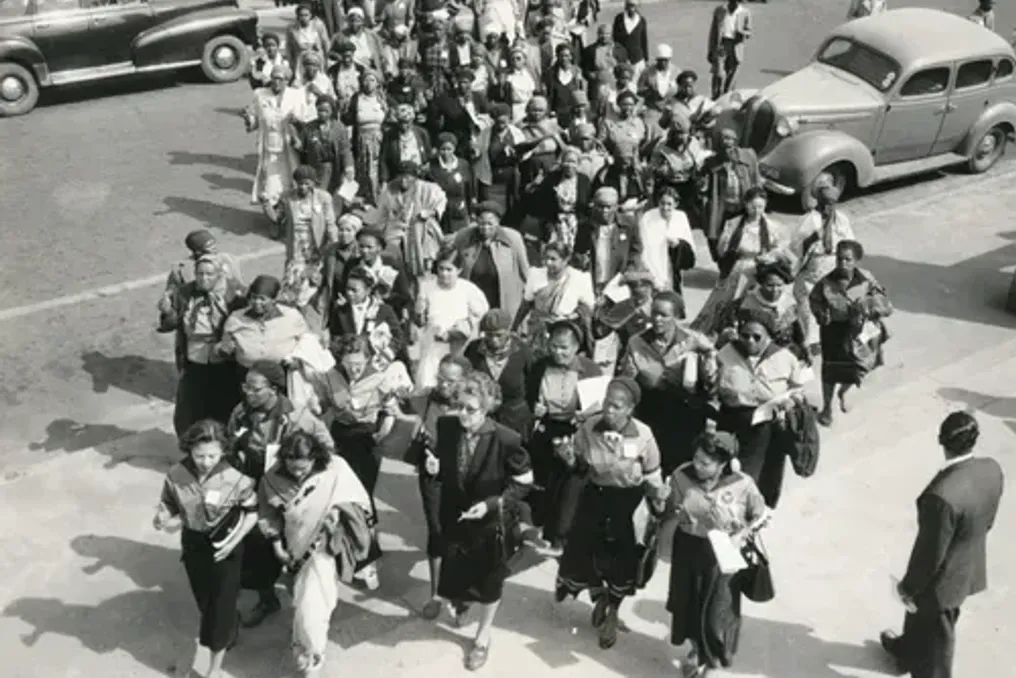
The author notes that modern women, including the author herself, stand on the shoulders of brave women who made huge sacrifices to reach the Union Building and observe 30 minutes of silence.
The entire month of August is traditionally dedicated to honoring courageous women who marched to the Union Building on August 9, 1956, an event that occurred about seventy years ago. For many, this is just another state holiday. This year there was an additional day off due to a decision the author calls a 'moment of foolishness or madness,' according to which the Monday following a Sunday holiday must also be a public holiday.
The author became interested in the details of organizing this march, which mobilized about 20,000 women. Lillian Ngoyi recalls in her book that the ANC leadership was not entirely confident in the success of this procession, doubting the women's ability to withstand the brutality of apartheid police. However, the women did not back down and convinced the leadership that everything would be fine and that there was a backup plan.
The details of planning the march day are astonishing. It began two years before the event. Modern technology did not exist in that era. Planning required women to visit homes in the evenings to obtain permission from men for their wives and daughters to participate in the procession. The time was chosen for the evening when men returned from work, despite it being the middle of winter, and it was unsafe for anyone to be outside, especially for women.
The march had to take place under absolute secrecy due to fears of Special Branch agents. Some men refused to give consent. Furthermore, there was no funding, so women raised money by using their skills in cooking, knitting, or sewing and selling these items.
The main goal of this march was to demand the repeal of pass laws. At that time, women could not open bank accounts, own housing or other assets, vote, and their earnings were at least 50% lower than those of male colleagues, even when performing the same job. These women showed great courage.
The women faced severe penalties: Lillian Ngoyi was banned for 15 years, Helen Joseph was placed under house arrest, Sophie de Bruyn was only 18 years old, and Rahima Musa was heavily pregnant. Unfortunately, the march was not successful because the newspaper Strijdom did not come out to meet thousands of women, and they left their petition on the floor. Nevertheless, they maintained their dignity and demonstrated the power of unity. They were punished when the pass laws were expanded to include women.
Despite the initial failure, the actions of these women contributed to raising the status of women, transforming them from second-class citizens into equals to men. Today, our daughters have rights that the Class of 1956 did not have, such as access to education and equal opportunities in the workplace. However, the question remains: are we truly free?
Sophie de Bruyn, one of the active participants in the march, shared her reflections at the Union Building on August 9. She said that after so many years, she feels both pride and sadness: pride that they influenced women's rights, and sadness that women are still marginalized, especially those facing gender-based violence (GBV).
In recent years, GBV, in the author's opinion, has increased and become more brutal, affecting victims and children. Nevertheless, Sophie de Bruyn maintains hope, emphasizing that women are a resilient gender. Many companies mark Women's Day with events, inviting 'successful' women to speak as speakers to inspire others. The author considers such events a conversation with those already convinced.
Some of these events are very expensive, starting from R250 per person and going up to R750 or more, which for some amounts to a month's supply of food or weekly transport costs. In addition to promises of luxurious lunches and teas, there are special offers during Women's Month advertising cosmetic procedures, such as 'Goddess Flush' or 'Angelic Haze,' costing around R2000. The author questions the advisability of such spending.
The article also mentions an advertised 50% discount offer related to vaginal strengthening and rejuvenation. Although the author is not interested in this procedure, they contacted the salon to learn about the process. It turned out to be a special mixture of oils and herbs in a steam boiler. The author notes how many traditional Indian practices are turning into profitable businesses and wonders about finding a similar way to earn a living.
The author is critical of high-paid invitations where the slogan features the phrase 'empowerment, connection, and celebration of the virtuous woman.' They question who defines what a 'virtuous' woman is, considering such phrasing potentially divisive. The author argues that true celebration should encompass women in all their diversity, unlike narrowly focused invitations.
In conclusion, the author supports charitable initiatives, such as a friend's event where entry was a donation to the SPCA, and an upcoming Phoenix event to raise funds for AIDS medication for people with disabilities. The author concludes that true empowerment lies in supporting those in need. They once again express admiration for the courage of the Class of 1956, urging that this bravery not be overshadowed by meaningless events in the name of Women's Day.