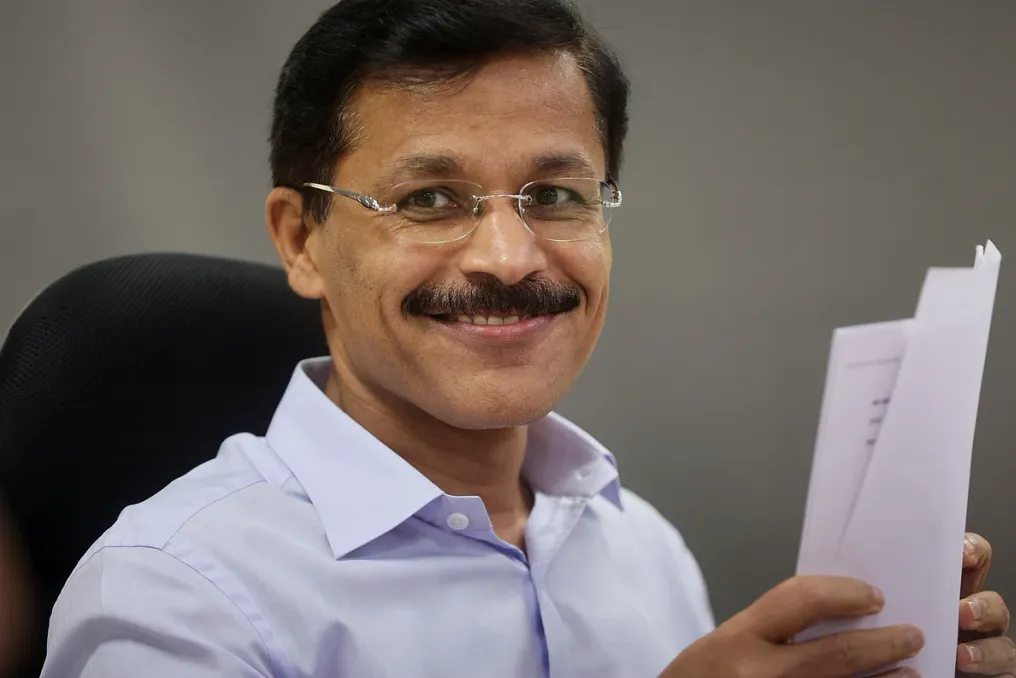
Tukaram Mundhe, an Indian bureaucrat, has launched a large-scale campaign to combat unsanitary conditions and unsafe food products in the country's commercial capital, Mumbai. As the State Commissioner for Food Safety, the 51-year-old Mundhe has conducted unprecedented inspections across various food service establishments, drawing attention from the public nationwide.
In recent weeks, Mundhe oversaw the suspension of operating licenses for four Domino's outlets and one Pizza Hut. Furthermore, since taking office as the head of the Maharashtra Food Safety Department in May, he has conducted over 3000 raids, covering cricket clubs, hotels, and renowned restaurants among others.
When a Mumbai judge accused Mundhe of selective aggression against private establishments and inquired about canteen inspections during court proceedings, his team promptly conducted inspections, closing some that were operating without the necessary licenses.
Mundhe stated in an interview with Reuters about his resolute approach: 'Those who try not to comply with the rules will face what the regulator expects.' He emphasized the seriousness of the situation, noting: 'You are dealing with people's lives.'
Mundhe has gained widespread recognition in India as his actions have addressed deep public dissatisfaction. Despite the active expansion of international chains such as Domino's and McDonald's, local eateries, street stalls, and small restaurants, which have long been sources of hygiene concerns, remain extremely popular.
According to data from the Indian government, food inspectors check over 100,000 samples annually since 2020, discovering that about 20 percent are unsafe, substandard, or lack proper labeling. Nearly 8000 business licenses in the food sector have been revoked in the last three years.
Ankur Bisen, a partner at the consulting firm The Knowledge Company, noted that people have tried for years to normalize this situation by saying it happens in India, but in reality, it is 'accumulated anger.' He added: 'I have never seen anyone like Mundhe. It gives people hope.'
Mundhe, who wears glasses and sports a handlebar mustache, adheres to an unconventional working style. He has appeared in television interviews, asserting that no one would dare bribe him and that he is unafraid of administrative action, despite numerous transfers in his 21-year career as an employee of the highly respected Indian Administrative Service.
Currently, his food safety control team's actions are becoming viral daily: raids lead to detailed public statements and vivid images of the interiors of establishments and grocery warehouses, showing stains on walls, crawling cockroaches and rats, and expired products, shocking many Indians.
In Mumbai, during a Reuters visit last week, 25 street vendors and restaurants expressed heightened fear of Mundhe's raids. One vendor replaced artificial red dye with natural pepper in Chinese dishes, while another began changing frying oil three times a day and requires staff to wear gloves and head coverings.
Mumbai's famous street fast food, 'vada pav'—a spicy potato patty in a bun—has not escaped Mundhe's attention. In June, he banned the use of newspapers as packaging material, which was often used to wrap this delicacy.
Customers are noticing the changes and are eating street food with greater confidence. Supriya Wagle, 14, is happy that her favorite vada pav is now packaged in cleaner paper, calling it 'undeniable relief.'
Following the discovery of violations in some Domino's and Pizza Hut stores, Mundhe's team suspended the operating license of one McDonald's establishment on Friday after finding 'live pest activity (cockroaches)' and 'putrid food.' None of the three companies responded to Reuters' inquiries.
Mundhe's campaign included actions against a British colonial-era cricket club in Mumbai, a 70-year-old freezer store, and a 110-year-old Parsee dairy production facility.
He faces criticism from businesses, which argue they should be given time to adapt, with some appealing to the High Court, accusing his department of excessive rigidity. In one instance, judges fined his department 500,000 rupees ($5,225 USD) for the continued suspension of the establishment, even after it improved its compliance.
Mundhe responded: 'If there are comments from the court, we take them seriously... if there is room for improvement, we improve.'
At an event in New Delhi on Friday, fans took quick selfies with Mundhe and crowded to shake his hand. One fan told him that the Prime Minister of India, Narendra Modi, should give him a national role. However, Mundhe replied to Reuters: 'I don't think I am a celebrity. I am just a Food Safety Commissioner.'
_