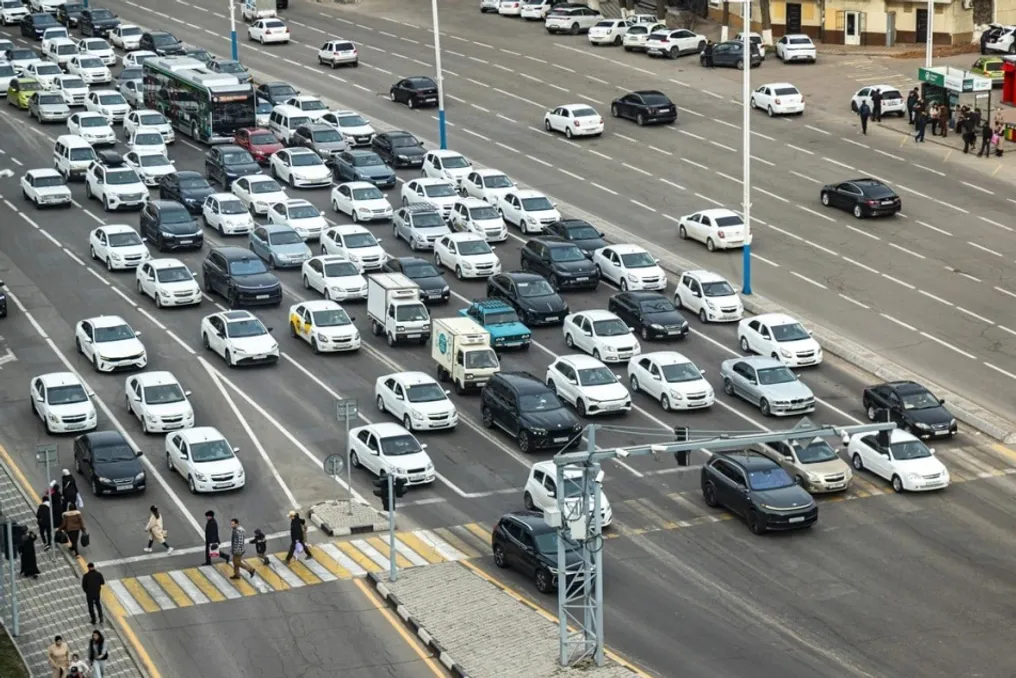
About 5 million personal vehicles registered in Uzbekistan
Read more
Podrobno.uz [uz]
podrobno.uz

About 5 million personal vehicles registered in Uzbekistan

The total number of vehicles in Uzbekistan has shown a noticeable increase. As of July 1, 4,982,516 units of various types of transport were registered to individuals.

Passenger cars form the core of the private fleet, numbering 4,618,719 units, which accounts for 92.7% of the total. Additionally, Uzbek citizens own 343,375 trucks, 7,508 minibusses, 7,128 special vehicles, and 5,786 buses.

Distribution of Transport by Region

The highest concentration of transport was recorded in Tashkent, where 637,706 units are registered. The next regions by quantity are Fergana region with 573,472 units, Samarkand region with 563,072 units, and Tashkent region with 476,148 units.

The minimum registration figures were noted in Syrdarya region (110,122 units), Jizzakh region (145,392 units), and Navoi region (156,745 units).

Comparing current data with figures from April 1, it became known that the number of vehicles owned by the population increased by approximately 79.4 thousand.

Furthermore, it was previously reported that an agreement was reached between 'Uzbekneftegaz' and the Azerbaijani company SOCAR on creating a network of modern gas stations in Uzbekistan.

Similar stories

Fines for riding an bus without a ticket in Uzbekistan could increase tenfold
Read more
sputniknews.uz

Fines for riding an bus without a ticket in Uzbekistan could increase tenfold

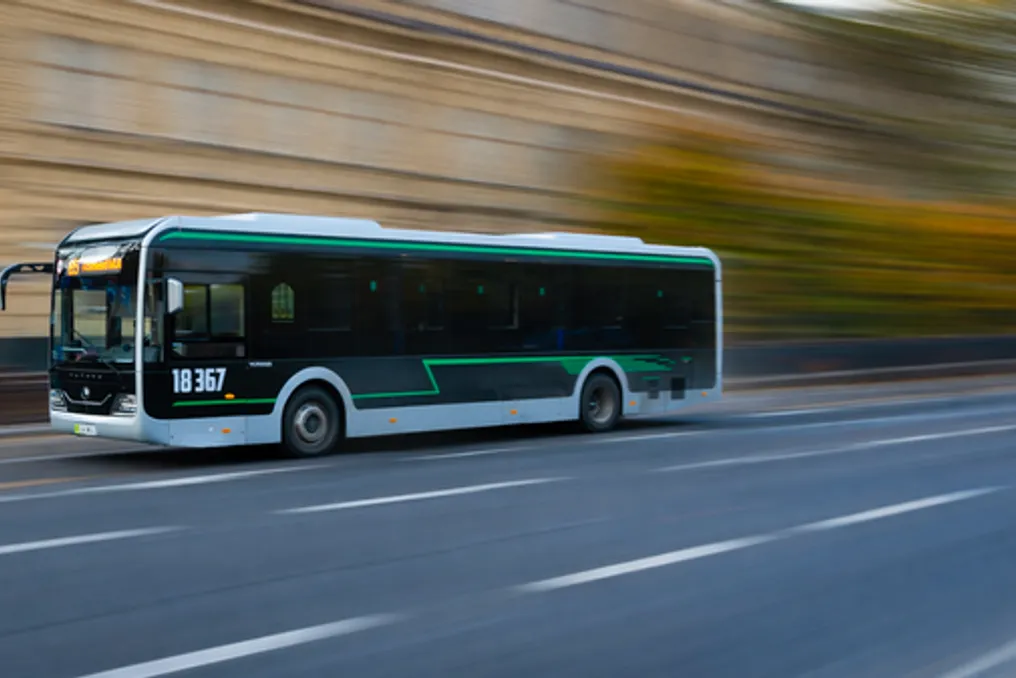
Uzbekistan is considering the possibility of increasing fines for traveling on public transport without payment. Muhammadjon Qahhorov, Director of the Tashkent City Institution for Monitoring and Controlling Passenger Transport, informed the publication 'Akhborot 24' about this proposal.

According to the proposal, if a passenger violates the rules for the first time and does not pay for the ride, they may be fined half of the Budgetary Minimum Wage (BMW), which is 220 thousand UZS. For a repeat offense, the fine amount could reach one BMW, totaling 440 thousand UZS.

Currently, the Code of Administrative Liability stipulates that the fine for riding a city bus is one eleventh part of the BMW. These proposals have already been submitted to the Legislative Chamber.

Furthermore, starting September 1st, stricter fare payment rules will be introduced on all city buses operating under gross contracts. Passengers are obliged to make payment upon exiting the bus; otherwise, they may be registered as passengers traveling without a ticket.

Controllers will determine the fact of the passenger's transport card payment using special tablets. Qahhorov also noted that in July 2026, over 82 thousand passengers who had not paid for their ride were identified, and more than 2 billion UZS in fines were collected from them.

The goal of introducing the new procedure is not only to fully account for revenue from fares but also to determine the flow of passengers at each stop and at specific times. Based on this data, it is planned to optimize the bus fleet and coordinate routes.

New customs rules for goods from foreign marketplaces will be introduced in the EAEU starting January 1, 2027
Read more
sputniknews.uz

New customs rules for goods from foreign marketplaces will be introduced in the EAEU starting January 1, 2027

According to information provided by Elimbek Kanibek uulu, Head of the EAEU Coordination Department of the Ministry of Economy of Kyrgyzstan, updated customs norms for goods imported through foreign marketplaces will be introduced in the Eurasian Economic Union (EAEU) starting January 1, 2027.

The new customs duty rate will be 5% of the product's value, but a minimum fee of 1 euro per kilogram will be established. Furthermore, the duty-free limit for goods intended for personal use will remain in place.

As Kanibek uulu noted, this new procedure will also apply to purchases made on Chinese marketplaces. The new mechanism for regulating external e-commerce is planned to come into effect on January 1, 2027. Goods acquired through electronic trade will be categorized separately and will fall under a unified customs regime.

According to Kanibek uulu, work is currently underway to amend the EAEU agreement regarding the taxation of e-commerce goods. Previously, the creation of a national e-commerce operator in Kyrgyzstan was announced, which will be responsible for processing online purchases and returns.

It is important to note that personal purchases valued up to 200 euros will remain exempt from customs duties, while a new regulation will apply to higher-value goods.

Popular