John F. Kennedy's famous words: 'Ask not what your country can do for you—ask what you can do for your country' remain relevant today. These words speak of citizenship, service, and the belief that significant changes often begin with one person deciding to act.
While South Africa is still reeling from ongoing revelations before the Madlanga Commission, which exposes corruption and greed, the 1860 Heritage Centre on Derby Street, Durban, reflects this spirit—a spirit akin to Kennedy's, which found expression in the work of unassuming Kaveri Reddy.
In early December 2025, while visiting an event at the centre, Kaveri walked through the grounds and noticed what many might have seen but preferred to ignore: an abandoned garden that symbolized decay. Scattered pipes, stagnant water, overgrown vegetation, and a general sense of neglect had stripped the space of the dignity it deserved as a place dedicated to preserving the history of indentured labourers and passengers of South Africa.
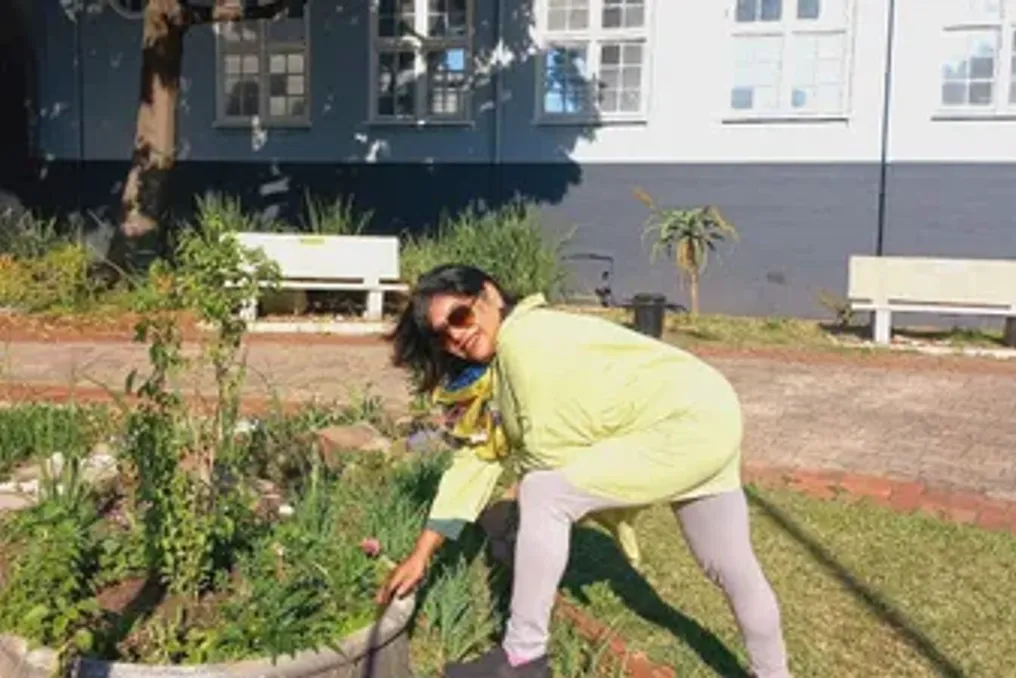
She could have simply walked past, but instead, she decided to be part of the solution. Using her passion for gardening, especially local gardening, Kaveri approached the centre's management and offered her services voluntarily.
Kaveri Reddy plans to create a central feature in the form of a herb garden with moringa trees, marigolds, benches, and a fountain. A walking path will be decorated with the names of the indentured labourers who arrived on the first ship to enter the port of Durban. What started as a simple act of care quickly transformed into a transformative vision.
She envisioned a living heritage that would not only beautify the area but also tell the story of those who arrived on the shores of South Africa starting in 1860. With the support of Nirode Bramdau, a board member of the 1860 Heritage Centre, and growing support from an enthusiastic community, this vision is gradually becoming a reality.
Today, what was abandoned is gaining dignity. The project is being implemented in phases. One section is dedicated to the local flora encountered by early arrivals stepping onto South African soil. Another section recreates the heritage garden, showcasing the plants, herbs, and crops brought by indentured labourers and passengers from India, reflecting the agricultural knowledge, culinary traditions, and cultural practices that continue to shape modern South African society.
However, this project goes far beyond plants; it concerns memory and honour. It aims to restore a sense of self-worth to a place that is a custodian of an important chapter in South African history. Moreover, it is a demonstration of how one person shows courage to change things for the better and works with the earth with their own small hands.
Kaveri Reddy has improved the gardens by clearing the bushes and turning the property into a peaceful and pleasant atmosphere for centre visitors. At the heart of the Heritage Garden will be a circular grove of moringa trees, creating a shaded spot for gatherings, symbolizing resilience and community. The central fountain represents the great ocean voyage of thousands of indentured labourers.
Benches around the fountain will provide a place for contemplation, where visitors can reflect on sacrifice, endurance, and hope. Traditional grinding stones donated by community members will surround this central point, ensuring that everyday objects once used in homes become part of a collective historical installation. Nearby, a mural dedicated to indentured women will be placed to pay tribute to generations of women whose labour, strength, and perseverance laid the foundations of family and cultural life, often remaining unnoticed.
Perhaps the most outstanding aspect of the project is that it is not funded by institutional means or large budgets. It is fueled by volunteering, generosity, and a shared belief that heritage matters. Every planted flower, restored bed, and sown seed represents an act of service.
Kaveri herself perfectly embodies this spirit, saying: 'This garden grows because people care. Every plant put into the ground carries a sense of contribution.'
The public response has been overwhelming. Friends, community members, heritage activists, and visitors have praised both the physical transformation and the vision behind it. They have spoken of her dedication, her 'golden touch,' her passion, and her unwavering commitment to preserving heritage for future generations.
Former Deputy Mayor Logie Naidu perhaps summarized it best, noting that Kaveri did this work 'in her free time and at her own expense,' transforming the area into a calm and welcoming environment for all visitors.
This is the essence of active citizenship. Too often, we wait for governments, organizations, or someone else to solve problems. We ask why spaces decline, why heritage sites struggle, or why communities seem divided. However, real change often begins with an individual willing to step forward and take responsibility.
Kaveri did not wait for permission to care. She cared enough to act. By doing so, she reminded us that preserving our heritage is not just the duty of institutions. It is the duty of all of us. Every generation inherits the responsibility to protect, nurture, and pass on the stories that define us.
Therefore, the developing 1860 Heritage Garden is much more than just a landscaping project. It is a living lesson in public service, heritage preservation, and collective responsibility. It is proof that one person's vision can inspire an entire community to participate in something meaningful.
As marigolds bloom where weeds once grew, and new life replaces desolation, the garden serves as a powerful metaphor for what can happen when people choose action over apathy. Kaveri's work reminds us that heritage is preserved not only by monuments. It is preserved by people. And perhaps that is the greatest lesson of all.