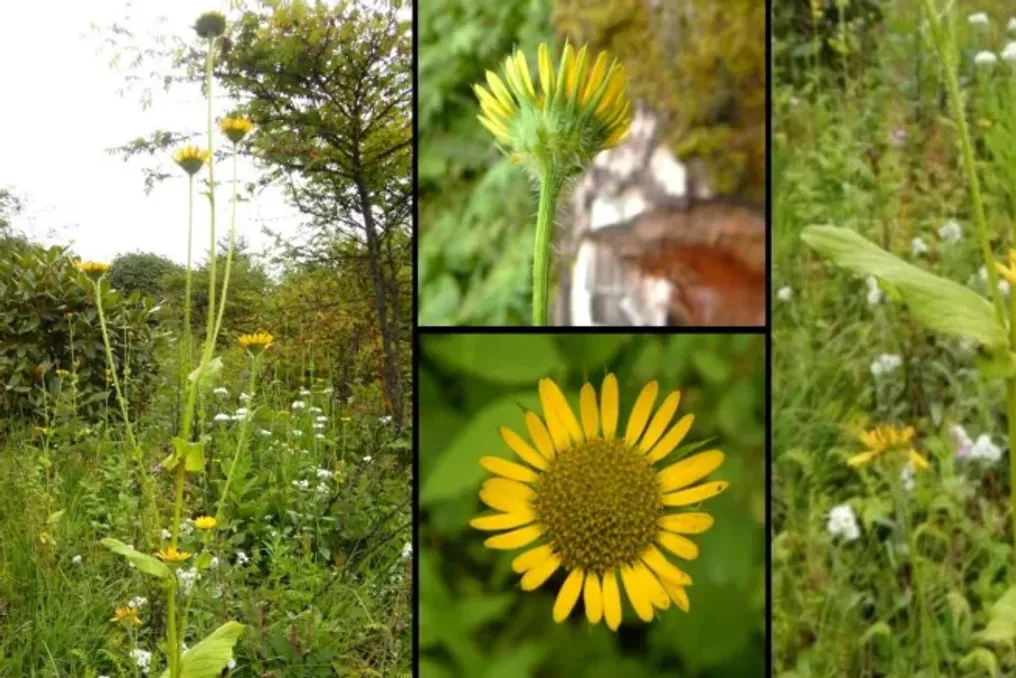
Researchers from the CSIR Institute of Himalayan Bioresource Technology (IHBT) have announced the discovery of a new plant species in the wild highlands of Arunachal Pradesh. This new species, named Doronicum sanctum and belonging to the sunflower family, was found during a comprehensive botanical survey of the Himalayan biodiversity hotspot.
The plant was found at an altitude of approximately 4086 meters above sea level in the Tawang area, along a rugged mountain trail leading to Damteng. This discovery holds particular historical significance as it is the first documented representative of the genus Doronicum in Northeast India, which was previously only found in western Himalayan regions.
The identification of Doronicum sanctum resulted from field sample collection followed by detailed laboratory analysis. Researchers used stereomicroscopy to study the plant's anatomy, comparing samples with existing herbarium records and global botanical literature. Although the plant shares some similarities with species found in Tibet and China, scientists identified several unique physical characteristics that distinguish it as a separate species.
The most notable features of Doronicum sanctum are the pubescent ray cypselae—tiny hairy seeds at the edge of the flower head—and the deciduous fluff, which is a pappus structure that easily sheds. It also differs from its closest Chinese relatives, D. conaense and D. stenoglossum, by having elongated peduncles (apex peduncle) and flat, lanceolate green bracts surrounding the flower.
The plant's name is closely linked to the geography and culture of the discovery region. The specific epithet 'sanctum' derives from the Latin word meaning 'sacred' or 'consecrated.' Researchers chose this name because the type locality of this plant is located near the Chumi Gyatse waterfalls, which hold high spiritual reverence among the local population.
Despite its striking appearance, with yellow flowers and heart-shaped leaves, the species appears to be extremely rare. The research team recorded a small population of only 10–12 individuals in the area, leading to a preliminary conservation assessment of 'Insufficient Data.' This discovery highlights the unexplored biological wealth of the Eastern Himalayas and points to an urgent need for further study and conservation in one of the world's most sensitive ecological zones.