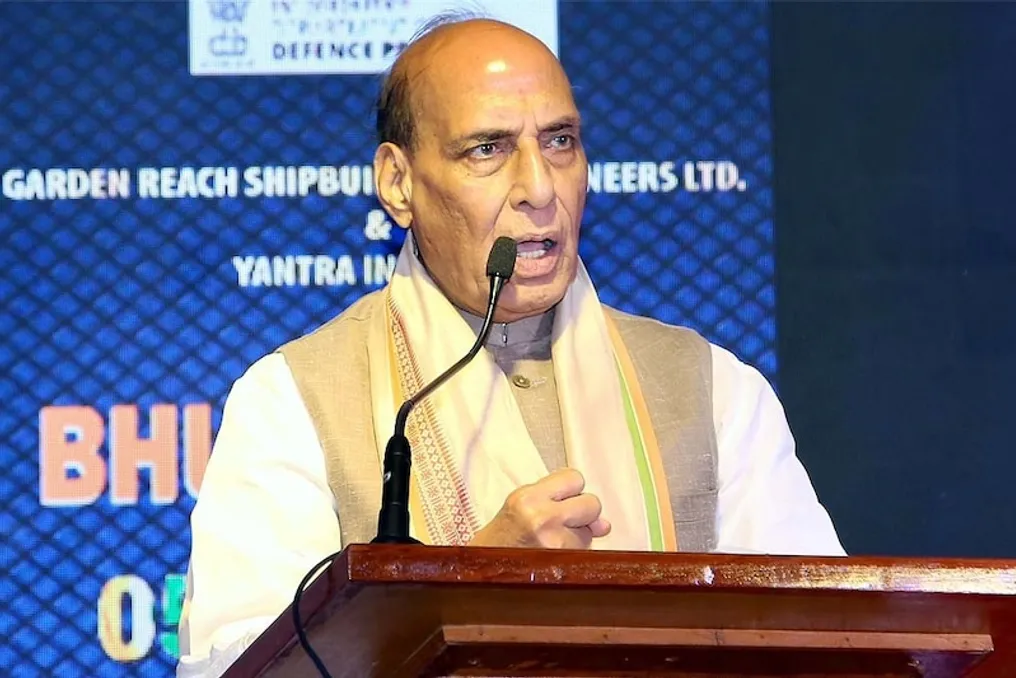
Defence Minister Rajnath Singh stated that India possesses the full capability to become a major global shipbuilding center. He noted that this is a favorable moment for the country as traditional shipbuilding nations are experiencing a certain deficit.
This statement was made following the virtual inauguration of five projects by Garden Reach Shipbuilders & Engineers (GRSE) and Yantra India Limited. The total value of these projects is estimated at approximately 350 billion rupees. Chief Minister of West Bengal, Subhendu Adhikari, was also present.
There is a growing demand for warships, tankers, and commercial vessels worldwide. However, traditional shipbuilding powers such as the USA, UK, France, and Netherlands are gradually reducing their production capacities. The main reasons cited for this are high labor costs and the lack of modernization of old shipyards.
Rajnath Singh emphasized that India can capitalize on this situation due to its vast workforce, presence of steel plants, and readiness to adopt new technologies. Special emphasis was placed on three areas: design, construction, and maintenance, repair, and overhaul (MRO). Thanks to the abundance of engineering and IT specialists, the country can become a global center for ship design.
The five inaugurated projects include three facilities of GRSE and two facilities of Yantra India. GRSE has signed an agreement to lease two small shipyards near the Shyama Prasad Mukherjee port in Kolkata and 32 hectares of land by the river in Raichak. Raichak will be developed as a shipbuilding hub with investments exceeding 250 billion rupees. Military ships of 200 meters length are planned to be built here, enabling GRSE to participate in next-generation frigate tenders.
Furthermore, two projects worth over 750 billion rupees will be implemented at the Yantra India metallurgical plant in Ishpore. These initiatives will strengthen domestic metallurgy and defense production. The projects will increase GRSE's capabilities, revitalize the industrial ecosystem of West Bengal, create jobs, and support the SME sector.
Mentioning Operation Sindur, Rajnath Singh noted that the world witnessed the strength of Indian defense systems. He assured that the initiative to meet defense needs solely through domestic resources will continue. These projects will serve to strengthen the 'Make in India' and 'Make for the World' policies.
Speaking about the development of West Bengal, he noted that reports of factory closures have been replaced by the start of new projects. Subhendu Adhikari, in turn, blamed previous governments for insufficient work in developing the state in coordination with the central government. The current administration's achievement was also highlighted—the transfer of 1100 hectares of land to the Border Security Force for constructing a fence on the border with Bangladesh.
Rajnath Singh's statement is viewed not merely as a formal speech but as part of India's industrial and defense strategy. Although countries like China dominate the global shipbuilding market, some traditional manufacturers are retreating due to geopolitical factors and labor costs.
India possesses a young population, engineering talent, and government support; however, serious challenges remain: the need to rapidly adopt modern technologies, attract more private capital, timely project completion, and adherence to international quality standards. Industrial revival in states like West Bengal is a positive step, given the region's historical industrial significance. If facilities like Raichak are ready on time and integrated with SMEs, it could bring significant benefits to employment and related industries. Overall, this is a good opportunity for India to enhance defense self-reliance and increase exports, provided strong policy and effective execution are maintained.