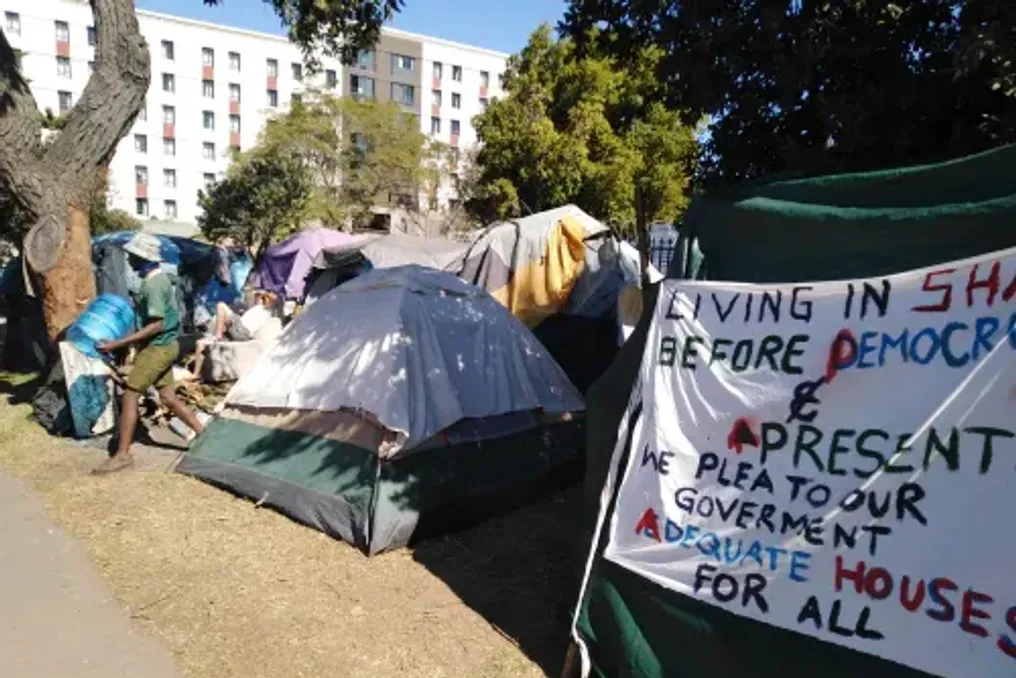
The proposed temporary housing construction in Gugulethu has met with strong resistance from residents and some politicians who fear that the City of Cape Town might create another long-term temporary settlement similar to Blouberg.
The dispute centers on plans to provide temporary housing for residents of the informal settlement of Singabalafa in Observatory, while simultaneously creating housing opportunities for residents of the Masowabe Temporary Resettlement Zone and the wider Gugulethu community.
Thetha Community Organization, led by Nombeko Leputing, strongly urged residents to oppose this proposal, arguing that Gugulethu is already facing serious housing challenges. The organization noted that local communities are struggling with substandard housing, overcrowding, hostels, and people waiting for homes for years.
The organization questioned the rationale for relocating residents from Observatory to Cape Flats instead of building housing within or closer to the city center. Furthermore, it demanded a 'fair and adequate housing plan' for Gugulethu and surrounding communities, warning of decisions that could further marginalize historically disadvantaged groups.
Public comments on this proposal close on September 14. The GOOD party warned that temporary resettlement zones in Cape Town have repeatedly become permanent settlements.
GOOD stated that there is 'enough evidence' because after being established by the DA-led government, these 'resettlement zones' or 'transitional housing' areas turn out to be neither temporary nor transitional. The party cited examples such as Blouberg, Welverivier, Masowabe, and Piquet Street in Salt River. GOOD emphasized that Masowabe residents have lived in the temporary resettlement zone for 14 years.
The party reported meeting recently with leaders of the Singabalafa community, who expressed understanding of the Masowabe residents' problems, as these families are still fighting for permanent housing. GOOD stated: 'Masowabe is another Blouberg.'
The Singabalafa community itself was at the center of a long-running housing and eviction dispute. The group, whose name means 'we belong here', previously occupied former Arcadia House in Observatory before moving to city-owned land along the Main Road after being evicted from the building. Their occupation led to a series of court cases regarding eviction and alternative housing.
The City began the eviction process and had previously offered emergency housing in Delft South, but the community opposed relocation far from workplaces, schools, and social networks. The site in Gugulethu then became an alternative option.
A member of the Mayor's committee on human settlement, Carl Pofaim, stated that the City designated the Gugulethu Temporary Resettlement Zone as a proposal for temporary housing for occupants. However, he stressed that the project would also benefit existing Gugulethu residents. Pofaim noted that the project's goal, besides offering temporary housing to illegal occupants, would also provide housing opportunities for the Masowabe Temporary Resettlement Zone and the wider Gugulethu community so they could utilize alternative building technology structures.
He reported that all necessary legal procedures still need to be completed. Pofaim also dismissed concerns that relocated people could bypass the housing queue. He stated that 'the City must prevent and mitigate the risk of queue jumping.' He added that 'illegal occupants cannot objectively or fairly have more rights to subsidized housing than those registered in the database according to the registration year.'
He clarified that the Gugulethu community would be the first to benefit from the alternative building technology component, followed by relevant evicted persons according to established housing distribution processes. Nevertheless, the GOOD party accused the City of concentrating increasingly dense housing in historically disadvantaged areas that are already struggling with overcrowding, infrastructure strain, and violent crime. The party also questioned why more well-located public land is not being used for affordable housing closer to the city center.
Pofaim responded that suitable city land for accommodating occupants is limited. He added that 'the City's proposal is based on its limited resources.' He concluded that illegal occupation of municipal and private land creates an additional burden on housing provision, land availability, and municipal resources. For Thetha Community Organization and the residents opposing the proposal, the central issue remains whether the development will lead to permanent housing or leave Gugulethu with yet another supposedly temporary settlement for many years.