Police Detain Star English Cricketer Brynden Cars Near Nightclub in Derby
Read more
Aaj Tak
www.aajtak.in

Police Detain Star English Cricketer Brynden Cars Near Nightclub in Derby

Star fast bowler from England and Sunrisers Hyderabad (SRH), Brynden Cars, found himself at the center of a scandal. Police detained Cars near a nightclub in Derby ahead of the second Test match against Pakistan, scheduled to take place at Lord's on August 27th.

After video footage of the incident appeared on social media, the England and Wales Cricket Board (ECB) launched an investigation. Although Cars was not arrested, he soon returned to the team hotel.

The incident occurred late Saturday evening. At the time, Cars was not on official England duty but was playing for Derby in the County Championship. The viral video shows Cars surrounded by four police officers who had handcuffs on them. His Derby teammates, Matthew Potts, tried to speak with him, and Ben Stokes was also present at the scene.

According to a report by Telegraph Sport, the conflict arose after someone spilled a drink on Brynden Cars, leading to a verbal altercation between the cricketer and that person. The police were not called regarding this, but officers were already near the club. Subsequently, the police intervened and temporarily detained Cars, although he was not formally arrested. At present, all details of the incident and the reason for the police using handcuffs remain unclear.

Brynden Cars is on the ECB's central contract list, meaning the incident falls under the board's jurisdiction, even though it happened outside of international duties. An ECB representative stated: 'We are aware of the alleged incident that took place in Derby last night and are currently investigating. We will provide further information when possible.' There is also a possibility of referring the case to the cricket regulator. It will only be clear after the investigation concludes whether Cars will face disciplinary action.

Prior to this incident, Brynden Cars participated in a County Championship match for Derby against Derbyshire. Derby secured a convincing victory on the third day. Ben Stokes took five wickets, conceding only 17 runs in the second innings, and the Derbyshire team was bowled out for 84 runs. Cars himself earned two wickets in this match. After the victory, some team members went out to celebrate in Derby, and it was during this event that the incident near the nightclub occurred.

Brynden Cars has faced disciplinary sanctions previously. In 2024, the cricket regulator suspended his activities for three months. The investigation revealed that early in his career, between 2017 and 2019, he placed bets on cricket totaling 303, which was a breach of rules. Following this, Cars returned and became a permanent part of the England squad. Additionally, during the Caribbean tour in 2023, disciplinary action was taken against him for off-field conduct.
Similar stories

Don Bradman set world record by scoring 974 runs in the 1930 Ashes series
Read more
www.aajtak.in

Don Bradman set world record by scoring 974 runs in the 1930 Ashes series

August 22, 1930, entered cricket history as the day Australia defeated England and won the Ashes series. In the match held at 'The Oval' stadium, Australia achieved an impressive victory, securing a 2-1 lead in the Ashes series.

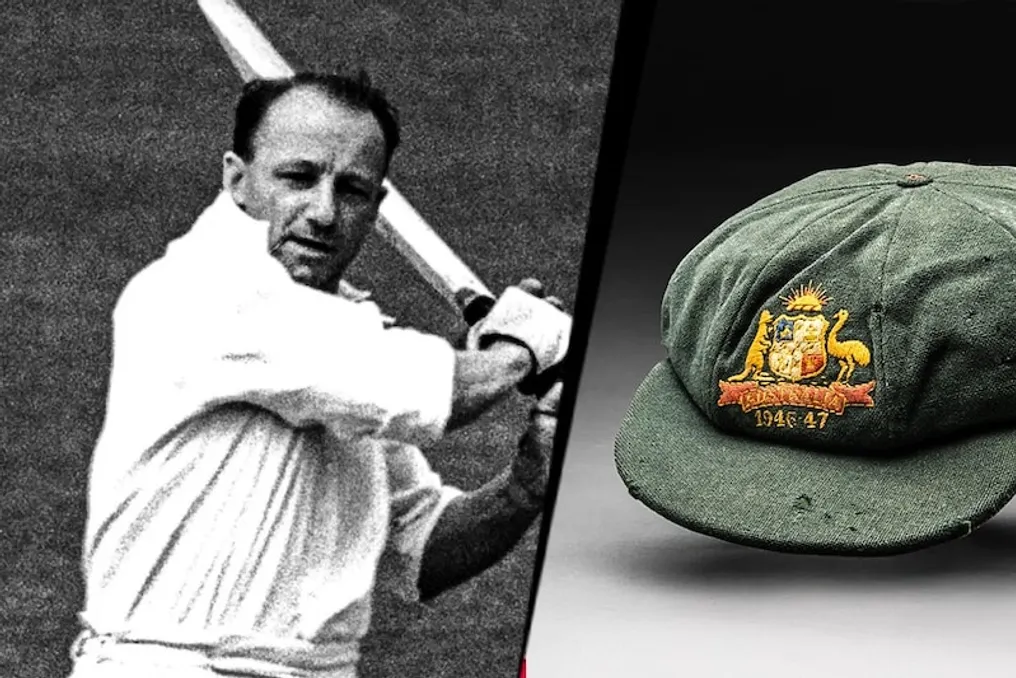
The main hero of this victory was the great cricketer Sir Don Bradman. He scored an impressive 232 runs in the first match. It is worth noting that in that era, scoring 232 runs was considered almost commonplace for Bradman.

Throughout the series, Bradman demonstrated incredible attacking potential that is still remembered. He scored 131 runs in the first Test, 254 in the second, 334 in the third, and 232 at 'The Oval'.

In this series, Don Bradman scored a total of 974 runs, which is the world record for the number of runs scored by one player in one Test series. Furthermore, in this series, Bradman achieved 4 centuries, playing 7 innings.

This historic performance by Bradman played a key role in Australia's return to the Ashes and also served as another example of his greatness in Test cricket. The 1930 Ashes series remains one of the most memorable in cricket history.

International statistical data for the great Australian batsman Sir Don Bradman is also presented, whose career in international cricket (1928-1948) was limited only to Test matches.

Young spinner Manav Sutar secures early wicket against Sri Lanka's star batsman during India vs Sri Lanka match
Read more
www.aajtak.in

Young spinner Manav Sutar secures early wicket against Sri Lanka's star batsman during India vs Sri Lanka match

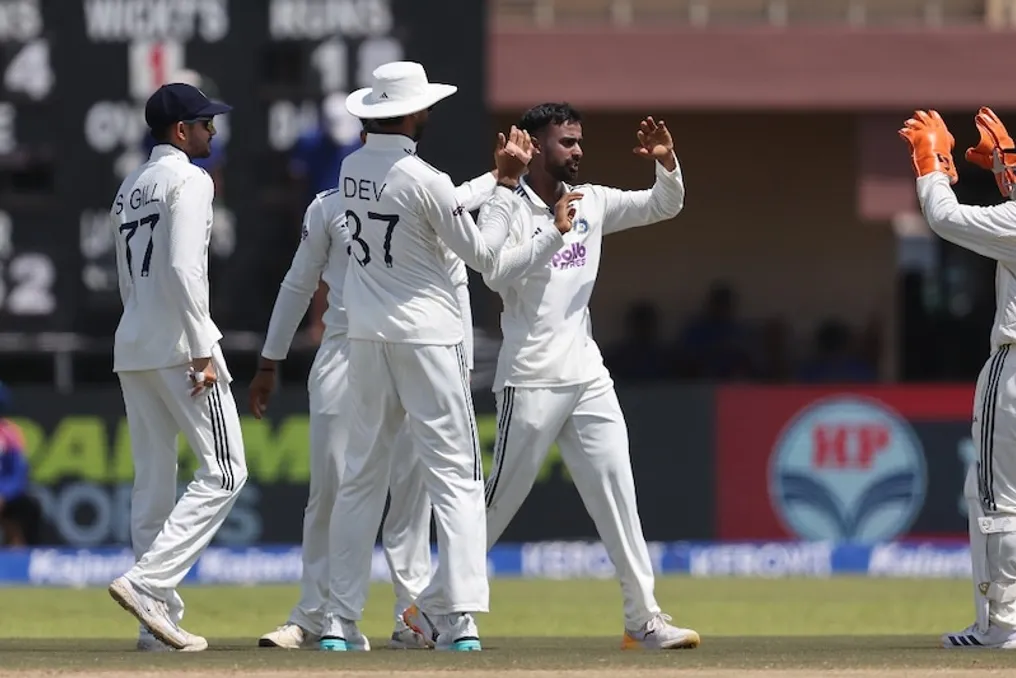
On the third day of the Test match between India and Sri Lanka in Galle, young spinner Manav Sutar made a strong impression with his performance. The 24-year-old Sutar began his Test career on foreign soil by taking a wicket. He dismissed the experienced Sri Lankan batsman Dinesh Chandimal on the very first ball.

Following this, he also bowled Lahiru Udara, the opening batsman, which seriously shook the top order of the Sri Lankan lineup. Sri Lanka's first innings started poorly. Mohammed Siraj dismissed Madushka, who scored zero runs, in the first over. Then, captain Shubman Gill handed the ball to left-arm spinner Sutar in the eighth over, and he justified the captain's trust on his very first delivery.

Manav Sutar's delivery showed excellent turn on the Galle pitch. Former captain Chandimal could not handle the ball, and it hit the edge of the bat into the gloves of bowler Rishabh Pant. Chandimal was dismissed after 16 balls, scoring only 4 runs. After this wicket, the hosts' score stood at 27/2.

After dismissing Dinesh Chandimal, Sutar dealt another serious blow to Sri Lanka. He trapped Lahiru Udara, who was trying to consolidate at the crease, in a slot for Yashasvi Jaiswal. Udara scored 27 runs, hitting 6 fours off 44 balls. On the other side, Kuldeep Yadav also complicated matters for Sri Lanka. Kuldeep dismissed Chaminda Mendis off 14 runs, and captain Shubman Gill caught a brilliant ball, executing a dive in the slips.

As a result, after India scored 462 runs, the Sri Lankan team lost four wickets, having scored only 59 runs in 16.1 overs.

Previously, on the third day, India had advanced its innings from 460/9, but only two runs were added to the score. Asita Fernando dismissed Prasad Krishna, and India's innings concluded at 462 runs. For India, Devdutt Padikkal played a brilliant innings, scoring 167 runs off 230 balls, while KL Rahul contributed 82 runs, and Dhruv Jurel scored 51 runs. From Sri Lanka's side, Prabath Jayasuriya scored four runs, and debutant Kesara Nuwanta took three wickets.

It seems that the Galle pitch helped the spinners on the third day, and Manav Sutar immediately capitalized on this advantage. By taking a wicket on the very first ball of his first overseas Test, and then securing a second wicket in the same session, the young spinner played a key role in putting Sri Lanka in a defensive position.

Record score of 952 runs after the 1997 match: Is it possible to break the 1000-run barrier in Test cricket?
Read more
www.aajtak.in

Record score of 952 runs after the 1997 match: Is it possible to break the 1000-run barrier in Test cricket?

In the T20 era, where the style of play has changed and batsmen have learned to score faster thanks to the popularity of powerful shots, and fitness and technique levels have risen, the world of cricket has gone through an entire era from 1997 to 2026. However, one record remains unchanged—the fortress of 952 runs.

Twenty-nine years ago, the Sri Lankan team set an incredible record in Test cricket that no other team has managed to surpass to this day. The match, which began on August 2, 1997, at the R. Premadasa Stadium in Colombo between Sri Lanka and India, witnessed India first scoring 537/8 after declaring their innings. Captain Sachin Tendulkar scored 143 runs, Mohammad Azharuddin scored 126, and Navjot Singh Sidhu scored 111. At that time, a score over 500 was considered a very strong performance.

But what happened after the completion of the Indian innings turned this match into one of the most outstanding events in cricket history. Sri Lanka came out onto the field and started scoring runs, and instead of wickets falling, records were broken. The score climbed: 300, 400, 500, 600... The game of the Sri Lankan batsmen did not stop. In the end, after 271 overs, the score reached 952 for the loss of 6 wickets, after which the innings was declared. In fact, on the fifth day, Sri Lanka played not for victory, but to create a historical moment. During the transition from 587/1 on the fourth day to 952/6 on the fifth day, the team added 365 runs.

To date, this score remains the highest team total in Test cricket. Following it are 903/7 by England, 849 by England, and 823/7 against Pakistan in 2024. Thus, almost three decades later, 952 remains the leader.

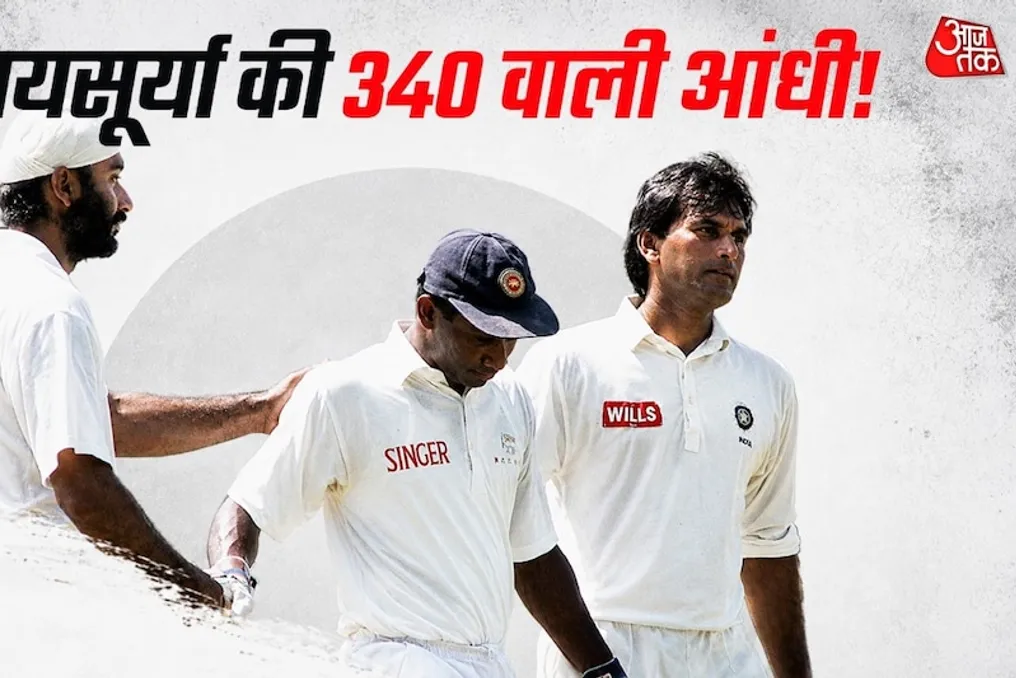
However, the story of 952 runs is not just a tale of a large score; it contains statistical data that is still difficult to accept. Sanath Jayasuriya personally scored 340 runs, playing 578 balls, with his innings including 36 fours and two sixes. Roshan Mahanama scored 225 runs off 561 balls. These two added 576 runs for the second wicket. This partnership of 576 runs is still a world record for the second wicket. Moreover, it is the largest partnership in any wicket in Test cricket history, only surpassed by one match: in 2006, Kumar Sangakkara and Mahela Jayawardene added 624 runs for the third wicket against South Africa in Colombo (SSC).

Thus, the partnership of Jayasuriya and Mahanama for 576 runs is the second-largest partnership in Test cricket history. Imagine: one batsman scores 340 runs, another reaches 225, and together they score 576 runs. After this, Arvind D Silva added 126 runs. The total score of the Sri Lankan team was 952 runs. Sri Lanka created a Test cricket record that has stood for 29 years. This is where the true mystery of 952 begins.

Is it possible to reach 1000 runs in modern cricket? The question becomes even more interesting in the current era. T20 cricket has made the game more aggressive, allowing batsmen to send the ball over the boundary more easily. The rate of scoring has also increased in many situations compared to 1997.

Nevertheless, reaching 1000 runs in Test cricket is not just a matter of speed. It requires a very flat pitch where batsmen will not find it difficult to score runs. Furthermore, at least two or three large and prolonged partnerships are necessary for the score to continuously increase. Most importantly, the opposing bowlers must not manage to dismiss the players, and the batsmen must not be under pressure.

However, the captain faces the biggest challenge: what is the priority—the record or the result. To approach 900–1000 runs, the innings needs to be stretched, whereas for winning a Test match, it is important to declare the innings at the right time to give the opponent enough time.

Sri Lanka in 1997 demonstrated that there is no limit to offensive possibilities in Test cricket, achieving 952 runs. After 952/6 by Sri Lanka, no team has managed to reach even 904 runs. In 2024, England tried to approach this record, scoring 823/7 against Pakistan. Thus, although batsmen in the T20 era have become faster, the 1000-run wall in Test cricket still stands. The mountain of 952 runs that Sri Lanka built 29 years ago remains the Everest of Test cricket. The only question remaining is: will any team ever be able to overcome this Everest and reach 1000?

Popular