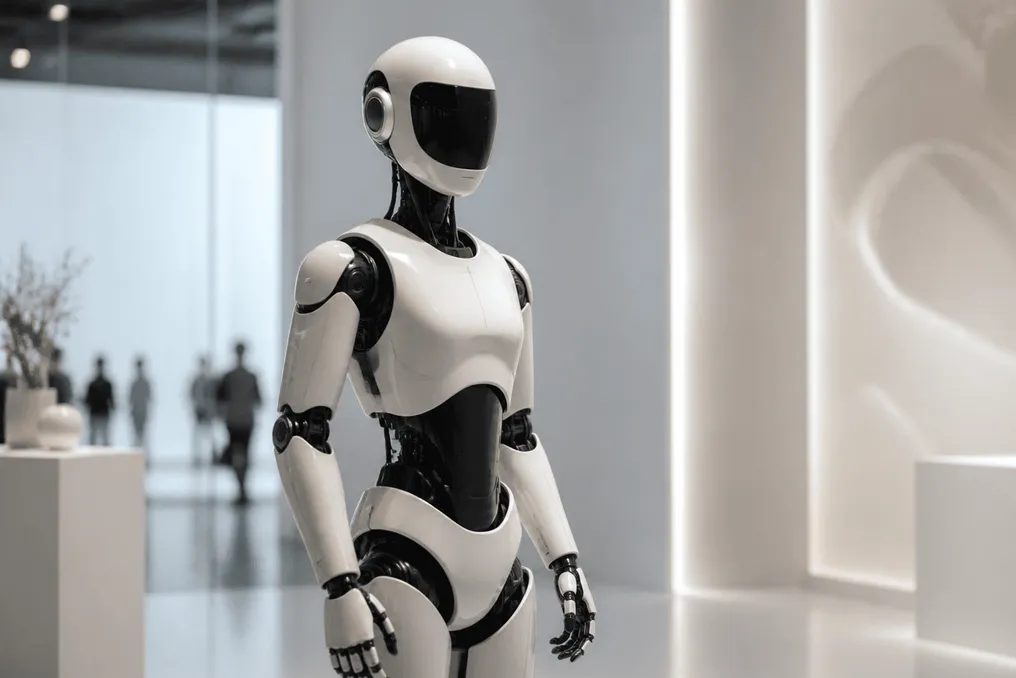
China's humanoid robotics sector demonstrated significant progress this week. During the XI World Robot Conference (WRC) in Beijing, where some halls were packed, humanoid athletes participated in parallel robotics games, running 100 meters in 9.32 seconds. This result was faster than Usain Bolt's human world record of 9.58 seconds. The combination of increased public attention and impressive results has once again raised the question of how far embodied intelligence and humanoid robots have advanced.
At the exhibition, leaders and engineers noted that the progress is driven by hardware. Unitree attracted a large number of visitors with its boxing demonstrations and large-screen broadcasts at its booth, improving the public's understanding of humanoid capabilities. The entire industry is observing an accelerated decline in cost curves, exceeding initial forecasts. One CEO told local media that the cost of core components, such as ball screws, has dropped by about ten times in three years, and the price of reducers has halved, contributing to the lowering cost of entire machines as supply chains expand.
Thanks to new capital, several companies involved in embodied intelligence are also going public. The most obvious evidence of development is speed. Honor's 'Lightning' running robot showed a time of 2 minutes and 30 seconds in a 1500-meter race. Its ability to regain balance in just two steps after colliding with a soft wall demonstrated the close integration of high-frequency sensors, edge computing, and torque-switching motors.
Entertainment is also becoming a source of revenue. AgiBot entered into a strategic agreement with Chimelong Group to create a humanoid-style park, adding tourism to the growing list of commercial applications. Despite this, the sector has not yet reached full maturity. Performance improvements remain difficult to visually perceive, and the ultimate limit to equipment development is cost. However, thanks to the drop in component prices and the noticeable increase in movement speed, China's humanoid robot ecosystem has transformed from a novelty into a tangible and investment-attractive stage.