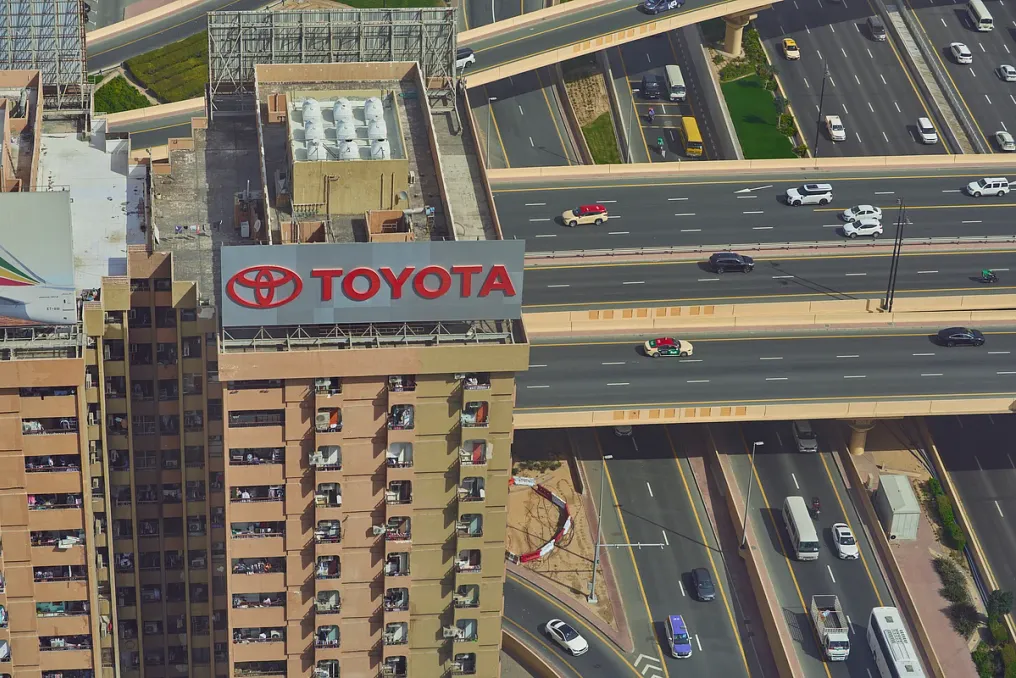
Iconic Toyota building sign in Dubai will be preserved, and the company plans another surprise
Read more
Khaleej Times
www.khaleejtimes.com

Iconic Toyota building sign in Dubai will be preserved, and the company plans another surprise

Although the lifespan of the Toyota building in Dubai is coming to an end, the famous sign that gave this landmark its popular name will be preserved. According to Khaleej Times, Al-Futtaim Toyota intends to continue the legacy of the sign after the demolition of the Nasser Rashid Lutah building on Sheikh Zayed Road.

This statement came as tenants continue to vacate the 15-story building, which is being prepared for demolition. A representative from the building's real estate department previously told Khaleej Times that the exact demolition dates have not been set.

The building, constructed in 1974, is officially named the Nasser Rashid Lutah Building. However, for Dubai residents for many generations, the official name was overshadowed by the giant Toyota sign on the roof.

Jax Brent, Managing Director of Al-Futtaim Toyota, shared mixed feelings with Khaleej Times regarding the news about the Nasser Rashid Lutah building on Sheikh Zayed Road, known as the 'Toyota building.' He noted that while he is sad about the end of this landmark's history, he is also pleased about what will happen at this prestigious city center location.

Brent emphasized that in a rapidly developing city like Dubai, they always understood that the history of the iconic 'Toyota building' could not last forever. Nevertheless, he assured that this is not the end for the famous Toyota sign, as they have plans to continue this legacy, which will be revealed in the coming months.

He also advised residents to closely watch this landmark before it disappears from the Dubai cityscape. 'And we have one more surprise before we say goodbye to the 'Toyota building'—you'll find out when you see it!'

Al-Futtaim Toyota has not specified whether the sign itself will be moved, relocated elsewhere, or preserved as a heritage object, stating that these plans still require confirmation.

The red and white Toyota sign was first installed in 1981, when Sheikh Zayed Road looked completely different from the modern skyscraper-lined highway. At that time, the building was one of the few high-rises in the area, which was then associated with the Defence ring road. As Dubai grew around it, the Toyota sign became such a familiar visual landmark that the building itself began to be called the 'Toyota building.'

This nickname persisted even though the building did not house a Toyota showroom or service center. Brent noted that since the Toyota sign was installed on the Nasser Rashid Lutah building in 1981, it served as a landmark for both residents and visitors of Dubai, becoming an integral part of Dubai's visual heritage and its dynamic development story, as well as a constant symbol of Toyota's deep connection with the UAE.

The sign remained on the building for nearly four decades before being removed in 2018 after the advertising contract expired. However, the disappearance of the logo had little impact on the retention of the name 'Toyota building.' When Al-Futtaim Toyota reinstated the billboard in 2022, it stated that this was in response to popular demand.

Brent said they were very pleased to bring back the iconic billboard in 2022, as Dubai residents associate much nostalgia and warm memories with it, and the restoration of the sign was a tribute to the city and its people. At the time, residents described the return of the familiar sign as a return of a piece of old Dubai. The building continued to stand while towers grew around it along Sheikh Zayed Road, making it one of the few surviving visual testaments to an earlier period of the city's development.

Al-Futtaim Toyota reported that conversations with long-time Dubai residents revealed another function the building once served: helping people navigate the city. Brent mentioned that they recently spoke with long-term Dubai residents and discovered that old landmarks like the Toyota building are a link to their own past.

Today, surrounded by some of the city's most recognizable modern attractions, including the Burj Khalifa, Emirates Towers, and Museum of the Future, the 'Toyota building' remained a constant element for many who have lived in Dubai for decades. Brent explained that before the widespread use of digital maps and geolocation tags, landmarks like the Toyota building actually served as addresses. In the days before GPS and Google Maps, people used attractions like the World Trade Centre and the Toyota building as navigation tools to find their way or give directions to others.

Al-Futtaim Toyota intends to maintain this connection even as the building prepares to disappear. The company expressed pride in having been such a prominent element of Dubai's iconic skyline for almost half a century and thanked the Nasser Rashid Lutah group for the opportunity provided.
Similar stories

Review of Iconic UAE Landmarks That Have Changed or Disappeared During the Country's Development
Read more
www.khaleejtimes.com

Review of Iconic UAE Landmarks That Have Changed or Disappeared During the Country's Development

The United Arab Emirates has always been characterized by dynamism, transforming through new roads and tunnels, as well as the emergence of new landmarks that displace older visual references. For many residents, observing changes in familiar neighborhoods, shopping centers, or buildings evokes a sense of nostalgia; however, these changes are an integral part of the UAE's history, testifying to continuous growth, adaptation, and future orientation.

Let's examine some of the changes that have occurred or are occurring in the country:

In Abu Dhabi, the iconic Mina Plaza in Mina Zayed was demolished. Four high-rise towers were brought down via controlled implosion in just ten seconds, freeing up the area for new tourism projects along the waterfront. Photographs show the state of the site before and during the demolition in November 2020.

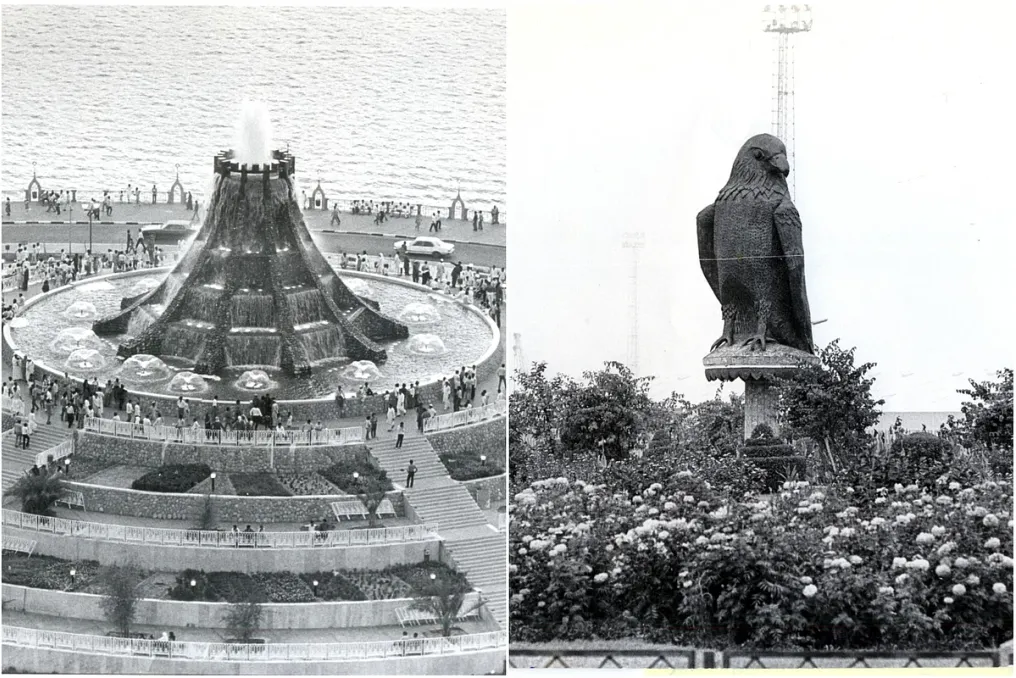
Another iconic Abu Dhabi landmark, Volcano Fountain, was also torn down. It received this name because the cult object on the Abu Dhabi Corniche glowed like flowing lava. Its demolition in 2004 allowed for the creation of a more open and modern promenade area on the waterfront.

When the Metropolitan Hotel opened in 1979, the surrounding landscape looked different, as much of Al Quoz was open desert. For decades, it served as one of Dubai's early hotels before being demolished in 2012 to make way for the large Al Habtoor City complex.

Long before Dubai's roads became an extensive network, the Flame Monument Roundabout offered arriving visitors a memorable first impression of the city. The monument's history began in 1969 with the construction of the original Flame Monument, whose flame was lit by the late Sheikh Rashid bin Saeed Al Maktoum, then Ruler of Dubai.

In 1975, the monument was relocated to a roundabout at the intersection of Sharjah Road and Airport Road as part of major road modernization efforts. For many years, it stood along the route used by travelers arriving through the then-new Dubai Airport. However, as the city grew and traffic volumes increased, the roundabout was eventually removed to create a more modern and efficient road network.

Before the advent of modern multiplexes in Dubai, Strand Cinema was a well-known cinema spot for film lovers in Bur Dubai. Opening in the 1970s, it became a popular gathering place for generations of residents and a cherished memory of the district. The cinema eventually closed around 2004 and was later demolished; its site was taken over by Ansar Gallery in Karama, marking a new chapter in the changing face of old Dubai.

For decades, the Phoenix Roundabout was a familiar sight at the intersection of Al Mina Road, Bank Street, and Al Ghubaiba Road, and its distinctive golden falcon sculpture became a recognizable part of old Dubai. This monument, dating back to the 1970s, was ultimately dismantled due to large-scale redevelopment of the area to accommodate new road infrastructure, including the Al Shindagha Corridor and Infinity Bridge.

For many years, Al Amal Mental Health Hospital was located along Al Wasl Road, with the original complex dating back to the 1980s. As the Jumeirah district of Dubai transformed, the hospital was moved to a purpose-built facility in Al Ruwaiya Third, Al Avir, along the Dubai-Hatta Road. The new modern complex officially opened in December 2016, and the original site was subsequently cleared to create the modern retail and residential area of City Walk.

Another iconic part of the Dubai skyline is under threat of disappearance. The Toyota Building on Sheikh Zayed Road, which was a landmark for generations of residents and drivers, is slated for demolition, although timelines have not yet been announced. Residents are also being evicted from the iconic Toyota Building on Sheikh Zayed Road due to overcrowding concerns caused by illegally subdivided apartments.

Some landmarks have already vanished, while others are simply transforming as the UAE continues to grow. Not every familiar place gives way to something entirely new; some undergo significant transformation to meet the needs of the evolving city.

Sheikh Dr. Sultan bin Mohammed Al Qasimi, a member of the Supreme Council and Ruler of Sharjah, previously announced the construction of a new underground two-lane tunnel connecting Sharjah and Dubai. This project will require the temporary removal of the Al Taawun roundabout monument. However, this monument will not disappear forever—it will be restored to its original location after the tunnel construction is complete.

For many who have watched the development of the UAE over the years, these changes serve as a reminder of how rapidly the country evolves, as familiar places become part of one chapter of memories while the next is being formed.

Dubai Airport Welcomes Arriving Guests with Historic Doors from Al-Shindagha, Al Fahidi, and Deira Districts
Read more
www.khaleejtimes.com

Dubai Airport Welcomes Arriving Guests with Historic Doors from Al-Shindagha, Al Fahidi, and Deira Districts

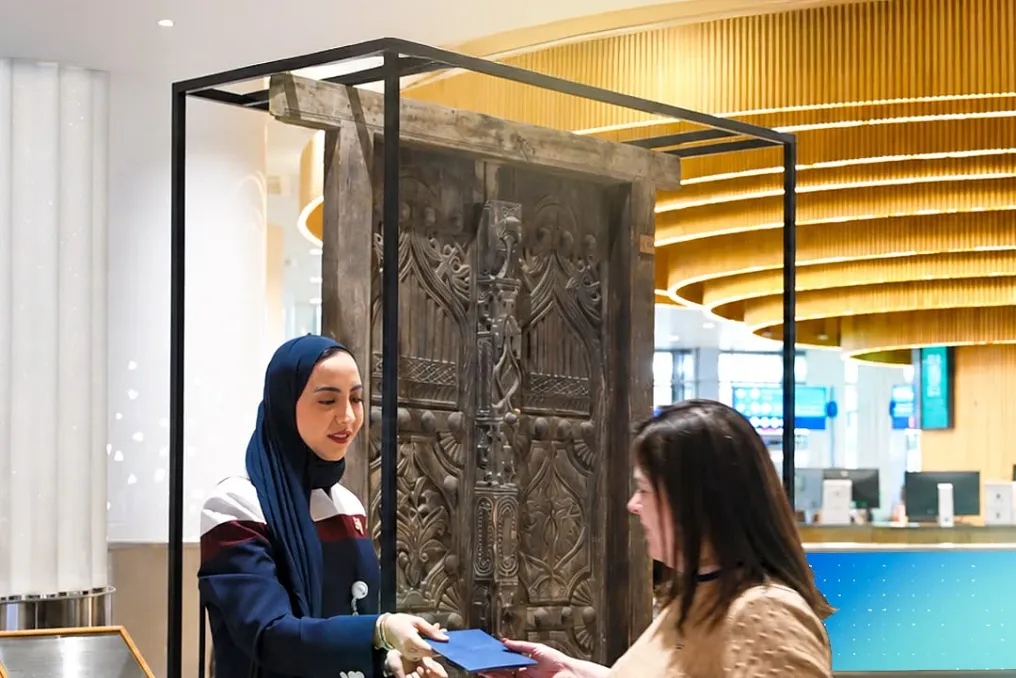
Arriving passengers at Dubai International Airport are now greeted by recreated historic doors inspired by some of Dubai's oldest districts.

The doors, sourced from the Al Shindagha, Al Fahidi, and Deira districts, have been reproduced throughout the airport arrival route as part of a new cultural heritage program. This initiative introduces visitors to Dubai's past before they enter the modern urban landscape.

The 'Dubai Historic Doors' program launched on August 20 and will run until September 7. Its implementation is carried out by the Dubai Municipality in collaboration with Dubai Airports and the General Directorate of Residency and Foreigners Affairs (GDRFA).

One of the central exhibits is a reconstruction of the historic door of Sheikh Saeed House, which is located in the arrivals area of Terminal 3. This experience begins the moment travelers arrive and continues until the passport control area, turning part of the arrival journey into a display of Dubai's architectural history and culture.

Traditional doors previously played an important role in the houses, markets, and neighborhoods of old Dubai. The new exhibits draw inspiration from historical locations such as Al Shindagha, Al Fahidi, and Deira, which continue to preserve some of the emirate's most famous buildings and streets.

The main goal of this concept is to give travelers an early glimpse into Dubai's history and traditions while they pass through one of the city's busiest entry points. The Dubai Municipality also noted that this initiative reflects the traditional Emirati concept of hospitality, where doors served not only as architectural elements but also as symbols of warmth.

Marwan Ahmed Bin Ghaleet, CEO of the Dubai Municipality, emphasized that Dubai's historic architecture remains an integral part of the emirate's identity. He stated: 'In the Emirati heritage, doors are more than just architectural elements. They are enduring symbols of hospitality and warmth.' He added that placing these doors in Dubai International Airport allows the city to showcase its heritage in a modern public space while welcoming people from all over the world.

Officials noted that the airport was chosen because it is one of the first points of contact for millions of visitors upon their arrival in Dubai. Major General Mohammed Ahmed Al Marri, CEO of GDRFA-Dubai, believes that the visitor's first impression of Dubai is formed from the moment of arrival. He noted that entry points like airports can offer more than just quick procedures and services, helping visitors understand the city's identity, history, and culture.

Majed Al Joker, COO of Dubai Airports, reported that this initiative provides travelers with an additional way to discover Dubai while moving through the airport. He stressed: 'DXB is not just a major transport hub, but a gateway to the city, offering arriving passengers their first introduction to Dubai.' Furthermore, the program aims to encourage guests to explore Dubai's historic districts and cultural attractions during their stay.

Popular