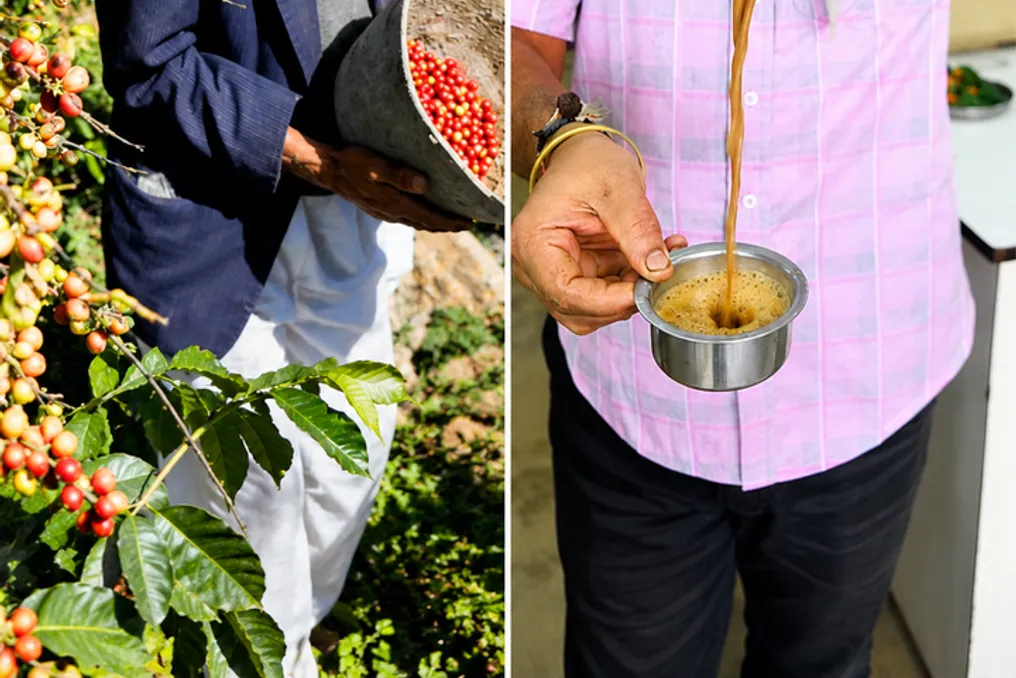
Before coffee became a social media phenomenon, homes in South India had already turned filter coffee into a daily ritual filled with aroma, foam, and slow, cozy mornings.
The history of this drink dates back to the 17th century. According to legend, a Sufi saint secretly brought seven coffee beans from Yemen to the hills of Chikmagalur in Karnataka state.
These beans took root in the mountains and gradually contributed to the spread of coffee cultivation throughout South India. However, the drink itself was not yet the filter coffee known today.
During British rule, coffee was cultivated as a plantation crop. Europeans consumed it black or simply filtered, while South Indian cuisines began developing their own brewing method.
Households started to completely transform coffee preparation, preferring a slower and richer brewing method that suited daily life, the use of milk, and warmth.
The steel filter became a turning point. Hot water slowly dripped through the ground coffee, forming a strong decoction collected at the bottom. This decoction was then mixed with boiled milk and sugar, poured between a glass and a dabara until it became foamy and full-bodied.
Over time, chicory was added to increase the volume of coffee during shortages. Its earthy depth eventually became part of the unique taste of filter coffee. From home settings, the drink spread to coffee shops, darshinis, and railway stations across South India, evolving over generations into a deeply familiar part of local food culture and morning routines.