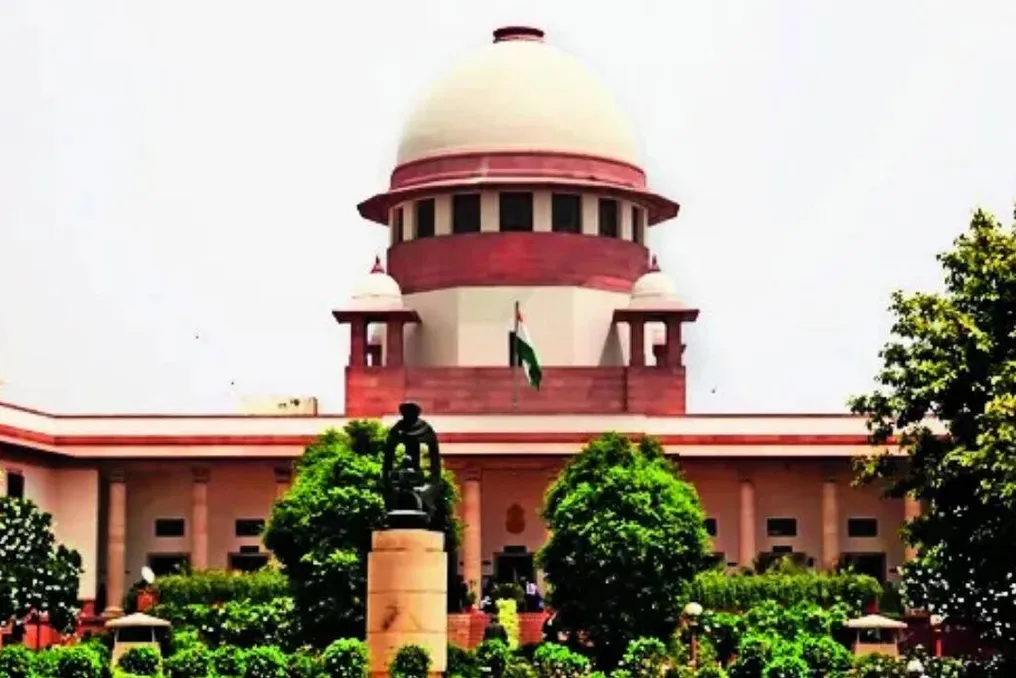
Supreme Court rules that registration in the income register does not determine property ownership
Read more
The times of India
timesofindia.indiatimes.com

Supreme Court rules that registration in the income register does not determine property ownership

The Supreme Court ruled that changes to property data in income registers do not result in the creation or termination of ownership rights. The Court emphasized that the right to ownership in real estate cannot be determined solely based on the income register; other evidence must also be considered.

A bench of judges Sanjay Karol and Augustine George Masih overturned the decision of the High Court of Madhya Pradesh, which had resolved a property ownership dispute based only on an entry in the income register. The Court stated that the right to immovable property cannot be considered voluntarily relinquished merely by making an entry in favor of another person; this must be independently proven by the party relying on it.

The Court noted: 'It is established by law that an entry in the income register neither creates nor terminates title and exists essentially for fiscal purposes. An order of the Tehsildar may regulate the income register, but it cannot act as a transfer or waiver of property rights simply by registering one person's name instead of another, and the civil court retains full jurisdiction to determine the underlying title to which the income register entry pertains.'

It was also pointed out that 'the legislative presumption of correctness attached to an entry in the income register under Section 117 of the Madhya Pradesh Land Revenue Code, 1959, is a rebuttable evidentiary presumption, not a presumption of title, and it must be weighed along with other evidence.'

Furthermore, the Supreme Court concluded that changing property in the income register neither creates nor terminates title nor has any presumptive value; it only allows the person in whose favor the entry was made to pay the corresponding land tax. The Court also ruled that the date of entry in the income register alone cannot be considered the starting point for establishing the statute of limitations.

Similar stories

Minister of Social Justice Atavale stated that reservation is a constitutional right and called for ending the caste system first
Read more
timesofindia.indiatimes.com

Minister of Social Justice Atavale stated that reservation is a constitutional right and called for ending the caste system first

At a recent event in New Delhi, Union Minister for Social Justice and Empowerment Ramdas Atavale stated that the reservation system constitutes a 'constitutional right'. He also termed demands to abolish this system as 'unconstitutional', believing that many needy communities continue to benefit from the existing system.

Atavale emphasized that despite the prohibition of untouchability under Article 17 of the Constitution, caste discrimination and acts of violence against SC communities persist, particularly in rural areas.

Supreme Court rules to release convicted murderer who turned 105 years old
Read more
timesofindia.indiatimes.com

Supreme Court rules to release convicted murderer who turned 105 years old

The Supreme Court decided on the permanent release of Rasik Mandala, who was sentenced to life imprisonment and reached the age of 105. The court ruled that he should spend his remaining time with his family.

Rasik Mandala was born in 1920, at the beginning of the Congress's non-cooperation movement against the British. On Friday, he was granted freedom as a life prisoner at the age of 105 after the Supreme Court ordered the centenarian to spend his final days with his relatives.

He was convicted in 1994 for a murder committed in 1988. On Friday, the collegial panel first asked: 'Is he alive? Why should he not be permanently released? Why should he be on temporary parole?'

Previously, the Supreme Court rejected his appeal in 2019.

Popular