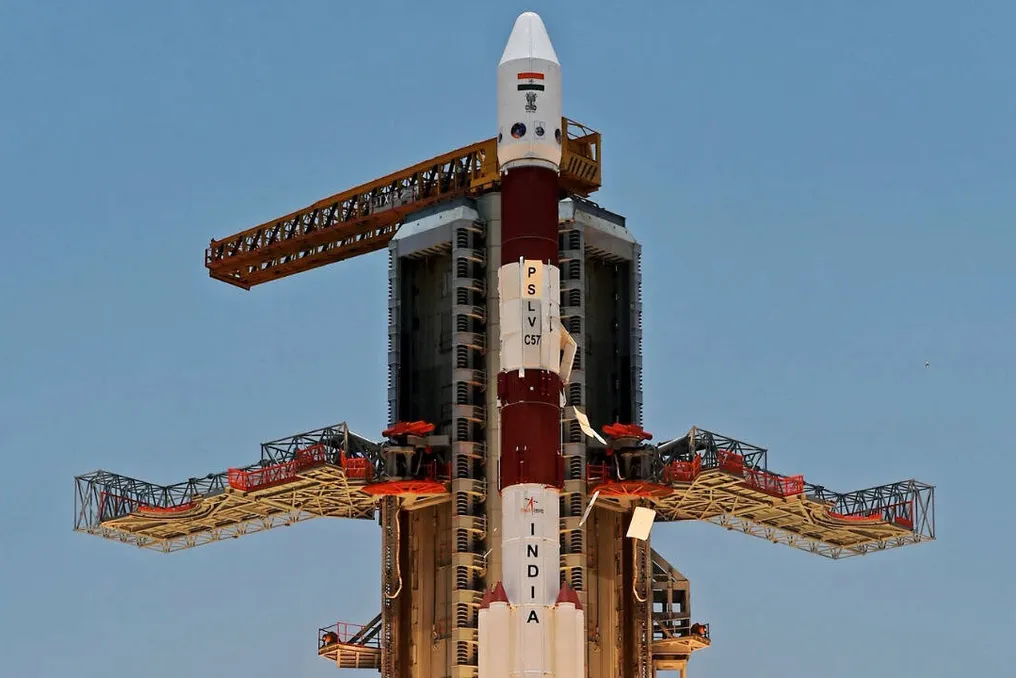
According to a study conducted by the University of Cambridge in 2026, the cost of launching satellites per kilogram in India exceeds that of the United States by four times and is the highest in the world. However, a high-ranking official from the Space Department told the publication TOI that this study did not account for subsidies provided by India to reduce transportation, logistics, and space maneuvering costs.
In the peer-reviewed article published in the journal Economics Letters by Elsevier, economists Alessio Terzi from the University of Cambridge and Francesco Nicoli from the Polytechnic University of Turin presented a new dataset. This dataset covers over 6740 rocket launches between 1960 and 2025. The standardized dataset includes 16 geographical locations, representing all major space powers: the USA, Russia, China, India, Europe, and Japan. It contains over 330 different rocket configurations and 4405 launches.
According to the article, by the end of 2025, the cost of placing a satellite into orbit from India was $13,302 (12.7 lakh rupees) per kilogram using domestically available rockets, which is more than four times the figure in the US, where the cost is $3,225 (3.1 lakh rupees). The study identified the USA as the market with the lowest cost among all studied. According to the same study, India is more expensive than the European Union, Russia, China, and Japan.
Following India in cost was Europe's rocket, whose price reaches $9,897 (9.5 lakh rupees) per kilogram.
Nevertheless, a source in the Space Department told TOI that the study did not take into account the various benefits provided by the commercial division of ISRO, NSIL. The Indian space agency provides 'satellite customers with a 30% subsidy on launch costs.' Furthermore, the source noted that Indian clients save money on logistics and transportation when launching from Sriharikota. It was also pointed out that foreign launch facilities usually send all satellites from one facility to the same orbit, which increases the launch cost because satellites 'attached to the main payload' must be moved to their respective orbits.
Moreover, the Department of Space (DoS) and IN-SPACe have implemented these financial incentives through two parallel mechanisms: the Launch Services Price Support Scheme (LSPS) and the Price Support Scheme. Both programs are designed to significantly lower entry barriers for non-governmental entities in India. IN-SPACe also provides financial support ranging from 30% to 100% for satellite launches and related space infrastructure under its LSPS program worth 800 crore rupees: up to 50% support when using ISRO and Department of Space launch vehicles; a 30% subsidy on launch costs (limited to $3,000 per kg) for small satellites weighing up to 500 kg; and full funding of 100% (limited to $13,000 per kg for up to four missions) for payloads weighing up to 120 kg.
The Cambridge study also predicts that the costs of putting cargo into space will drop sharply in the coming years. It is projected that the cost to reach orbit will be cut by more than half by the end of the decade, and by 2040, it will fall by approximately 93%. The study suggests that the cost of sending one kilogram of payload to low Earth orbit, which averaged $3,868 last year, will decrease by more than 58% to $1,569 by 2030 and could reach only $273 per kilogram by 2040.