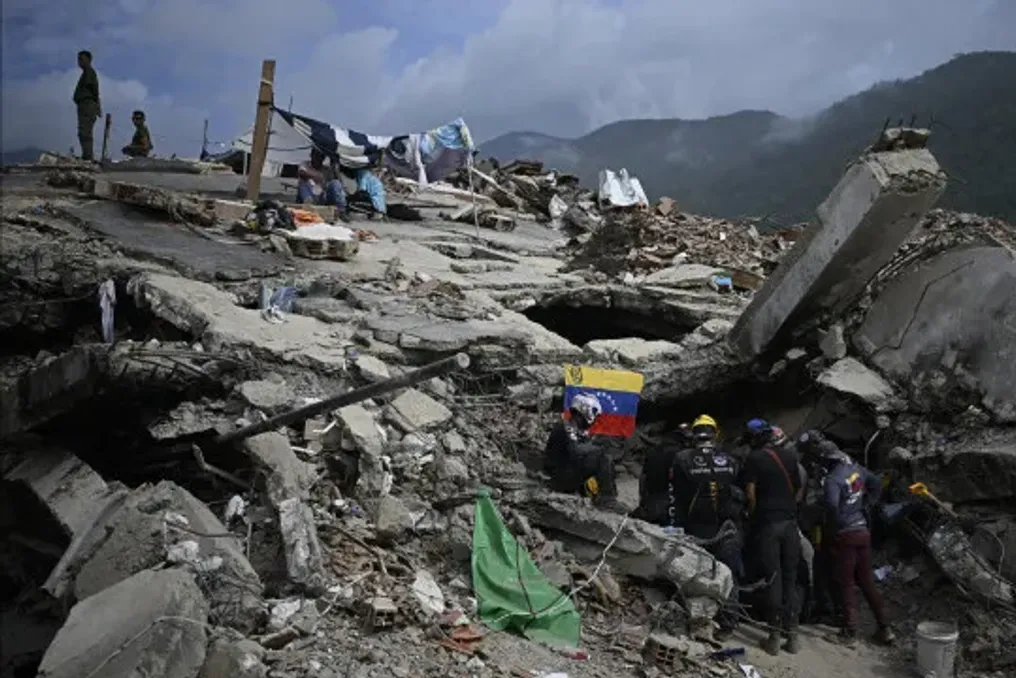
The UN's interim resident coordinator in Venezuela requested support from Portugal and the Portuguese people, emphasizing the importance of assistance with livelihoods. He mentioned that companies could help by employing people who lost their jobs or homes, and that organizations in the social and educational sectors could offer support to those who have lost everything.
Álvaro Rodríguez, who also serves as the UN humanitarian coordinator, stated that the organization's activity in the country has increased significantly, especially after the two earthquakes on June 24th.
Rodríguez detailed that the UN's work has two main fronts. The first focuses on medium and long-term issues, aiming to guide the government, the private sector, and communities toward sustainable development goals, as established by the United Nations as an essential cooperation framework.
The second aspect is humanitarian, which has gained significant momentum in recent weeks, concentrating on meeting all needs resulting from the tremors, such as food, medical assistance, shelter, education, sanitation, and access to clean water.
The coordinator emphasized that these two areas of collaboration with the government and Venezuelan citizens represent the majority of the UN's focus in the territory.
Warning that the common perception after the seismic events is one of gradual improvement, Álvaro Rodríguez stressed the urgency of continuing to help people. He observed that those affected by the double earthquakes, who lost family members or suffer from mental disorders, and whose children could not attend school, face difficulties for long periods, and the UN's goal is to reintegrate them into daily life.
Furthermore, he advocated for reconstruction done in a superior manner. The idea would not be merely to return to the state prior to the earthquake, which included precarious housing, but rather to build better to ensure survival under good conditions should another seismic event occur.
Rodríguez shared his experience visiting the Turkey earthquake on February 6, 2023, where 50 thousand people died, which gave him a clear notion of finding destroyed buildings and people still searching for relatives. He described the difficulty of witnessing such a scenario and imagining that these people would have to start life over after so much suffering.
The UN coordinator added that although images broadcast on television help illustrate the catastrophe to the outside world, they do not capture the human dimension of the tragedy. He stated that by speaking with many people, especially in refugee camps, it is perceived that what they experienced and what they are experiencing will remain in their memories forever, citing the trauma of those left alone or who lost their entire family.
Álvaro Rodríguez expressed concern about the possibility that the disaster in Venezuela might stop being internationally reported, even if it remains present in people's daily lives. He stressed that despite the constant change in the world and other tragedies, the work will continue in the country, as the public and business sectors, workers, the UN, donors, and embassies will never forget what happened.
Regarding funding, he admitted that it is always challenging to obtain all the necessary resources for a systemic response to a catastrophe. In the case of Venezuela, he highlighted the great contribution of the government and the people of the United States, which offers a good chance to meet reconstruction goals in the next six months. In addition to supporting the victims of the earthquakes, the US also contributes to humanitarian programs in other regions of the country due to problems caused by excessive rainfall, having provided a generous amount of about 200 million dollars.
The double earthquakes of August 24th caused serious damage to infrastructure, injuries, and deaths in seven states of Venezuela: Caracas, Miranda, Aragua, Carabobo, Lara, Yaracuy, and La Guaira, the latter being the most affected. According to the latest official balance, 6,438 people died and 86,358 were treated in hospitals after the earthquakes. Among the deceased, there are at least 138 Portuguese and Lusophone descendants.