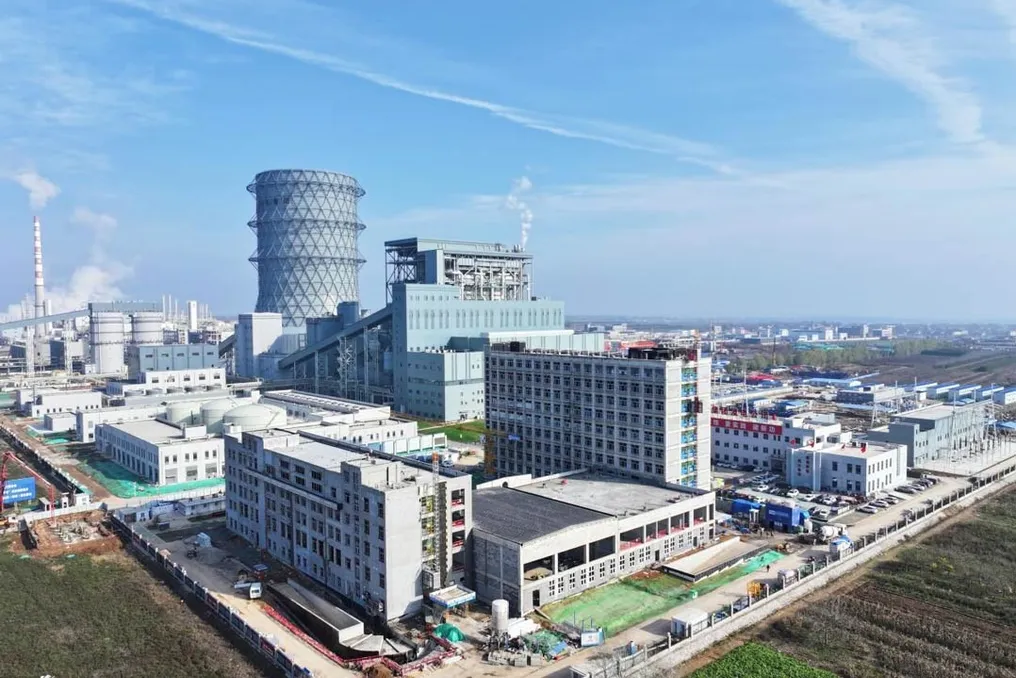
Energy Minister Kossisianto Ramakogopa told the audience at the University of South Africa (Unisa) that South Africa will retain coal in its energy balance as a foundation for cheap assets, and that scientists are working on technologies to solve environmental problems associated with coal.
At the Leadership Business School Graduation Dialogue on August 13, he emphasized that the country would adopt clean coal technologies because it has a responsibility to the environment. He named Eskom and the Council for Geoscience as the project developers. Ramakogopa is confident that science will help resolve existing issues, stating: 'Coal is not going anywhere.'
However, the picture presented by the Council for Scientific and Industrial Research (CSIR) appears more cautious than the minister's one-word promise. In a written response to TechCentral, CSIR described the status of the High Efficiency Low Emission Circulating Fluidized Bed (HELE-CFB) program, which they are implementing jointly with Eskom, the South African National Energy Development Institute (Sanedi), and the Coaltech Research Association.
The partners launched the localization program on April 1, 2026, in support of the Integrated Resource Plan 2025, following a feasibility study conducted during 2025 and 2026. The first phase, which involved feasibility research, ran from July 2025 to June 30, 2026, and was funded by four partners amounting to 7.15 million rand. The second phase, dedicated to detailed design, procurement, construction, and commissioning of a 500 kW test facility, is scheduled from August 2026 to July 31, 2028, contingent upon securing funding for the second phase.
The third, demonstration phase, is expected to conduct testing campaigns until around mid-2029. Currently, only part of the second phase is funded, and Setobane Mangena, CSIR's manager for future production and chemicals, reported a financial gap for the construction and demonstration phases, noting that fundraising efforts are underway. The pilot project is expected to cost 'tens of millions of rand,' but CSIR declined to state an exact figure as the work still needs to go through a tender.
The Facility in Rosheriville
Even after construction, this facility will not be connected to the main power grid. The 500 kW test complex, which will be located at the Eskom site in Rosheriville (where a 1 MW coal characterization test rig is already operational), is intended solely for data collection to inform future decisions, not for commercial operation. The decision to create a commercial facility falls outside the scope of the current program. The goal of this project is to provide information for developing South Africa's clean coal policy after 2030, as stipulated in the IRP 2025.
The Council for Geoscience (CGS), mentioned by Ramakogopa, is not a partner in the HELE-CFB program. It collaborates with Eskom on a pilot project in Leandre in the Mpumalanga province, which investigates the possibility of permanent underground carbon dioxide storage—a different clean coal technology focusing on carbon fate rather than the method of coal combustion.
CSIR clarified that the HELE-CFB program focuses on coal combustion methods to reduce emissions at the source. In contrast, the Council for Geoscience's project in Leandre deals with geological storage. According to CGS's Head of Communications and Stakeholder Relations, Mahlatse Mononela, the Leandre project is developing independently: geological characterization has been completed with 'very promising' results, the engineering design phase is being finalized, and the construction of the pilot well and CO2 injection are expected within the next year. This project is government-funded, with Eskom's participation.
CSIR noted that the test facility design allows for the addition of carbon capture at a later stage. Currently, the primary methods for reducing CO2 emissions are co-firing with biomass and oxy-fuel combustion. The Leandre project aims to address whether the captured carbon can subsequently be stored.
How Combustion Occurs
Mangena explained that circulating fluidized bed combustion is a different method of burning coal. Instead of crushing coal into fine powder and burning it at a temperature of about 1300°C, as the existing Eskom fleet does, the CFB unit burns coal in a circulating bed of hot sand mixed with limestone at temperatures ranging from 800°C to 900°C. Mangena reported that this process allows for capturing over 95% of sulfur dioxide and sharply reduces nitrogen oxide content inside the combustion chamber, avoiding costly downstream scrubbers required by traditional units. The lower combustion temperature prevents the formation of nitrogen oxides and allows the limestone to absorb sulfur.
The unit is also capable of operating at higher steam pressure and temperature. This is not a contradiction because the heat relates to the steam that drives the boiler for turbine operation, not the coal being burned itself; hotter and higher-pressure steam generates more electricity per ton. CFB technology can burn a much wider range of fuels, including biomass and approximately 1.5 billion tons of unused coal waste in South Africa.
A benchmark example is the 660 MW Binchang ultra-supercritical CFB boiler in China, commissioned in 2024, which demonstrates sulfur dioxide, nitrogen oxide, and particulate matter emissions significantly below South African standards with a thermal efficiency of 46.3%. Mangena stressed that these figures are merely 'indicators of the technology's potential based on international experience, not CSIR forecasts for any specific South African facility.' Official figures will only be available after receiving data from the third phase.
Chinese units are tuned for their own coal. The South African facility will use local coal and low-grade waste, which behave differently in the furnace. This is precisely what the pilot project is designed to determine: whether it will work with such fuel and what the cost will be.
What Eskom Expects from the Program
According to Mangena, the program's goal is to gather data to assess the possibility of modernizing existing plants or using CFB to revive part of the operational fleet. This would extend the lifespan of existing assets by utilizing their land plots, grid connections, and water supply, thereby preserving jobs 'in line with a just energy transition approach.'
Regarding costs, CSIR declined to comment. When asked how clean coal compares in cost per kilowatt-hour to new wind, solar, and storage energy, considering Eskom's 2021 parliamentary assessment that meeting minimum emission standards could cost up to 300 billion rand and increase tariffs by 7–10%, Mangena stated that CSIR 'is unable to confirm, deny, or update Eskom's figures.' He specifically noted that this project 'is not a power-generating or revenue-generating facility.'
Despite all this, the minister's statement that coal will remain in the energy balance, or that clean coal has prospects, is not incorrect. The cabinet classified coal as a critical mineral resource, and the IRP 2025 retains it in plans until the next decade, even though wind, solar, and gas hold leading positions. However, the assertion that 'it will work' describes a facility that does not yet exist, has not received full funding, and according to CSIR's own schedule, will not provide locally verified results until 2029.
[ ]