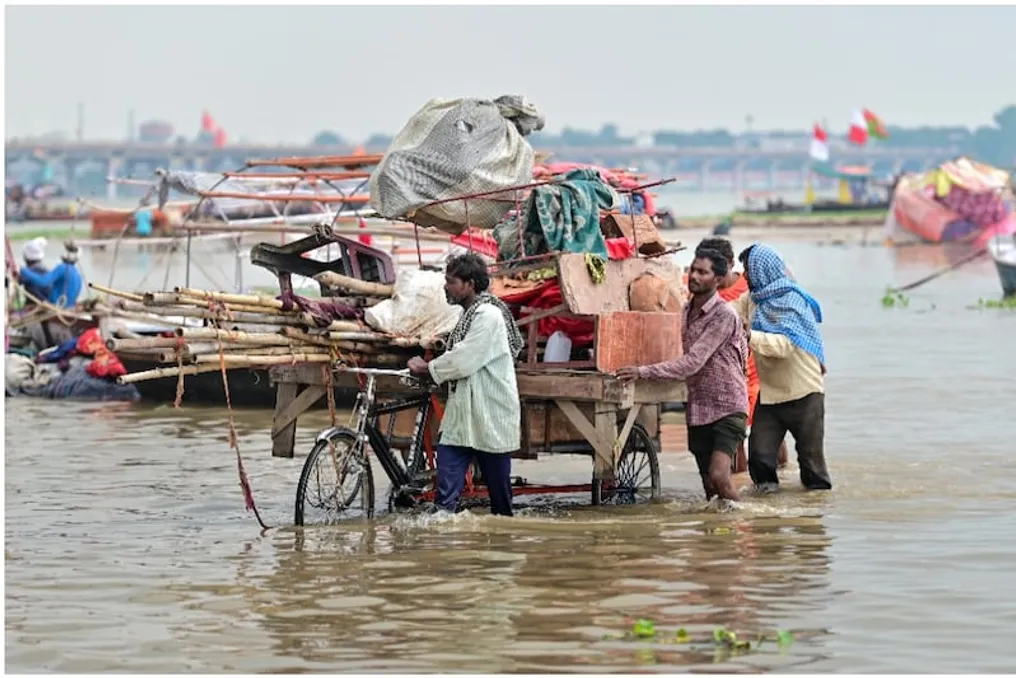
According to the meteorological service, the southwest monsoon of India in late August 2026 is showing a weakened and chaotic pattern. Although unusually heavy rain is expected in Europe, frequent intra-seasonal breaks in India have suppressed rainfall in many regions, including West India.
The hope was placed on the Indian Ocean Dipole (IOD) transitioning to a positive phase, but it remains neutral. Even if it becomes positive in the coming weeks, it may be too late to provide significant support to the monsoon.
September has become a crucial month for rice cultivation. According to forecasts from the Meteorological Department (IMD), rainfall across the country is expected to be below normal over the next two weeks (until September 2).
As of Saturday, India recorded 14% less rainfall, and this figure may increase. The monsoon trough is stuck at the foothills of the Himalayas and is not moving towards Central and South India. This leads to reduced rainfall in central and western areas, while northeastern and hilly regions show relatively better figures.
Models such as ECMWF indicate that the chaotic regime may persist until mid-September. There is a tendency towards rainfall deficit in West and Central India, while the East and Northeast have more favorable prospects. Localized and intermittent rains are possible in Jammu and Kashmir, but widespread downpours are not expected.
The main problem is not so much the weakening of the monsoon as its uneven distribution. Situations similar to flooding in some places and drought in others are occurring simultaneously. The private forecasting agency Skymet has lowered the seasonal forecast to 85% of LPA, predicting a drought probability of 70%. Previously, this figure was 94% in April, and the IMD forecast dropped to 90% in June.
Deficits are observed regionally: 26% in the East and Northeast, 23% on the southern peninsula, 11% in the northwest, and only 3% in Central India.
The primary cause of this weakness is the intensification of El Niño. According to the UK Meteorological Office, this is becoming one of the most powerful El Niños in a century. Sea surface temperatures in the Pacific Ocean may exceed normal by 3 degrees Celsius. El Niño usually weakens the Indian monsoon. Although a positive phase of the IOD could bring partial relief, due to its current neutral state and the likelihood of a late change, the assistance will be limited.
The situation raises serious concerns for rain-dependent crops such as tur, soy, and maize. In regions like Madhya Pradesh, Maharashtra, Karnataka, Rajasthan, and Gujarat, irregular rains are being observed. Experts believe the deficit could exceed 15%, negatively impacting yields and increasing the risk of food inflation.
Global supply chain issues, such as those related to the conflict in Russia and Ukraine, could exacerbate the situation. The government needs to pay special attention to monitoring crops, assessing yields, and managing supply chains. The story of the monsoon is now defined more by 'uneven distribution' than by 'weakening'. Expectations of improvement in September are limited. Farmers, policymakers, and the market should prepare for this unpredictability. While future updates are possible, current signs require caution. Measures such as water resource management, alternative irrigation, and crop insurance can help manage this challenge.