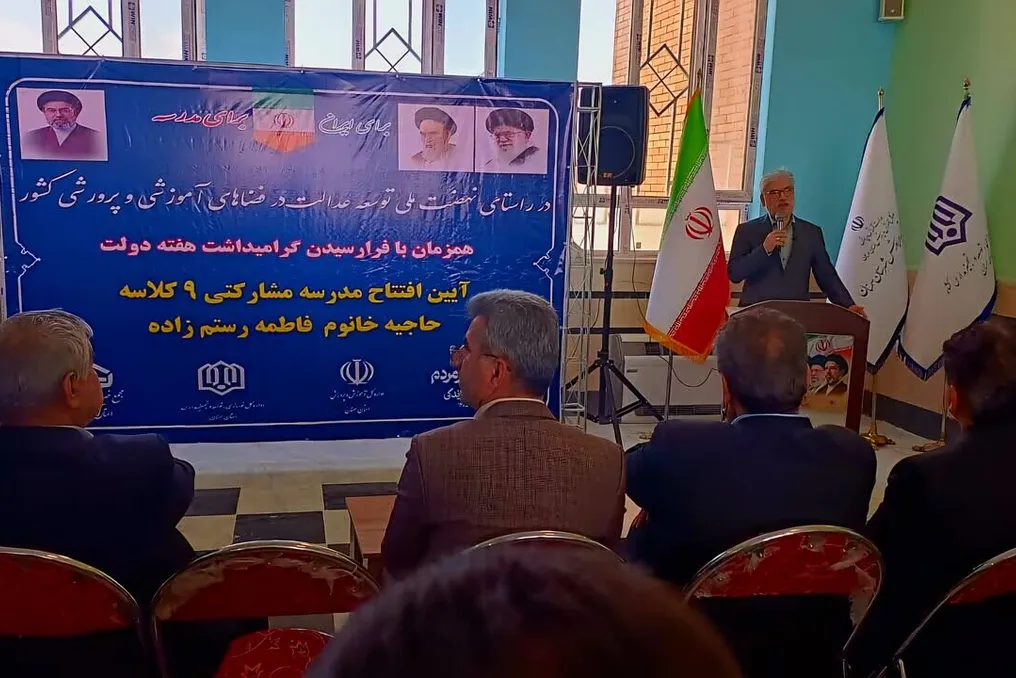
The Minister of Science reported that charitable donations over the past two years have exceeded 200 trillion rials, which amounts to about $100 million, and these funds were directed towards expanding educational infrastructure across the country.
Furthermore, the government has set the goal of modernizing 5,000 classrooms. As quoted by the minister's agency IRNA on Saturday, the development of education and achieving educational equity are among the government's main priorities.
Within these goals, 4,000 new classrooms have been added to the country's educational system over the past two years. The creation of modern schools marks a new chapter in Iran's education system, playing an important role in reducing illiteracy rates and creating conditions for the growth and development of the state, concluded Simai-Sarraf.
The third national event dedicated to future schools took place in February. Eight best ideas were highlighted from over 200 submitted to the event secretariat. Hamidreza Khanmohammadi, director of the Organization for the Development, Reconstruction, and Equipping of Schools, noted that more than 200 ideas were submitted, 174 passed evaluation, and eight were ultimately selected.
Khanmohammadi, citing IRNA, emphasized that a space designed and built as a school should be multifunctional, flexible, and equipped with diverse, future-oriented learning environments. He also stressed that schools should serve as places where students practice life and prepare for spiritual life accompanied by progress.
The third national event highlighted the application of modern technologies, such as artificial intelligence (AI) and blended learning, to develop thinking and creativity skills, as well as to improve interaction between future generations of students. Four key themes of the event included: the future school and the public education system; the future school as a community development center; the future school and the physical environment; and equipment and educational technologies.
The main target audiences of the event were technological and science-oriented companies, engineering consultants, universities and research centers, science parks, professors, students, and researchers in technical, engineering, humanities, arts, and psychological sciences.
Currently, about 16 million students are studying in the country. Under the Seventh National Development Plan (2023–2027), the Ministry of Education plans to train two million students in AI, including primary, secondary, and high school students. Increasing digital literacy will prepare students for the future labor market, help them develop critical thinking and master new technologies, and contribute to the development of creativity and innovation among youth.