
Urfi Javed shares disappointment after being rejected from 'Big Boss 20' and other projects
Read more
Aaj Tak
www.aajtak.in

Urfi Javed shares disappointment after being rejected from 'Big Boss 20' and other projects

Actress and fashionista Urfi Javed revealed that she approached the creators of 'Big Boss 20' with the desire to participate in the reality show, but she was rejected after just one meeting. In a video posted on Instagram, she also shared other disappointments she has faced in her career over the past year.

Urfi stated that she decided to contact the creators of 'Big Boss 20' when she couldn't find an opportunity to participate in another reality show, as she aimed to be part of such a project, considering 'Big Boss' a suitable option.

She said: 'I thought I would be in Big Boss because I wanted to do a reality show. So, when I contacted the Big Boss creators, and our meeting took place, they rejected my candidacy.'

She voiced this information in the context of how social media often creates the impression that everyone is constantly succeeding. Urfi emphasized that she wants to talk not only about career successes but also about her failures over the past year.

Urfi noted that after being rejected from 'Lock Up', she was also turned down by 'Big Boss'. Previously, she had received an offer for the show 'Lock Up: Truth or Punishment', but could not take the chance due to a date conflict with another project.

She explained that she accepted the offer for 'Lock Up', but its dates coincided with the schedule of another show for which she had already signed a contract. When 'Lock Up' started, representatives of the other show informed her that their project had already moved forward, to which her reaction was an exclamation: 'What nonsense is this?'

Furthermore, Urfi mentioned that she was also rejected from participating in 'Khatron Ke Khiladi 15'. She had anticipated participating in this show, but the creators declined her. Also, someone else took her spot in 'Playground'; she had previously been a mentor in that project. Additionally, Season 2 of the show 'Follow Kar Lo Yaar' was cancelled by Prime Video a month before its release.

She further recounted working on a Netflix project that was cancelled after filming one episode. Urfi accused Netflix of deciding that the show was too bad and terminating it after the first episode was shot.

Urfi also touched upon the decrease in advertising collaborations. Previously, she used to sign about five or six deals with brands per month, but now this number has dropped to two. Concluding her story, she stated that this year has been a year of rejections for her. The last time Urfi was seen as a host in 'Splitsvilla 16' was alongside Naya Sharma, Karan Kundr, and Sani Leon.
Similar stories

Tiny Sasanian Bird Motif Discovered in Southern Iran
Read more
www.tehrantimes.com

Tiny Sasanian Bird Motif Discovered in Southern Iran

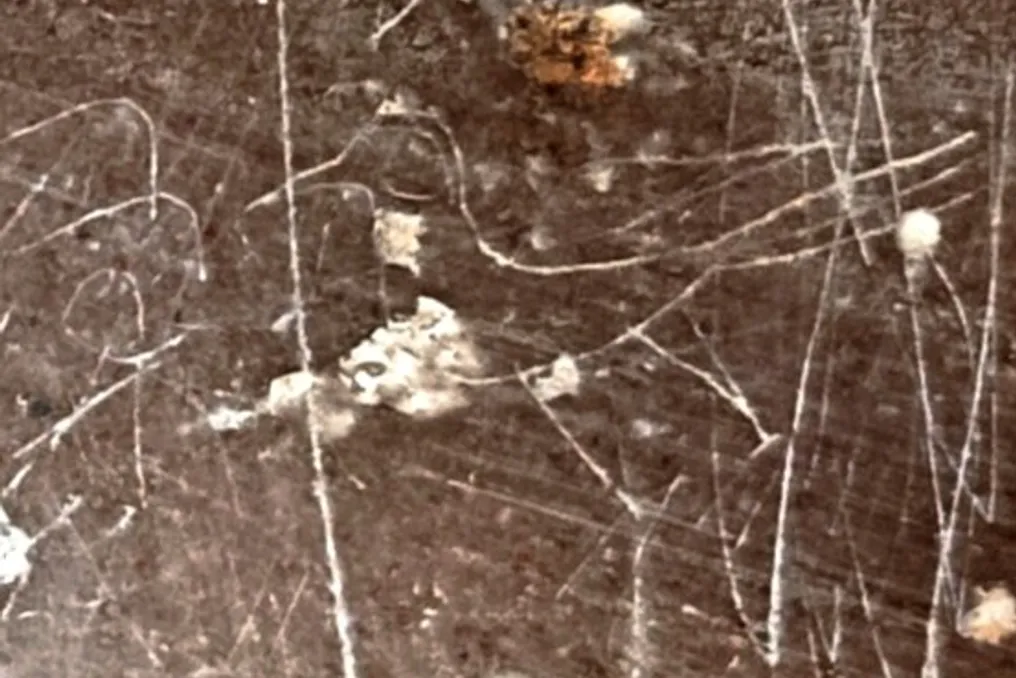
Archaeologist Abolhasan Atabaki reported a discovery that he describes as the smallest known bird motif from the Sasanian period. This motif, measuring only 3 by 2 centimeters, is engraved on stones in the Marvdasht plain in Fars province, southern Iran.

The small image was executed using punching or engraving techniques and is located next to an inscription in Middle Persian (Pahlavi) dating to the late Sasanian period. According to Atabaki, the bird is likely connected to the ideas expressed in the inscription, particularly the concept of the salvation of the soul.

Atabaki noted that in ancient Iranian culture, birds were often associated with auspiciousness, the delivery of messages, the ascent of the soul, and the connection between the earthly and celestial worlds. He added that this visual tradition did not disappear after the fall of the Sasanian Empire but continued with changes into the Islamic period, reaching its peak in Persian miniature painting.

Birds perched on branches became a recurring element in the art of various schools of Persian miniature, especially during the Ilkhanid, Timurid, and Safavid eras. Atabaki emphasized that such birds served not merely as decorative elements but also contributed to the poetic and spiritual atmosphere of the paintings.

Historian Najme Ebrahimi suggested that this motif could also be interpreted in connection with death and beliefs about the soul. She explained that in Iranian traditions, death was viewed not as the end of existence but as the transition of the soul from the material world to the spiritual one. Thus, the bird, positioned between earth and sky, may serve as a metaphor for the soul's transition and the connection between earthly and afterlife existence.

Ebrahimi reported that studying the engraving showed that the bird was depicted very linearly, using narrow and shallow grooves cut into the stone. The artist apparently defined the small image mainly by its contours using a pointed instrument.

The nearby Pahlavi inscription, which contains references to salvation and the fate of the soul, provides a basis for a possible symbolic interpretation of the bird. Ebrahimi added that in Iranian religious and epic traditions, birds often carried meanings beyond their natural existence and were sometimes considered intermediaries between the material and spiritual worlds or bearers of divine messages.

The location of the engraving and the inscription enhances their significance. The Marvdasht plain remained an important political and religious landscape of Iran from the first millennium BCE through the Sasanian period. The proximity of this area to major archaeological sites such as Persepolis, Naqsh-e Rostam, and Naqsh-e Rajab indicates that the region continued to be part of an important ritual and cultural landscape during the Sasanian era.

Ebrahimi concluded that the combination of a religious inscription with a symbolic natural motif on stone aligns with traditions where natural elements were used to convey religious concepts. She called this small engraving along with the Pahlavi inscription a rare example of the interaction between image and text in late Sasanian art, noting that a full study of the find will help better understand the role of bird symbolism and religious concepts in Sasanian art and culture.

Review of Iconic UAE Landmarks That Have Changed or Disappeared During the Country's Development
Read more
www.khaleejtimes.com

Review of Iconic UAE Landmarks That Have Changed or Disappeared During the Country's Development

The United Arab Emirates has always been characterized by dynamism, transforming through new roads and tunnels, as well as the emergence of new landmarks that displace older visual references. For many residents, observing changes in familiar neighborhoods, shopping centers, or buildings evokes a sense of nostalgia; however, these changes are an integral part of the UAE's history, testifying to continuous growth, adaptation, and future orientation.

Let's examine some of the changes that have occurred or are occurring in the country:

In Abu Dhabi, the iconic Mina Plaza in Mina Zayed was demolished. Four high-rise towers were brought down via controlled implosion in just ten seconds, freeing up the area for new tourism projects along the waterfront. Photographs show the state of the site before and during the demolition in November 2020.

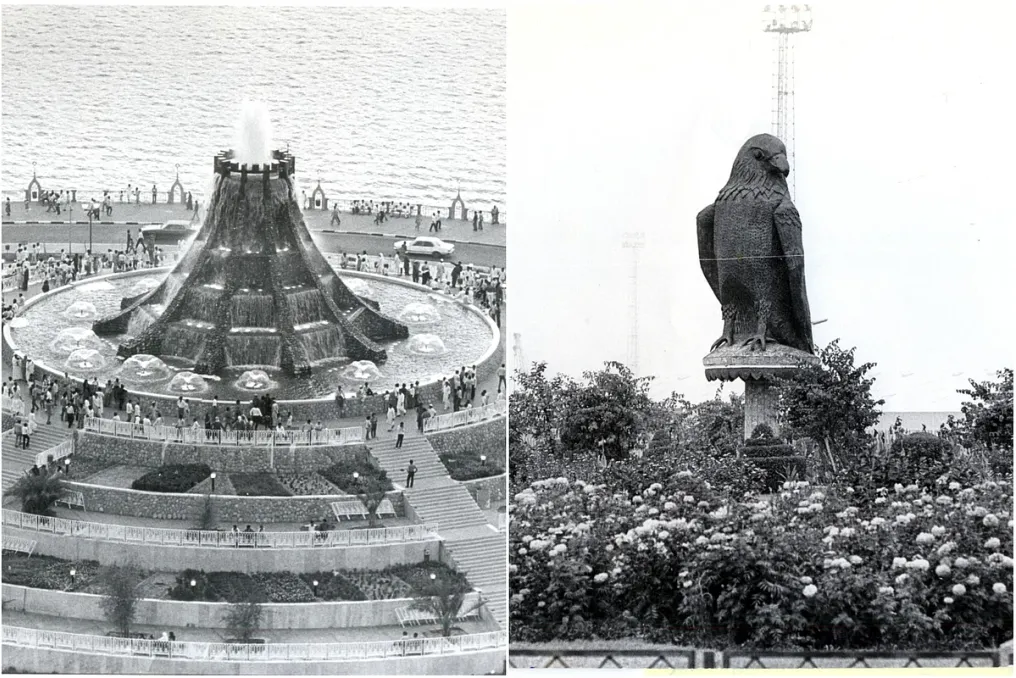
Another iconic Abu Dhabi landmark, Volcano Fountain, was also torn down. It received this name because the cult object on the Abu Dhabi Corniche glowed like flowing lava. Its demolition in 2004 allowed for the creation of a more open and modern promenade area on the waterfront.

When the Metropolitan Hotel opened in 1979, the surrounding landscape looked different, as much of Al Quoz was open desert. For decades, it served as one of Dubai's early hotels before being demolished in 2012 to make way for the large Al Habtoor City complex.

Long before Dubai's roads became an extensive network, the Flame Monument Roundabout offered arriving visitors a memorable first impression of the city. The monument's history began in 1969 with the construction of the original Flame Monument, whose flame was lit by the late Sheikh Rashid bin Saeed Al Maktoum, then Ruler of Dubai.

In 1975, the monument was relocated to a roundabout at the intersection of Sharjah Road and Airport Road as part of major road modernization efforts. For many years, it stood along the route used by travelers arriving through the then-new Dubai Airport. However, as the city grew and traffic volumes increased, the roundabout was eventually removed to create a more modern and efficient road network.

Before the advent of modern multiplexes in Dubai, Strand Cinema was a well-known cinema spot for film lovers in Bur Dubai. Opening in the 1970s, it became a popular gathering place for generations of residents and a cherished memory of the district. The cinema eventually closed around 2004 and was later demolished; its site was taken over by Ansar Gallery in Karama, marking a new chapter in the changing face of old Dubai.

For decades, the Phoenix Roundabout was a familiar sight at the intersection of Al Mina Road, Bank Street, and Al Ghubaiba Road, and its distinctive golden falcon sculpture became a recognizable part of old Dubai. This monument, dating back to the 1970s, was ultimately dismantled due to large-scale redevelopment of the area to accommodate new road infrastructure, including the Al Shindagha Corridor and Infinity Bridge.

For many years, Al Amal Mental Health Hospital was located along Al Wasl Road, with the original complex dating back to the 1980s. As the Jumeirah district of Dubai transformed, the hospital was moved to a purpose-built facility in Al Ruwaiya Third, Al Avir, along the Dubai-Hatta Road. The new modern complex officially opened in December 2016, and the original site was subsequently cleared to create the modern retail and residential area of City Walk.

Another iconic part of the Dubai skyline is under threat of disappearance. The Toyota Building on Sheikh Zayed Road, which was a landmark for generations of residents and drivers, is slated for demolition, although timelines have not yet been announced. Residents are also being evicted from the iconic Toyota Building on Sheikh Zayed Road due to overcrowding concerns caused by illegally subdivided apartments.

Some landmarks have already vanished, while others are simply transforming as the UAE continues to grow. Not every familiar place gives way to something entirely new; some undergo significant transformation to meet the needs of the evolving city.

Sheikh Dr. Sultan bin Mohammed Al Qasimi, a member of the Supreme Council and Ruler of Sharjah, previously announced the construction of a new underground two-lane tunnel connecting Sharjah and Dubai. This project will require the temporary removal of the Al Taawun roundabout monument. However, this monument will not disappear forever—it will be restored to its original location after the tunnel construction is complete.

For many who have watched the development of the UAE over the years, these changes serve as a reminder of how rapidly the country evolves, as familiar places become part of one chapter of memories while the next is being formed.

Popular