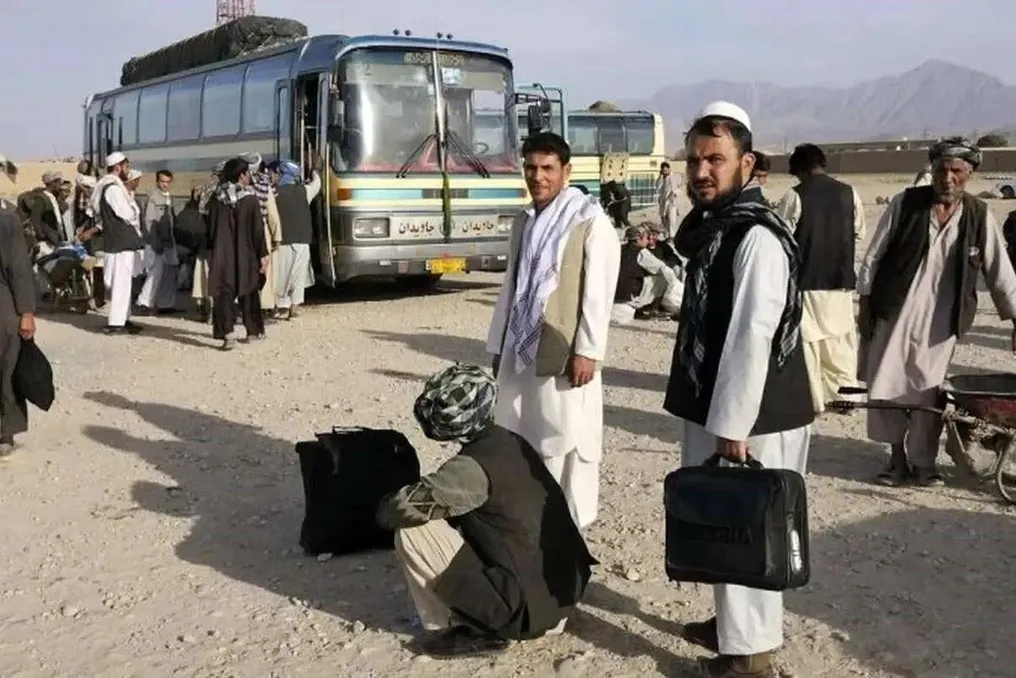
Since the beginning of the current Iranian year, which started on March 21, over 200,000 illegal Afghan refugees have been deported from Iran.
According to Nader Yar-Ahmadi, head of the National Migration Organization, out of 4.8 million Afghan refugees residing in the country, about 2.8 million are unregistered. The official added that unauthorized refugees do not have the right to receive any services in Iran because they committed the crime of illegal entry, and will therefore be expelled as a punitive measure.
Iran at the forefront of refugee assistance
For the last four decades, Iran has been one of the leading countries hosting the largest number of migrants and refugees, despite the numerous difficulties the country faces. Most of these refugees arrived from Afghanistan, fleeing wars, instability, poverty, and crises in their home country.
In 2023, the global figure for international migrants was approximately 304 million people, of whom 83 million were internally displaced. According to the United Nations High Commissioner for Refugees (UNHCR), Iran hosts about 773,000 refugees with Amaesh cards and more than 2.7 million people in refugee status. The total number of refugees makes Iran the second-largest host country, accommodating over 3.5 million refugees, making it an important part of the global picture and a key player in managing the migration crisis.
Unofficial statistics and field reports claim that seven million Afghans live in the country, four million of whom lack documentation. International organizations such as the International Organization for Migration (IOM) have always highly praised Iran for providing various types of services, including healthcare and education, to refugees. Children from Afghanistan attend the same schools as Iranian students without needing to pay extra fees, unlike in other countries where refugees face serious restrictions in accessing medical care and education.
Danandzai Bhattarai, head of the UNHCR in Holy Mashhad, praised Iran's generosity in hosting refugees and treating them with dignity. Most Afghan refugees in Iran live in cities and villages and constantly interact with host communities. Iran, in cooperation with international organizations, strives to help refugees gain opportunities for employment, vocational training, and collaboration with non-governmental organizations; this approach has transformed migrants from a passive population into an active part of society.
Nevertheless, Iran faces serious problems as the international community has provided less than a third of the funds needed to meet the humanitarian needs of refugees. With the start of the current Iranian year, which began on March 21, the government adopted a new policy aimed at organizing refugees for the return of unauthorized migrants. UNHCR reported in a press release on October 27 that in the first nine months of 2025, over 1.7 million Afghan refugees returned from Iran to Afghanistan.
A wide range of services is also provided at the borders, especially in the provinces of South Khorasan, Northeast Khorasan Razavi, and Southeast Sistan-Baluchestan. According to the Ministry of Health website, these services include establishing medical camps, screening for infectious diseases, and ensuring safe water and sanitation. The Ministry of Health has established permanent and temporary camps for examinations and providing medical care, such as injections, serum therapy, and treatment of acute cases.