The United Arab Emirates has always been characterized by dynamism, transforming through new roads and tunnels, as well as the emergence of new landmarks that displace older visual references. For many residents, observing changes in familiar neighborhoods, shopping centers, or buildings evokes a sense of nostalgia; however, these changes are an integral part of the UAE's history, testifying to continuous growth, adaptation, and future orientation.
Let's examine some of the changes that have occurred or are occurring in the country:
In Abu Dhabi, the iconic Mina Plaza in Mina Zayed was demolished. Four high-rise towers were brought down via controlled implosion in just ten seconds, freeing up the area for new tourism projects along the waterfront. Photographs show the state of the site before and during the demolition in November 2020.
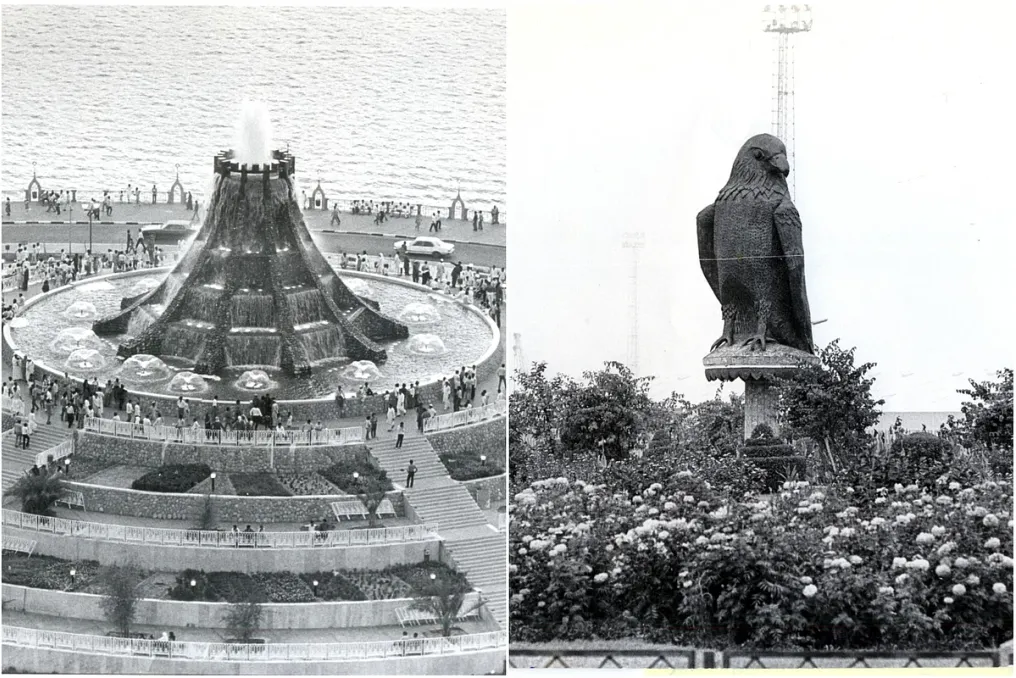
Another iconic Abu Dhabi landmark, Volcano Fountain, was also torn down. It received this name because the cult object on the Abu Dhabi Corniche glowed like flowing lava. Its demolition in 2004 allowed for the creation of a more open and modern promenade area on the waterfront.
When the Metropolitan Hotel opened in 1979, the surrounding landscape looked different, as much of Al Quoz was open desert. For decades, it served as one of Dubai's early hotels before being demolished in 2012 to make way for the large Al Habtoor City complex.
Long before Dubai's roads became an extensive network, the Flame Monument Roundabout offered arriving visitors a memorable first impression of the city. The monument's history began in 1969 with the construction of the original Flame Monument, whose flame was lit by the late Sheikh Rashid bin Saeed Al Maktoum, then Ruler of Dubai.
In 1975, the monument was relocated to a roundabout at the intersection of Sharjah Road and Airport Road as part of major road modernization efforts. For many years, it stood along the route used by travelers arriving through the then-new Dubai Airport. However, as the city grew and traffic volumes increased, the roundabout was eventually removed to create a more modern and efficient road network.
Before the advent of modern multiplexes in Dubai, Strand Cinema was a well-known cinema spot for film lovers in Bur Dubai. Opening in the 1970s, it became a popular gathering place for generations of residents and a cherished memory of the district. The cinema eventually closed around 2004 and was later demolished; its site was taken over by Ansar Gallery in Karama, marking a new chapter in the changing face of old Dubai.
For decades, the Phoenix Roundabout was a familiar sight at the intersection of Al Mina Road, Bank Street, and Al Ghubaiba Road, and its distinctive golden falcon sculpture became a recognizable part of old Dubai. This monument, dating back to the 1970s, was ultimately dismantled due to large-scale redevelopment of the area to accommodate new road infrastructure, including the Al Shindagha Corridor and Infinity Bridge.
For many years, Al Amal Mental Health Hospital was located along Al Wasl Road, with the original complex dating back to the 1980s. As the Jumeirah district of Dubai transformed, the hospital was moved to a purpose-built facility in Al Ruwaiya Third, Al Avir, along the Dubai-Hatta Road. The new modern complex officially opened in December 2016, and the original site was subsequently cleared to create the modern retail and residential area of City Walk.
Another iconic part of the Dubai skyline is under threat of disappearance. The Toyota Building on Sheikh Zayed Road, which was a landmark for generations of residents and drivers, is slated for demolition, although timelines have not yet been announced. Residents are also being evicted from the iconic Toyota Building on Sheikh Zayed Road due to overcrowding concerns caused by illegally subdivided apartments.
Some landmarks have already vanished, while others are simply transforming as the UAE continues to grow. Not every familiar place gives way to something entirely new; some undergo significant transformation to meet the needs of the evolving city.
Sheikh Dr. Sultan bin Mohammed Al Qasimi, a member of the Supreme Council and Ruler of Sharjah, previously announced the construction of a new underground two-lane tunnel connecting Sharjah and Dubai. This project will require the temporary removal of the Al Taawun roundabout monument. However, this monument will not disappear forever—it will be restored to its original location after the tunnel construction is complete.
For many who have watched the development of the UAE over the years, these changes serve as a reminder of how rapidly the country evolves, as familiar places become part of one chapter of memories while the next is being formed.