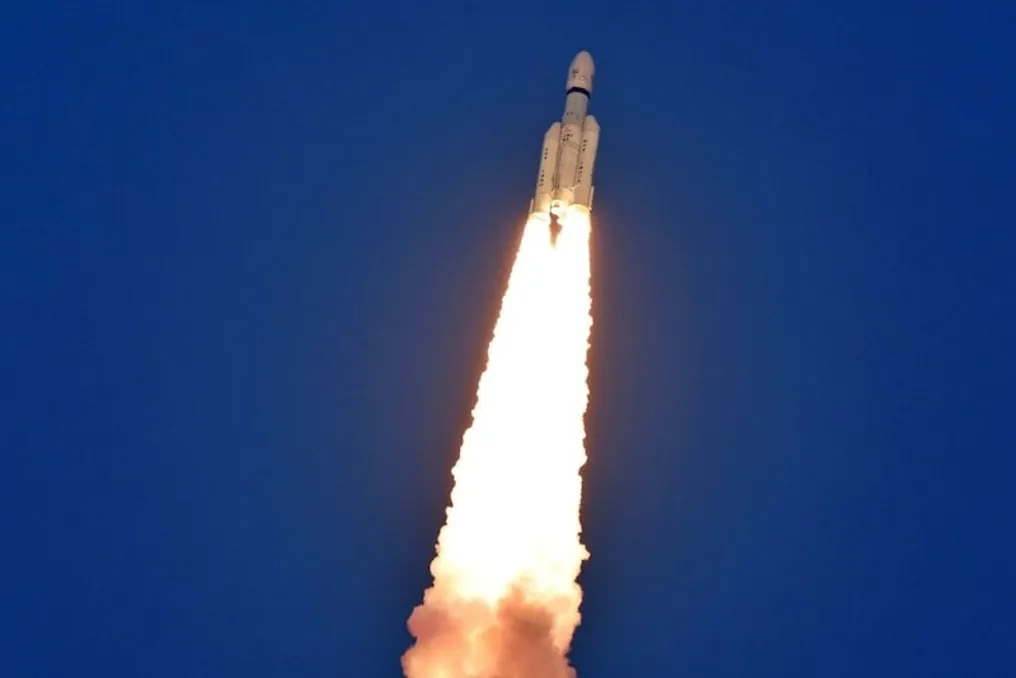
Senior management has announced that the Indian Space Research Organisation (ISRO) is undergoing a strategic restructuring, shifting its focus towards scientific research, advanced technology development, and major space missions. The production of launch vehicles and routine satellites will be handed over to private companies and public sector undertakings.
This shift is expected to be a significant stimulus for the Indian space industry, both in the development and application segments. Plans include launching a crewed orbital spacecraft next year, establishing an 'Indian Space Station' by 2035, and aiming for Indian astronauts to land on the Moon by 2040. Currently, there are about 450 space startups operating in India.
The development segment covers all processes, infrastructure, testing, launch, operation, and monitoring of space objects, including space situational awareness. Meanwhile, the application segment encompasses all services and devices that utilize satellites to create commercial value.
Pavan Gaenka, Chairman of the Indian National Space Promotion and Authorisation Centre (IN-SPACe), stated at a media summit on Saturday: 'ISRO will not manufacture any launch vehicles. All of this will be done by the private sector or public sector undertakings.'
Moin SPM, co-founder and COO of Agnikul Cosmos, noted that such a transition is a natural step in the collaboration between ISRO and the private sector. He added that ISRO will be able to concentrate more deeply on research and advanced technologies, while private players will take on most of the production and operational scale. He also emphasized the need for clear regulatory oversight, safety checks, and measures to protect critical intellectual property and manufacturing capabilities within India.
To stimulate the sector, the government has already adopted several important policy measures, including the New Space Policy 2023, the Foreign Direct Investment Policy 2024, the Indian Telecom Act 2023, and the geospatial data policy. These measures are expected to increase the size of the Indian space sector from $9 billion to $44 billion by 2033.
Lieutenant General A K Bhatt (Retd), CEO of the Indian Space Promotion Association (ISpA), noted that the recent successes of private space companies have demonstrated India's ability to reach a globally competitive level. He also stressed that the next phase of India's space journey will be determined not only by capabilities in the development segment but also by adoption in the application segment. Companies involved in Earth observation, satellite communication, and geospatial intelligence provide practical applications in agriculture, climate monitoring, urban planning, disaster management, communications, and national security.
Krishnan Acharya, CEO and co-founder of Suhora Technologies, believes that raw data only becomes valuable after being transformed into actionable information, and it is here that application segment players will increasingly generate revenue for the Indian space economy. He sees this as an area where India can build long-term, exportable expertise, competing globally in analytics and space data-based applications.