The Director of Investment and Business Development of the National Iranian Oil Company reported that more than 30 investment agreements have been signed in the National South Iran Oil Company (NISOC). The goal of these deals is to increase production levels, reduce gas flaring, and develop operational capacities.
Amir Moghisseh, citing SHANA during a visit to the company's investment plans and projects, noted the growing trend of private and non-state sectors participating in the oil and gas industry. He emphasized that these projects are aimed at increasing production, reducing gas emissions, expanding refining capabilities, and strengthening the country's drilling potential.
Moghisseh added that NISOC, as the largest crude oil producer in the country, is pioneering the attraction of the private sector to the development of upstream oil fields. The second half of last year saw a significant increase in the number of signed investment contracts, which are focused on three main areas: gathering associated gas and eliminating flares, crude oil refining, and providing onshore drilling rigs.
Twenty-three contracts were concluded with private and non-state entities in the field of associated and flare gas gathering. The implementation of these contracts will provide the basis for shutting down 57 flares in Hoveyzeh province. Moghisseh specified that the work on implementing the contracts is ongoing, and it is expected that about 400 million cubic feet of associated gas will be collected by the end of the current year. Furthermore, during the Government Week in the Hoveyzeh region, 40 million cubic feet of flare gas will be gathered and prevented from being burned.
Increasing refining capacity by 380,000 barrels
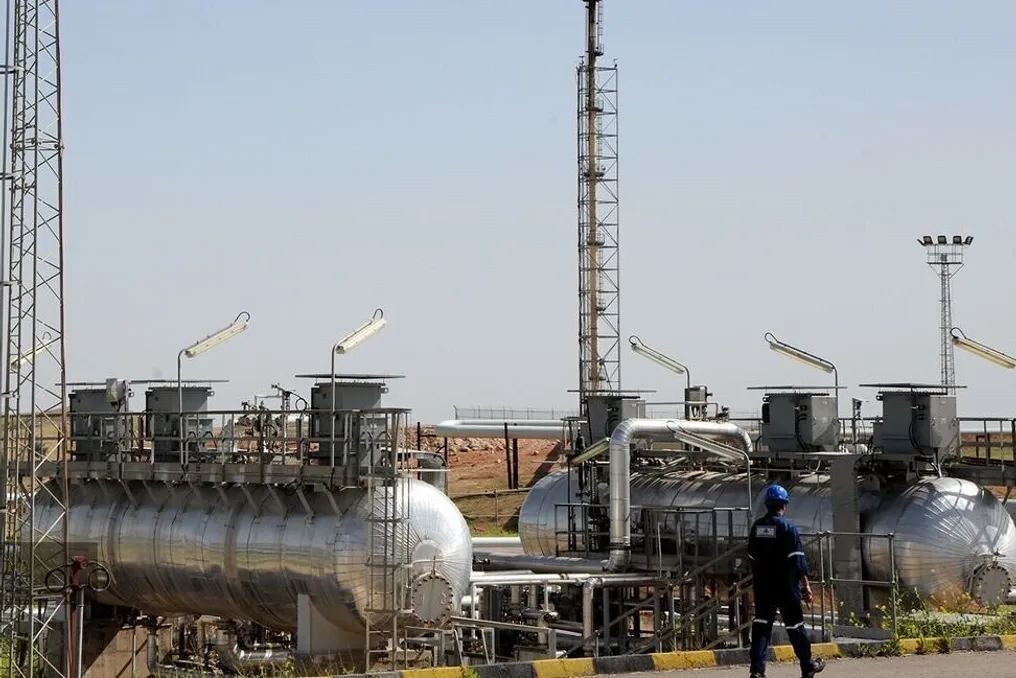
As the second area of cooperation with the private sector, Moghisseh mentioned contracts for purchasing crude oil refining services using skid-mounted equipment. Seven such contracts were signed for seven oil fields, which will increase the country's oil refining capacity by 380,000 barrels per day. This volume is equivalent to approximately 11–12 percent of the total refining capacity of the country that will be created with the participation of the private and non-state sectors.
Moghisseh also noted that thanks to the support and cooperation of investors, some projects may be commissioned earlier than planned, given the progress of certain projects.
Provision of services for 18 onshore drilling rigs
The third area of investment is the provision of onshore drilling rig services. The Director of Investment and Business Development of the National Iranian Oil Company stated that providing such services is a necessary condition for the development, growth, and maintenance of production at the country's onshore oil fields. Under public-private partnership contracts, the National Company of Southern Oil-Rich Regions has assigned private and non-state sectors to provide services for 18 onshore drilling rigs.
Moghisseh spoke about the first onshore rig supplied under the guaranteed drilling service purchase scheme. This rig was supplied with private sector investment and is currently being set up to soon begin drilling operations at the Ab-Teimur field. Emphasizing NISOC's support for the presence of the private sector in upstream oil production, he stated that utilizing the private sector's potential in upstream projects can contribute to increasing production and strengthening the oil and gas industry's capabilities over the next five to ten years.
The Director of Investment and Business Development of the National Iranian Oil Company added that investments in this area, besides increasing production, can positively affect employment, the development of operational capacities, and the increase in the country's foreign currency revenues. Moghisseh predicts that a significant number of additional drilling rigs will be delivered and put into operation within the next two to three months according to the plan presented by investors.