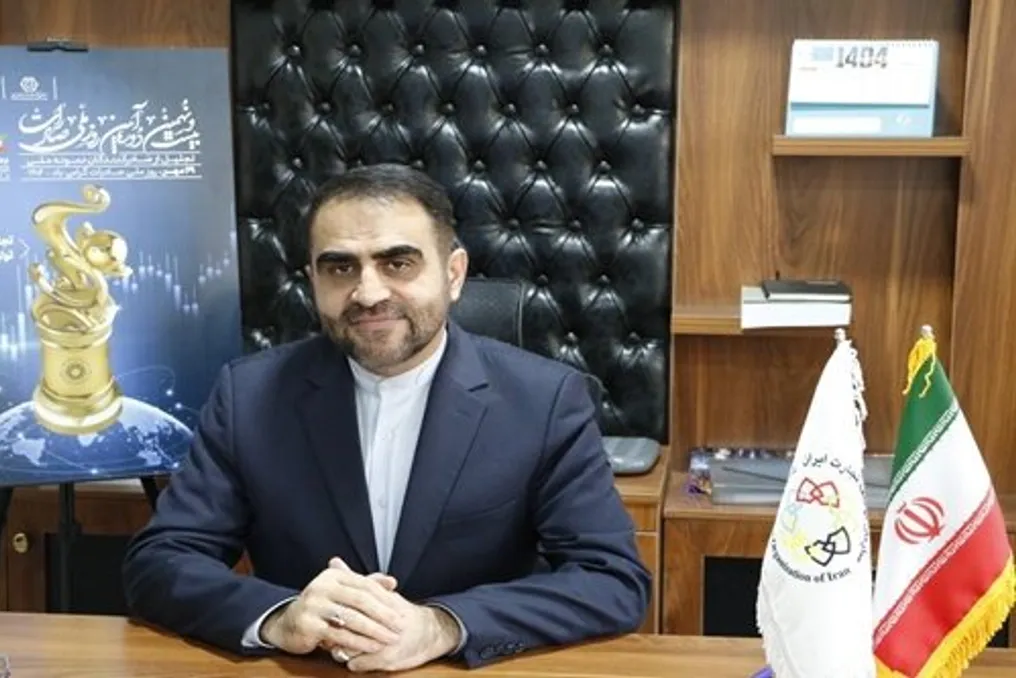
The Deputy Head of the Iranian Trade Promotion Organization (TPO) presented the organization's main areas of activity and key achievements over the past two years. The main vectors of TPO's work were the development of trade infrastructure, strengthening Iran's position in target markets, targeted support for exporters, and simplifying foreign trade procedures.
According to the TPO Public Relations Department, Morteza Salehi, while congratulating on Government Week, explained the results of TPO's work within the framework of the 14th government program. He noted that the organization's agenda included the simplification, reforming, and optimization of regulations and trade processes. During this period, effective steps were taken to reduce complexities in order registration, customs clearance, and currency repatriation by eliminating obstacles for economic actors.
One of the most important achievements was the removal of restrictions on editing tariff codes in some order registrations, as well as the facilitation of import and export procedures. Salehi also spoke about the expansion of the network of commercial attachés in importing countries. This network, serving as the organization's field unit, plays a significant role in implementing Iran's production and export capabilities and establishing contacts between economic actors. In this regard, the number of commercial attachés in target countries was increased to strengthen presence and gain deeper insight into the needs and trade opportunities of these countries.
Another important area was the development of trade centers in target markets. The creation and strengthening of such centers ensures a constant and organized presence of Iranian companies in foreign venues, helping exporters find clients, develop distribution networks, and monitor markets. Thus, the organization's approach is shifting from temporary presence to creating sustainable infrastructure for export development. Over the past two years, initial licenses have been issued for more than 10 trade and marketing centers for Iranian products and services.
This TPO official representative also mentioned activities in the field of domestic and international exhibitions. He emphasized that simplifying the process of obtaining permits for holding exhibitions and establishing pavilions of the Islamic Republic of Iran at international events is an important tool for developing export markets. The targeted participation of Iranian companies in specialized foreign exhibitions provides an opportunity to present the country's products, conduct direct negotiations with buyers, and establish new business relationships. The organization strives to facilitate private sector participation in such events by optimizing executive processes.
The Deputy Head of TPO views the support of exporters and the utilization of export incentives as another aspect of the organization's work. He stated that export development is impossible without supporting economic actors and compensating for some of the costs associated with being present in foreign markets. Salehi specifically highlighted the need for targeted support for exporters, noting that export incentives should be used to develop markets, enhance the competitiveness of Iranian goods and services, and sustain export markets. During the reporting period, the organization utilized available opportunities for more effective exporter support.
Regarding the role of exhibitions and trade events in developing non-oil exports, he reported that in 1404 (2025–2026), TPO issued permits for 83 domestic and 132 foreign international exhibitions. These events serve as a suitable platform for demonstrating the country's production and export capabilities and establishing direct contact with target markets. Furthermore, Salehi announced the approval of sending 105 trade delegations abroad. These delegations were aimed at seeking export opportunities, developing economic cooperation, and establishing ties between Iranian enterprises and foreign partners.
He also briefly covered the organization's activities in emergency situations. During this period, the priority was maintaining the stability of external trade flows and supply chains. Measures taken to prevent disruptions in the country's trade process included forming specialized working groups to monitor foreign trade, constant coordination with the Customs Service, Port Authority, and the private sector, monitoring international transport routes, activating alternative corridors, accelerating order registration, and coordinating customs clearance of goods.
The Deputy Head of TPO also discussed support for the export of technical and engineering services. The organization views the development of such services' export as an important aspect of the country's foreign trade, so it actively supports competent companies and creates conditions for their entry into international markets. Salehi stressed the high potential of exporting technical and engineering services in Iran, noting that this type of export has not undergone radical changes despite last year's military actions. The export of technical and engineering services in 1404 (2025–2026) showed a growth of 230% compared to the previous year, increasing from 790 million dollars to 1 billion 800 million dollars.