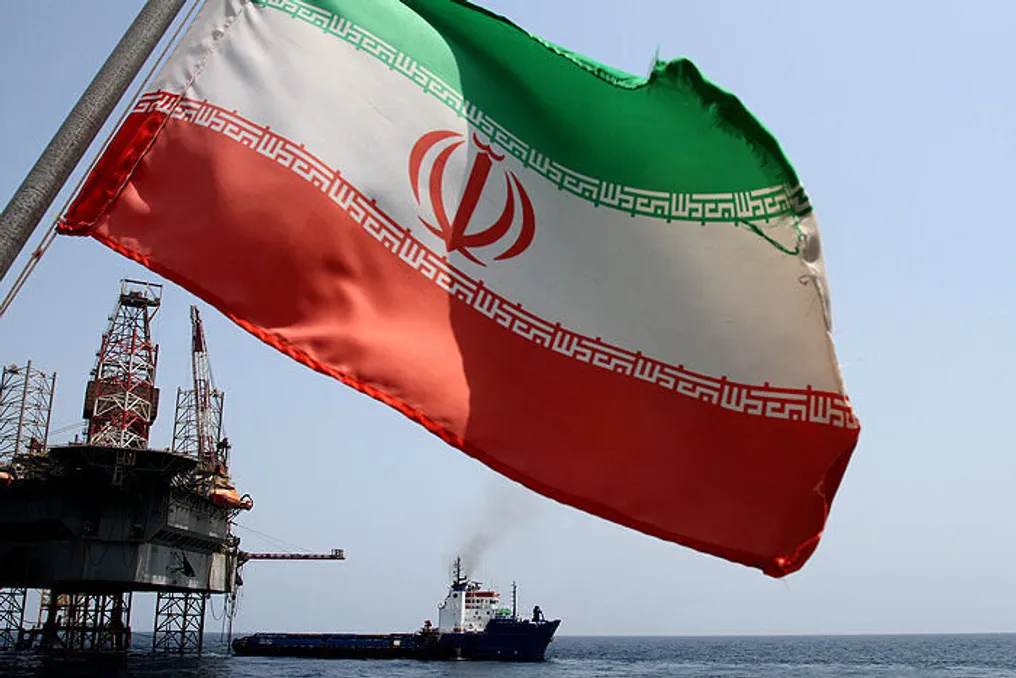
According to economic expert Hamid Nobahar, Iran's energy power cannot be assessed solely by current production volume or export levels. Its global position in energy geography is determined by a combination of vast hydrocarbon reserves, a long history of extraction, potential for field development, access to Persian Gulf waters, and proximity to the Strait of Hormuz.
Before disruptions in 2026, the Strait of Hormuz was one of the most important global routes for energy transit. According to OPEC data, as of the end of 2024, Iran possessed approximately 208.6 billion barrels of proven crude oil reserves. In 2024, crude oil production in Iran amounted to about 3.26 million barrels per day, highlighting the country's special status in oil resources.
The expert specified that an adequate assessment of oil power requires distinguishing between proven reserves, production capacity, actual exports, and the ability to influence the market. He noted that having large reserves alone does not guarantee market strength, just as production capacity, transportation capability, and market access do not. The U.S. Energy Information Administration (EIA) forecasts that if sanctions are lifted, Iran's production capacity could increase to approximately 3.8 million barrels per day.
EIA data also shows that Iran's crude oil and condensate exports increased from 400,000 barrels per day in 2020 to nearly 1.4 million barrels per day in 2023, and in the first eight months of 2024, it was estimated at about 1.5 million barrels per day. In 2023, about 90 percent of Iran's crude oil and condensate exports were directed to China. These figures demonstrate both Iran's ability to maintain exports under sanctions and the need to diversify markets to strengthen the country's oil maneuver.
Nobahar emphasized that Iran itself does not determine global oil prices, but its production capabilities, huge reserves, and geographical location can influence the supply balance and market expectations. The strategic importance of the Strait of Hormuz increases as it serves as a transit route for crude oil from major Persian Gulf producers to world markets.
According to EIA data, in 2023, about 20.9 million barrels per day of crude oil, condensates, and petroleum products passed through the Strait of Hormuz. Of this volume, 14.9 million barrels per day consisted of crude oil and condensates, corresponding to a significant part of global maritime oil trade, placing the economic significance of Hormuz beyond a mere regional waterway. Any disruption in the strait affects calculations for refineries, shipping companies, insurers, traders, and oil-importing governments.
The energy economist added that the country's oil power extends beyond wells. Iranian oil is part of a complex network that includes extraction, storage, export terminals, pipelines, transport fleets, final refineries, and the financial system. The more flexible this network is, the higher Iran's economic capacity to utilize its reserves. Therefore, it is strategically important to develop export terminals outside the Hormuz zone, increase storage capacity, expand the range of buyers, and strengthen energy transmission infrastructure.
Regarding the Jask project, he reported that to reduce the vulnerability of oil exports to restrictions on the Hormuz route, the country has developed the Jask export infrastructure and the Goreh-Jask pipeline with a nominal capacity of about one million barrels per day. Furthermore, the total capacity of oil loading terminals in Iran is estimated to be over 8 million barrels per day, indicating significant infrastructural capabilities in the country's oil industry.
Concerning Iran's dependence on China, the expert noted that the Chinese market is extremely important, but diversifying clients can reduce the risk of market concentration. According to a Reuters report from August 21, 2026, in that month, Iran's oil exports to Chinese buyers reached about 534,000 barrels per day, and a decrease in floating oil reserves was also noted, from approximately 105 million barrels to 80 million barrels.
The economic expert stressed the importance of energy security. A country possessing oil resources but lacking transit routes, export capacity, or diverse markets cannot fully realize the economic potential of its resources. Iran holds a different position due to its vast reserves, significant production, Asian markets, access to the Persian Gulf, and the development of alternative export routes.
He also emphasized that Iran's policy should include the development of joint fields. Increasing production from such fields, developing refining infrastructure, and capturing associated gas will help both increase output and prevent resource loss. Protecting Iran's share in joint fields is critical, as any loss of production in these areas will lead to a reduction in the country's economic share of the overall resource.
In conclusion, the expert stated that Iranian oil is a geopolitical tool, but its strength is not limited to the volume of reserves. The combination of 208.6 billion proven reserves, production of about 3.26 million barrels of crude oil in 2024, potential of 3.8 million barrels per day, exports of about 1.5 million barrels in the first eight months of 2024, and geographical location near Hormuz has provided the Islamic Republic of Iran with a set of assets to build potential. The country's policy must be aimed at transforming oil reserves into sustainable oil power, which implies increasing production capacity, diversifying markets, strengthening export infrastructure, developing refining, and obtaining stable foreign currency.
State attention and the Ministry of Oil's focus in 1405 (2026-2027) on continuous production, facility maintenance, capacity development, and promoting joint fields are highly valued. It is important to preserve one of the most crucial foundations of the country's economic and geopolitical strength. When Iranian oil transforms from a source of income into a powerful network of production, investment, export, refining, storage, and energy diplomacy, the country's position in global equations will become more resilient. In this system, Hormuz acts as a link between Iranian oil, Asia's energy security, and the world economy, giving Iranian oil its geopolitical value.