The Evolution of Romantic Scenes in Indian Cinema: From Floral Motifs to Explicit Moments
Read more
Aaj Tak
www.aajtak.in

The Evolution of Romantic Scenes in Indian Cinema: From Floral Motifs to Explicit Moments

The romantic style in Indian cinema has undergone significant changes, transforming from traditional imagery with flowers to explicit intimate scenes, as seen in the film 'Toxic'.

Before the release of 'Toxic', which sparked much discussion due to its intimate scenes, the romantic relationship between Kiara's actors attracted significant public attention. However, this level of explicitness is not new to Indian cinema; such trends have been developing for decades.

In the 1960s, the ways romance was depicted on the big screen differed from modern times. As time progressed and Western culture's influence on people grew stronger, romance in films began to change.

Previously, romantic moments were often portrayed through flowers. When characters approached a moment of intimacy, two flowers would suddenly appear on screen, followed by an image of their romantic relationship. In that era, concepts of modesty and shyness were highly valued in Indian culture.

However, the pioneering change in this approach was brought by the renowned film director Raj Kapoor. In 1973, his film 'Bobby' marked the beginning of using kisses, or more precisely, lip kisses, on the big screen. Since then, open kissing scenes between characters have begun to be filmed.

Bollywood superstars such as Aamir Khan, Shah Rukh Khan, Ajay Devgn, and Akshay Kumar also participated in filming kissing scenes. Aamir Khan filmed lip-kissing scenes in many of his films in the 90s. Akshay Kumar also did not shy away from kissing scenes early in his career.

Shah Rukh Khan and Ajay Devgn started appearing in kissing scenes later. Shah Rukh first kissed Katrina Kaif in the film 'Jaan'. Ajay also acted in intimate scenes with a foreign actress in the film 'Shivay'.

Nevertheless, when it comes to romantic scenes, Imran Hashmi is invariably mentioned. He participated in intimate scenes in almost every second of his work and earned the nickname 'Serial Kisser' in Bollywood.

After this, many intimate scenes began to appear in films. Currently, many web series include sexual scenes, causing important storylines to be overlooked. The new film 'Toxic' by Yash also featured many songs filled with intimacy. Now it remains to be seen whether 'Toxic' will lead to losses because of this or if it can impress audiences with its plot.
Similar stories

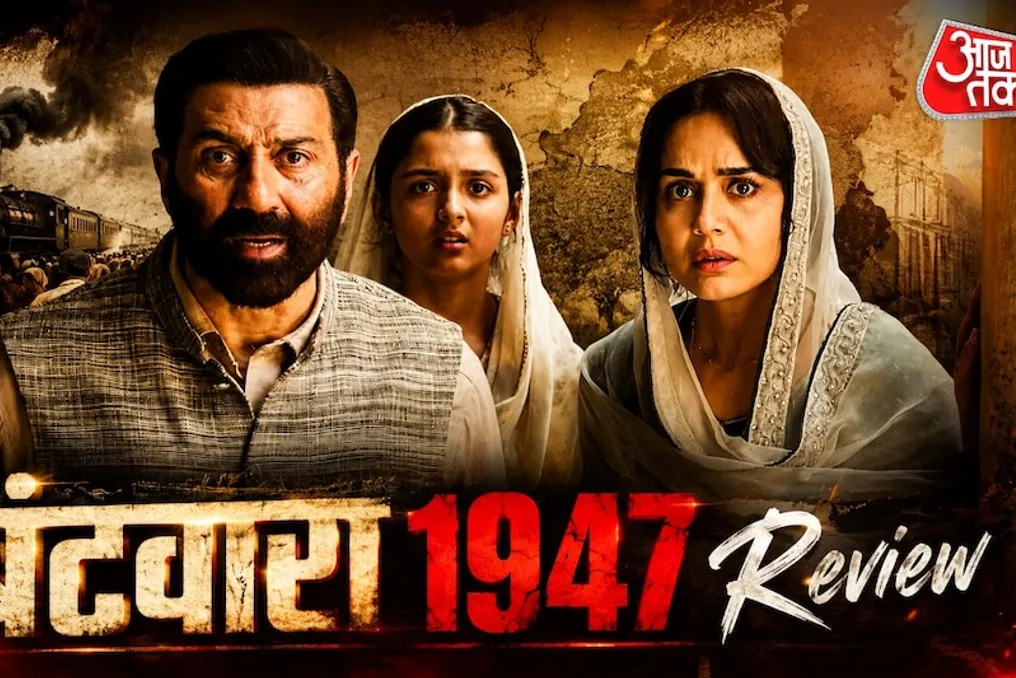
Review of the film 'Bantwara 1947': A story of humanity during the partition of India and Pakistan
Read more
www.aajtak.in

Review of the film 'Bantwara 1947': A story of humanity during the partition of India and Pakistan

There are experiences that are extremely difficult to put into words. These feelings can only be understood by those who have lived through them. On August 14, 1947, millions of people faced inexpressible pain as India and Pakistan were formed as separate states based on religion. Although everyone knows what happened in both countries during this partition, another story was born—one that transcended religion, caste, and discrimination through the power of humanity.

Popular writer Asagar Wajahat created the play 'Jis Lahore Nahi Vekhya, O Jamyay Nahi' (He who has not seen Lahore is not born). Based on this play, director Rajkumar Santoshi and Amir Khan made the film 'Bantwara 1947,' featuring stars such as Sunny Deol, Preeti Jinta, and Shabana Azmi. We detail how much we enjoyed this film released on the day of the partition.

Sikandar Mirza (Sunny Deol), owner of a printing press in Merat, is preparing to celebrate India's independence with his family. He is highly respected in the city. However, due to riots between Hindus and Muslims, he is forced to leave his country and travel to Lahore, Pakistan. He boards a train to Lahore with his wife Hamida (Preeti Jinta), son Javed (Karan Deol), and daughter Tanu (Khushi Jahare), but for some reason, his son Javed cannot join them.

Mirza arrives in Lahore, where Habib Akhtar Qadmi (Ali Fazal) helps him find accommodation. An elderly woman, Durgavati Kishanpal Devi, known as Mai (Shabana Azmi), already lives in this house. This house belongs to her son Ratan, who died along with his entire family in the fire of the partition. Mirza and his family are under the scrutiny of Yaqub Khan (Abhimanyu Singh) because they provided shelter to the Hindu old woman. Consequently, extremism escalates in the streets of Lahore, as Yaqub wants to drive Mai out of the house at any cost. During these attempts, he attacks Mirza's family. The main plot revolves around how Sikandar Mirza manages to protect his family and the elderly Mai from hatred fueled by religion.

Although the film's plot is fictional and not directly related to real life, this imaginative story reawakened the pain of the partition without resorting to hate or excessive drama. Instead, it told a simple story based on humanity and a mother's emotions.

'Bantwara 1947' beautifully portrays the hidden emotions of each character. You feel the emotions experienced by Sunny Deol and Preeti Jinta's characters during the Partition. Furthermore, Shabana Azmi's story is tear-jerking. The pain of a mother dying while waiting for her child is felt by the audience until the very end of the film.

The only drawback of the film is that its length begins to become tiresome over time. The songs are also not memorable enough to want to listen to after leaving the cinema. A.R. Rahman's background music is good, but one expects more from it.

The film does not engage in playing mind games with any religion—be it Hinduism or Islam. On the contrary, it showcases an image of humanity that may never have been seen in Indian cinema before. No religion is depicted negatively; rather, one thought is explained: no religion is inherently bad; there are good and bad people.

Director Rajkumar Santoshi has created a contemporary piece of cinema that is a truly magnificent viewing experience. Where hatred and negativity prevail everywhere, this film guides the viewer toward a certain positivity. The film contains many moments that make one ponder whether using religion for politics is justified.

Those who doubted that Sunny Deol would release another film in the style of 'Gadar' are mistaken. In 'Bantwara 1947,' Sunny plays a completely different character. His actions are limited to what is shown in the trailer; the rest of the film revolves around the emotions of his character Mirza and Mai. Sunny poured his heart into his role, and it is undoubtedly one of the best performances of his career.

As for Shabana Azmi, she is the true soul of this film. She demonstrated complete sincerity in her role. For a moment, the viewer might feel that she is genuinely someone's mother. Shabana ji masterfully conveyed a mother's pain using her life experience. Ultimately, she will make you cry a lot, so be prepared for that.

Preeti's Return to Bollywood

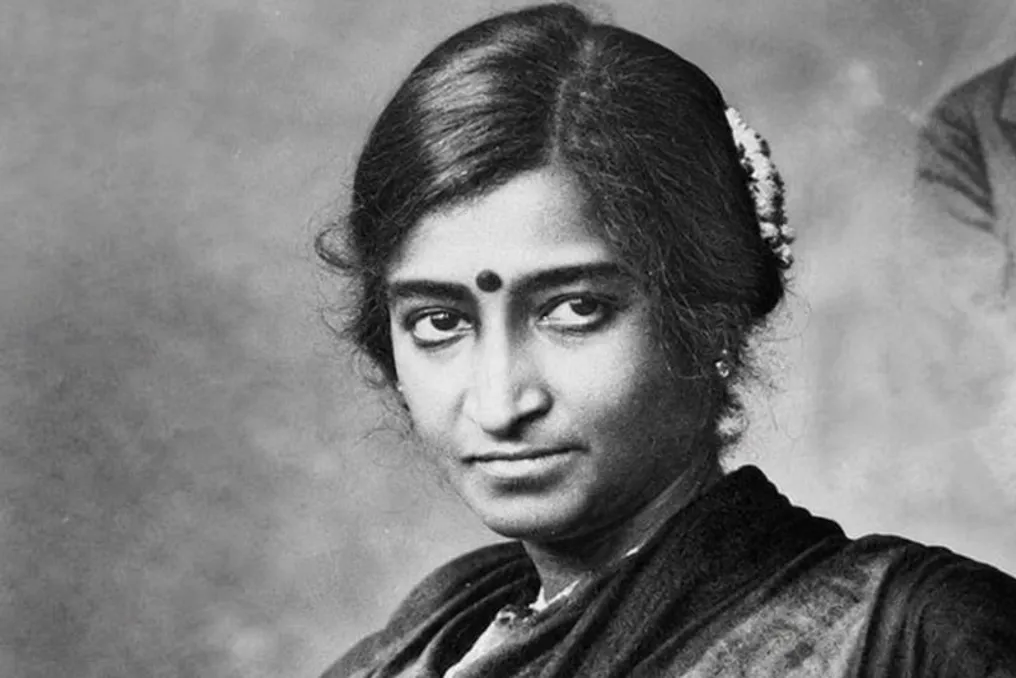
Durgabai Kamat — the first actress in Indian cinema whose story is linked to the fight for freedom
Read more
www.aajtak.in

Durgabai Kamat — the first actress in Indian cinema whose story is linked to the fight for freedom

There was a period when men played female roles in films. This was due not only to the early stage of cinematography's development but also because the appearance of women in the world of acting was not socially acceptable. Under such circumstances, a woman appearing before the camera was not just performing a role, but challenging the existing social order.

During this period, one woman fought on two fronts simultaneously. On one hand, she faced domestic violence in her personal life. On the other hand, she violated established societal rules by pursuing acting. This story belongs to the woman Durgabai Kamat.

In 1913, Indian cinema was in its nascent stage; Dadasaheb Phalke released the first feature film, 'Raja Harishchandra.' Since the profession of an actor for women was not considered ordinary at that time, the role of Taramati in the film was played by the male actor Anna Salunke.

It was customary at that time for men to play female roles. However, Phalke sought to overcome this taboo in his next film, 'Mohini Bhaskar.' Perhaps he realized that the presence of women on screen was necessary for the advancement of Indian cinema. He began searching for an actress for 'Mohini Bhaskar,' which led him to Durgabai Kamat and her daughter Kamlabai.

The story began with theatre. Theatre was a much older and more established world compared to cinema. There was a tradition of acting on stage, artists received training, and theatrical troupes toured various regions of the country. Therefore, if one hoped for the appearance of a talented female actress, it was in the theatre.

Dadasaheb Phalke was a theatre enthusiast and was deeply interested in music. His attention was drawn to the Chitrakarchak theatre company. Ranganathrao Gohle owned this company. This theatre company was set to close in a few months. Later, Kamlabai Gohle shared many memories about her mother and Phalke in Rina Mohan's documentary 'Kamlabai' (1992).

She recounted that when Phalke learned about the company's closure, he went to Ranganathrao Gohle's house the next day. He asked how long the company would be closed. When informed that the company's work would be suspended for about four to five months, Phalke made a proposal that changed the history of Indian cinema.

He asked Ranganathrao if Durgabai and Kamlabai could work in his film during that time. Ranganathrao immediately agreed. In 'Mohini Bhaskar,' Durgabai Kamat received the role of Parvati, and her daughter Kamlabai Gohle played Mohini.

Durgabai was a trained and experienced artist. Kamlabai once mentioned that her mother knew Kathak and was also proficient in playing the veena, sitar, and tabla. She performed in various roles in the theatre and participated in the translation and adaptation of Shakespeare's plays.

This was the first instance of a woman playing a female character in Indian cinema. Kamlabai was very young then, but she came into the film not only with her mother; she became part of a historical moment when Indian cinema first opened up space for women in front of the camera. The film took about six months to complete, and when it was released, extremely important changes occurred in the world of Indian cinema. No longer was a male actor required to play female roles.

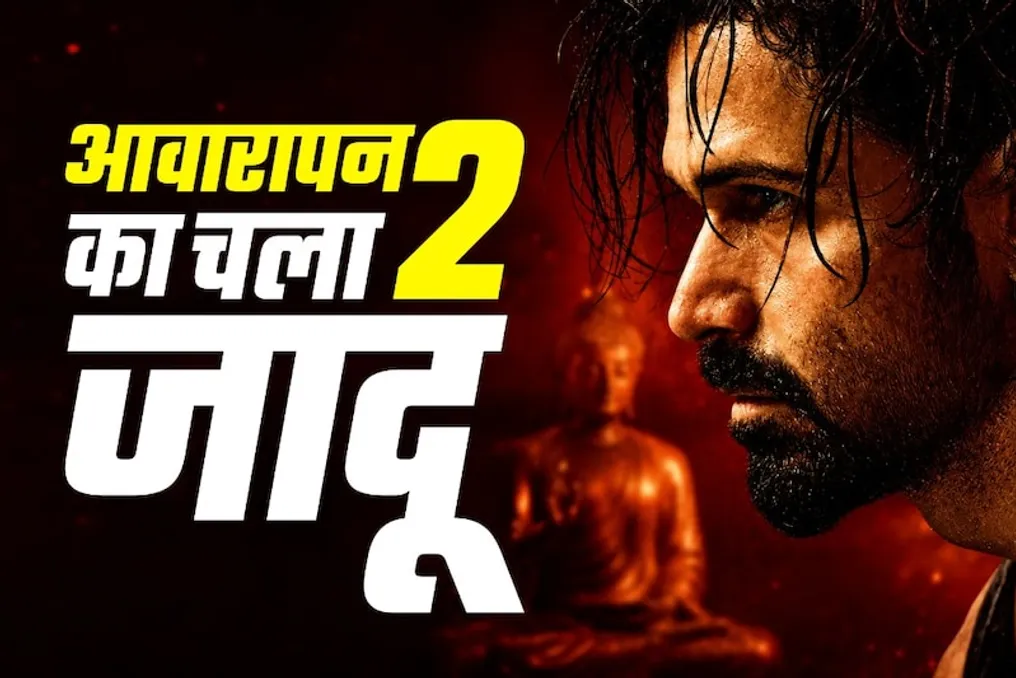
Imran Hashmi returns as Shivam Pandit in 'Avarapan 2'; audiences highly praise the premiere
Read more
www.aajtak.in

Imran Hashmi returns as Shivam Pandit in 'Avarapan 2'; audiences highly praise the premiere

Imran Hashmi's film 'Avarapan 2' generated high anticipation among the public. After 19 years, Imran returned in the role of Shivam Pandit, and the film premiered in theaters on August 14th. Initial reviews from viewers who shared their opinions about Shivam Pandit's return have already appeared.

Before the release of 'Avarapan 2', it created huge excitement among viewers. On Friday morning, the movie appeared in cinemas, and fans rushed to the halls without delay. The first reactions coming in on X are mostly positive, with particular mention of the film's emotional impact and Hashmi's long-awaited return.

One user noted that the first twenty minutes are so captivating that the viewer emotionally connects with Shivam Pandit. Another viewer was deeply impressed by the music and wrote that the original song in 'Avarapan' is worth the money. Fans were thrilled to see Imran Hashmi in the cinema.

One fan of Imran wrote that his appearance, charm, and effortless handsomeness are simply stunning. He added that watching 'Avarapan 2' on the first day and at the first screening feels incredible. While some actors can entertain, Imran's charisma hits differently.

Another viewer described the emotional experience while watching the credits at the end of the film. A fan wrote that watching the credits at the end of the film is so emotional that you feel everything, and then suddenly realize that this song is truly part of the film. It was something incredible.

Imran Hashmi's film with Disha Patani is receiving good reviews not only from viewers but also from film critics. On August 14th, along with Imran's film, 'Bantwara 1947' starring Sunny Deol was also released in theaters, and an interesting confrontation between the two films is expected.

Popular