When it comes to artificial intelligence, most people imagine chatbots or image generation. However, there is another area of technological development that is advancing quietly: so-called physical AI—systems capable not only of processing data but also of perceiving the environment, making decisions, and performing tasks in the real world.
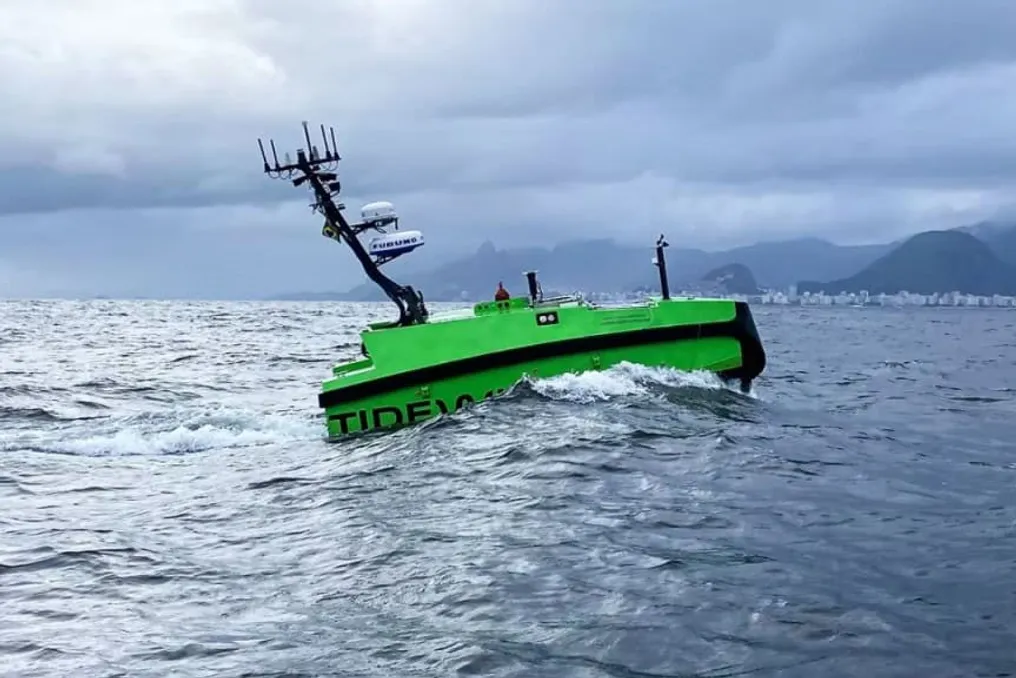
In Brazil, this technology is already being applied in marine conditions. A startup from Rio de Janeiro, founded in 2019, develops and operates unmanned vessels capable of carrying out missions under remote control. An operation with Petrobras was conducted at a distance of about 100 km from the coast, with monitoring carried out remotely over 300 km via satellite communication.
The system integrates hardware, software, sensors, and communication means, allowing the vessel to function without an crew. The main product is USV Tupan—an Unmanned Surface Vessel that can be controlled remotely or autonomously perform navigation tasks.
Operations are monitored through WiseControl, a proprietary platform that allows the operator to track navigation, plan routes, and control the vessel's functions. This system also detects failures in critical components and puts the vehicle into safe mode if necessary.
Applications of these systems include hydrographic surveying, bathymetry, environmental monitoring, and structural inspection. These systems can be integrated with drones and underwater robots to expand the volume of information collected during an operation.
As part of its cooperation with Petrobras, USV Tupan transported small cargo and collected water samples between platforms in the Campos Basin. The vessel was under remote observation at a distance exceeding 300 km, using satellite communication throughout the mission.
Sending people to sea involves costs, logistics, and operational risks. An unmanned vessel can perform certain tasks without exposing workers to dangerous conditions and consumes less fuel. Autonomous systems can also operate for extended periods while attention is focused in ground control centers.
In August 2026, the company began operations in Belgium and opened an office there, which is intended to be an entry point to other European markets. Furthermore, the company is exploring opportunities in the Middle East, Malaysia, and Australia.