Deputy Hood denies calling Sajjan Kumar a role model after his death
Read more
The times of India
timesofindia.indiatimes.com

Deputy Hood denies calling Sajjan Kumar a role model after his death

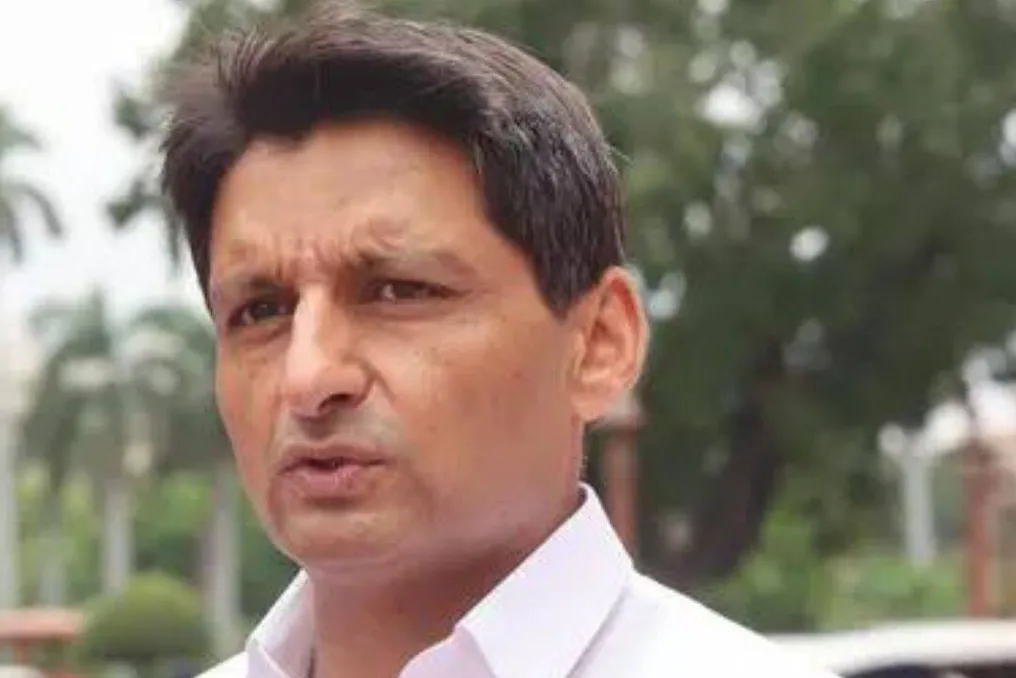
Congressman Deputy Hood refuted the claim on Sunday that he called Sajjan Kumar a 'role model' following the passing of the former Congress leader on August 20.

Kumar, who served two life sentences in connection with the anti-Sikh riots of 1984, died at the age of 80. When reporters asked Hood whether he considered Kumar a 'role model,' he responded, 'I did not use those words, and I did not have such a feeling. These words are imposed on me by those who want to play politics, undermining the spirit of brotherhood.'

He added that people know that regarding the Sikh community, they have always supported and stood by them through everything. Hood emphasized that there is a centuries-old bond of brotherhood with the Sikhs, and their family was connected to them through joys and sorrows, supporting them in every struggle.

Deputy Hood, son of former Haryana Chief Minister Bhupinder Singh Hooda, characterized the anti-Sikh riots as 'a grave injustice' and demanded severe punishment for the perpetrators. He stated, 'A grave injustice occurred; the culprits must be severely punished; the Sikh community deserves justice—that is our unwavering position. We fully support the Sikh community.'

Expressing condolences on Kumar's death, Hood called it 'a loss to the country's political landscape' and praised former MLA Lok Sabha for his 'connection with the people and contribution to Delhi's development.'

These comments sparked a sharp reaction, particularly in the Punjab constituency where elections are taking place, as the SAD, BJP, and AAP parties opposed the Congress for its 'anti-Sikh mindset.' Leaders of his own party also condemned these remarks.

Congress leader and former Chief Minister of Punjab, Charanjit Singh Channi, labeled Kumar a 'Sikh killer' and a 'traitor.' Channi stated, 'He conspired to kill Sikhs... Far from being a role model, even mentioning his name is a sin. If such people become role models, the country will be destroyed.'

Congress President of Punjab, Amrinder Singh Raja Warring, also attempted to distance the regional unit from Hood's statement, suggesting it might reflect the deputy's 'personal view' from Rohtak.

AAP Member of Parliament from Punjab, Kuldeep Singh Dhaliwal, noted that the wounds of the 1984 Sikh massacre are still alive in the hearts of Sikhs, calling Kumar's remarks deeply offensive to the community. Dhaliwal observed, 'If a senior Congress leader calls Sajjan Kumar his role model, it raises serious questions about the party's thinking and politics.'

BJP President of Punjab, Keval Singh Dhillon, also stated that the wounds of the victims' families remain unhealed. Dhillon said, 'At such a sensitive time, describing a key convict in the 1984 anti-Sikh riots as a role model was a reprehensible attempt to salt the wounds of the victims' families and reopen their painful memories.'
Similar stories

Rajnath Singh sharply criticizes Rahul Gandhi for statements on the Prime Minister's foreign policy
Read more
timesofindia.indiatimes.com

Rajnath Singh sharply criticizes Rahul Gandhi for statements on the Prime Minister's foreign policy

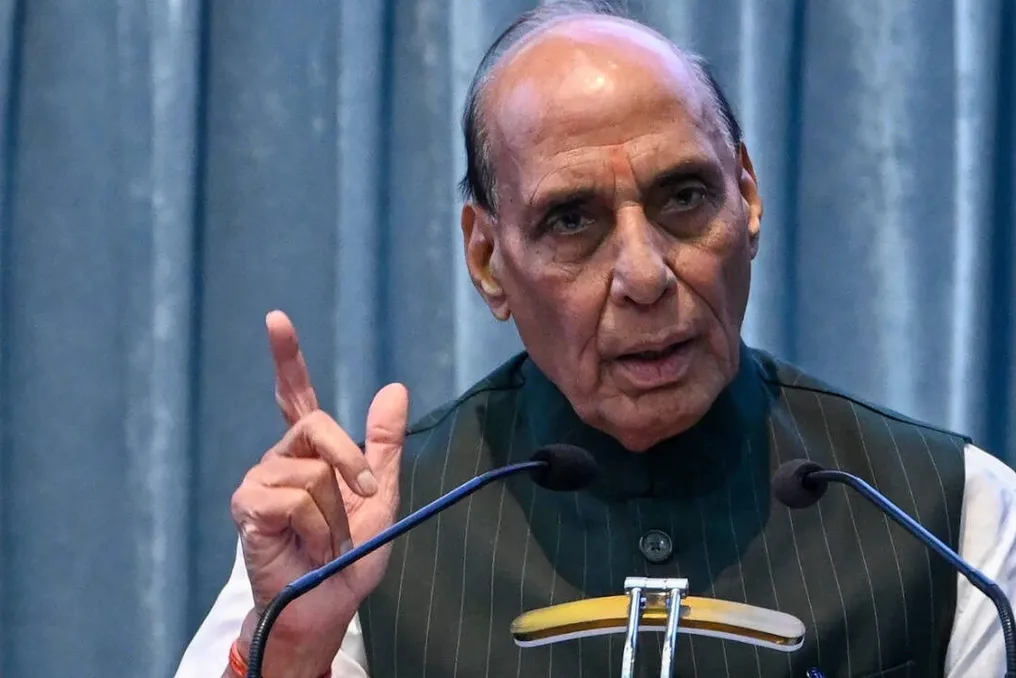
Defence Minister Rajnath Singh strongly criticized Congress leader Rahul Gandhi after he made remarks regarding Prime Minister Narendra Modi and the government's foreign policy, calling them 'petty and reprehensible.'

Singh warned that such rhetoric could damage democratic discourse.

Singh was particularly upset that the comments came from the opposition leader in the Lok Sabha. He accused Gandhi of undermining the dignity of the office and questioned the appropriateness of such behavior for someone holding a key constitutional position.

The Defence Minister stated: 'The remarks made by the opposition leader Rahul Gandhi yesterday about Prime Minister Narendra Modi and India's foreign policy are petty and reprehensible. It pains me personally too. In my long political life, I have never seen such indecent and unimaginable behaviour from any opposition leader. Such behaviour is a serious sign of a threat to healthy democracy.'

Furthermore, the Defence Minister defended Modi's track record as Prime Minister and his international stature, asserting that political disagreements should not lead to such disrespectful statements. He noted: 'Rahul Gandhi may be feeling frustration towards the Prime Minister in his mind, but such indecent remarks are unacceptable, especially when Prime Minister Modi has become a Prime Minister who has brought prestige to India at national and international levels and paved the way for Viksit Bharat.'

He continued, emphasizing that Modi worked with complete dedication for 12 years and did not take vacations. Singh added that such disrespectful remarks against such a Prime Minister hurt every Indian.

Singh then redirected his criticism towards the Congress party, questioning whether the party can continue to claim the legacy of several great Indian leaders after Gandhi's statements. He asked: 'I would like to humbly ask the Congress party if they have any claim to the legacy of Lal Bahadur Shastri and Gandhi, Patel and Nehru, from Subhas Babu to Rajendra Babu and Shastri ji and Narasimha Rao ji to Pranab Mukherjee?'

He accused Gandhi not only of targeting Modi but also of damaging India's image and the dignity of the Lok Sabha opposition leader's post. Singh concluded: 'With such behaviour, Rahul Gandhi has insulted not only Prime Minister Narendra Modi but also the international prestige of India. He has undermined the dignity of the Lok Sabha opposition leader's post. I cannot even imagine that someone with the surname Gandhi could make such a shameful remark.'

This exchange of views followed Gandhi's comments at the Congress National Conference in Rachnatmak in New Delhi on Thursday. Gandhi criticized the government's approach to foreign policy, arguing that India's international relations should be determined by national interests, not personal connections between politicians.

He shared his experience: 'I don't know where this came from; this idea got into their heads. I don't know who put it there or where it came from, the idea that foreign policy means hugging politicians. I was young. We went to America. Since we are talking about expressions, I will share this. We went to America. I was twelve years old. Priyanka, my mother and my grandmother—my grandmother was the Prime Minister. There was a state dinner—an official dinner. My grandmother and mother attended the official dinner.'

Gandhi stressed that in this role, the Prime Minister of India does not just engage in friendly relations but is obligated to protect the country. He also accused the Modi government of undermining India's foreign policy, citing the current conflict involving Iran, the US, and Israel.

He suggested that if India had recognized its strength, and someone like Indira Gandhi were its leader, the conflict in Iran could have been the greatest opportunity in the world. However, according to him, Pakistan intervened instead, acting as a mediator, while India and Modi ji simply watched.

Rahul Gandhi stated that he has recently been receiving 'information directly from Modi ji's office; there is a full-scale rebellion going on there.' He also mentioned some social media video statements regarding China's actions concerning patrolling along the LAC in the Arunachal Pradesh border area.

Gandhi leveled accusations regarding Chinese activity along the Line of Actual Control (LAC) in Arunachal Pradesh and accused the government of pressuring the media not to report certain statements. He claimed that Rajnath Singh, Amit Shah, and Narendra Modi 'were completely bewildered' because they call media editors and tell them: 'Don't publish this in your newspapers; suppress this story.' In his view, this directly harms the country.

Gandhi also returned to the debate on how India is handling the border situation with China after the Galwan clashes. He argued that contradictory statements about the loss of Indian territory weakened India's position during negotiations with China. He criticized the internal situation, stating that 'after the Galwan incident, the Prime Minister held a meeting—a Zoom call. He said China did not capture an inch of Indian territory. The army said our land was captured. Just think about the message sent to China: Chinese negotiators asked our negotiators: 'What are you talking about? Your own Prime Minister said the land was not lost.' Thus, internally they destroyed the country; they ruined our foreign policy. And all this was done solely to finance their political structure, to get funds from Adaniji.'

Kumar Sanu commented on his popularity among female fans and joked about Udit Narayan
Read more
www.aajtak.in

Kumar Sanu commented on his popularity among female fans and joked about Udit Narayan

In the 90s, Bollywood had a special atmosphere where the audience enjoyed melodious voices, among which Kumar Sanu stood out. He performed numerous songs in films of that period, and his voice still captivates millions of people's hearts.

Kumar Sanu's popularity in the 90s was immense; girls were charmed by his vocals. Following the success of songs he sang in the film 'Aashiqui,' his career soared. Recently, Kumar Sanu participated in the program The Lallantop, where he spoke about his fan base and popularity, while also showcasing his humorous nature.

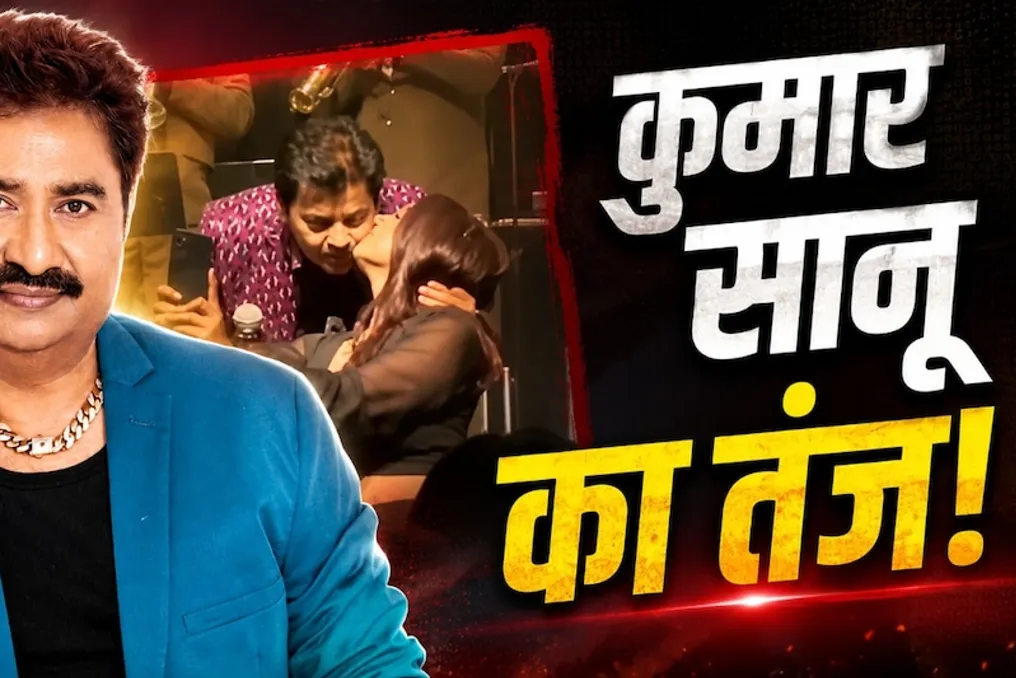
When the host asked Kumar Sanu about his female fan base, the singer openly stated: 'No one has kissed me, and I have not kissed anyone. I have never kissed or received a kiss. I did not do that.'

These words from Kumar Sanu allude to the kissing scandal involving Udit Narayan. Last year, Udit Narayan publicly kissed one of his fans at a live concert, which caused strong public disapproval and led to massive trolling on social media. After this incident, old video clips of Udit Narayan showing him kissing started appearing online. It now seems that Kumar Sanu mocked Udit Narayan.

In the 90s, there was intense rivalry between Kumar Sanu and Udit Narayan, as both were leading singers of their time. Despite recording songs together for many films, over time, both singers became close friends. In this interview, Kumar Sanu emphasized how strong their friendship has become compared to back then, noting that they now have nothing to lose.

Javagal Srinath spoke about the Saurav Ganguly and Steve Waugh incident, mentioning the connection with Steve Waugh
Read more
www.aajtak.in

Javagal Srinath spoke about the Saurav Ganguly and Steve Waugh incident, mentioning the connection with Steve Waugh

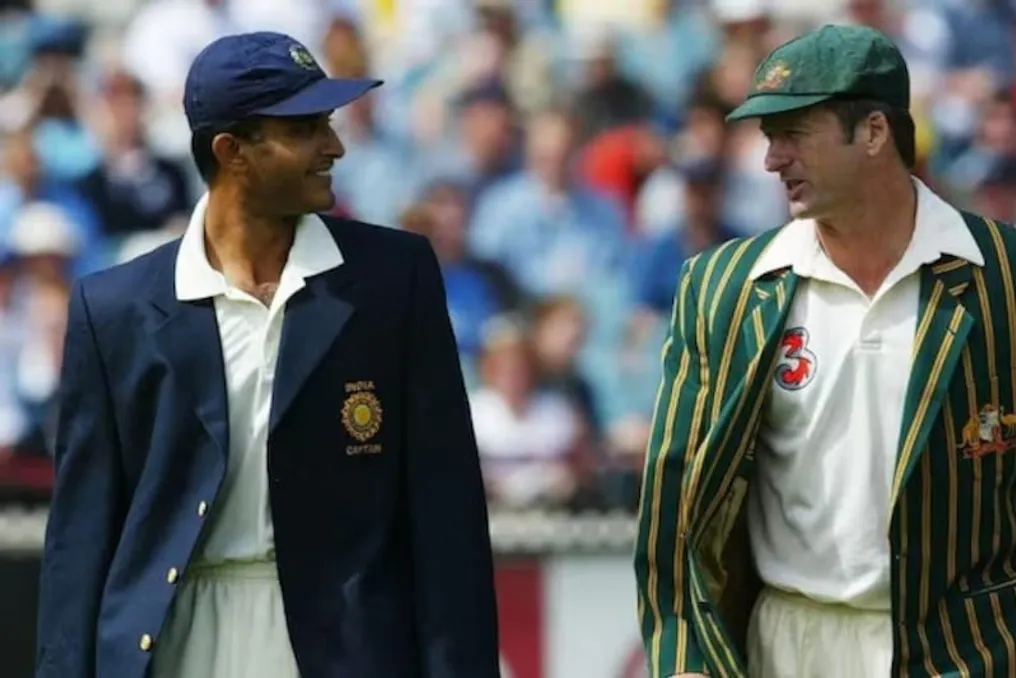
Former fast bowler for the Indian team, Javagal Srinath, shared an interesting comment regarding one of the most discussed episodes involving Saurav Ganguly. Srinath suggested that if he had been the referee in the match between India and Australia at the Eden Gardens during the 2001 Test, he could have temporarily banned Ganguly from playing in some matches to force the Australian captain, Steve Waugh, to wait when determining the outsider.

Recalling past times, Srinath jokingly stated: 'I would ban Saurav for several matches.' This incident became widely known during the Australian team's visit to India in 2001, when Indian captain Ganguly made Steve Waugh wait while determining the outsider. Some viewed this as a tactic of psychological pressure on the Australian captain.

Nevertheless, Saurav Ganguly himself later explained the reason for the delay with other circumstances, stating that he could not find his blazer, which led to the delay in determining the outsider. In that Test match, the Indian team won despite playing on a follow-on. Subsequently, India won the series 2-1.

After the joke about the outsider situation, Javagal Srinath highly praised Saurav Ganguly's leadership, particularly noting his ability to prepare young players. According to Srinath, Ganguly supported players like Yuvraj Singh, Harbhajan Singh, and Virender Sehwag by giving them ample opportunities for self-testing.

Javagal Srinath also recalled the period after the match-fixing scandal in Indian cricket in the late 1990s. He believes that at that time, there was a collective desire among the players to restore the image of Indian cricket. The team, which was fighting for victories abroad in the 1990s, gradually began to change its behavior.

Javagal Srinath made an important statement regarding the 2003 World Cup final. In the decisive match against Australia in Johannesburg, Saurav Ganguly won the toss and decided to start with bowling. Srinath reported that during team discussions, he supported the idea of starting with batting. He felt that creating a score would be a more effective strategy to put pressure on Australia.

He noted: 'I was among those who said we should start with batting and then put pressure on them.' However, captain Saurav Ganguly decided on bowling. In Srinath's opinion, after the captain's decision, the team should accept it and move on. That day, Australia played strongly, and India's dream of winning the World Cup collapsed.

Javagal Srinath also recounted an interesting episode from the early days of Zaheer Khan. He saw Zaheer take six wickets against Air India while playing for MRF Pace Foundation and was very impressed by his bowling. After that, he recommended Zaheer's name to the then selector Chandu Bordey.

Chandu Bordey jokingly asked what would happen to Javagal Srinath if Zaheer Khan made it into the team? Srinath replied: 'If he is good, he will take my place.' This response from Javagal Srinath also demonstrates the team spirit of that era.

Popular