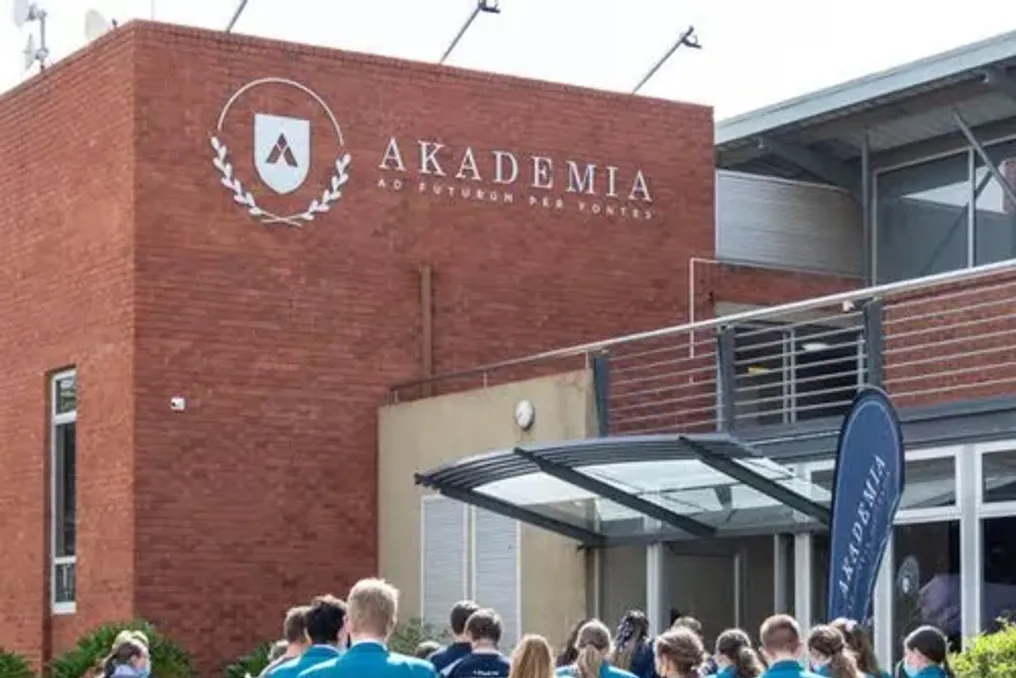
Active debates surround the establishment of Akademia, a new university teaching in Afrikaans, raising sharp questions about the place of such an institution in diverse and inclusive South Africa. Discussions around the Akademia campus have taken an undesirable turn: one former Minister of Higher Education questioned the creation of this structure, and a prominent political figure went further, asserting that the project should not continue.
These statements raise a broader question: is an independent Afrikaans-language university compatible with the constitutional character of post-apartheid South Africa? It is acknowledged that challenging Akademia is not inherently wrong, as no organization in a constitutional democracy is beyond criticism, and language, race, and education cannot be separated from history. However, history cannot be used to force the Constitution to affirm what it does not state.
The Constitution directly regulates the field of education. Section 29(2) recognizes the right to receive education in a language of choice in public institutions, provided it is reasonably practicable. Furthermore, the state is obliged to consider fairness, practicality, and the necessity of correcting past mistakes, as well as reasonable educational alternatives, including institutions with a single language of instruction.
Thus, the Constitution explicitly supports education in one language. The Afrikaans institution can teach in Afrikaans, just as an isiZulu institution can teach in isiZulu, or an English institution can teach in English.
However, Akademia is not a state university, making Section 29(3) more relevant. It grants everyone the right to establish and maintain 'on their own account' independent educational institutions subject to three conditions: they must not discriminate on the basis of race, must be registered with the state, and their standards must not be lower than those of comparable state institutions. This is the constitutional compromise.
The Constitution contains no fourth condition requiring an independent institution to be multilingual, nor does it take away this right simply because the chosen language is Afrikaans. Sections 30 and 31 further protect linguistic and cultural rights, as well as the ability of communities to support associations and other civil society bodies. The Constitution does not demand cultural and linguistic uniformity; it creates space for difference.
But this is only half the argument. If Akademia claims constitutional protection afforded to an Afrikaans-language institution, it must be absolutely clear that its organizing principle is language, not race. Consequently, its admissions policies and practices must be unequivocally non-racist. A Coloured Afrikaans-speaking student must have the same opportunities for study there as a white Afrikaans-speaking student. The same must apply to Black or Indian South Africans who speak Afrikaans and wish to study in it.
Akademia may require students to complete academic work in its chosen language of instruction, but it must not use race, directly or indirectly, as an admission barrier. However, merely stating a lack of discrimination is insufficient. If Akademia wants South Africans to distinguish the Afrikaans institution from a white institution, it must actively demonstrate this difference.
Its commitment to racial inclusivity should not be hidden in fine print of the admissions policy; it must be evident in how Akademia describes itself, whom it attracts, where it draws from, and whom it publicly welcomes into its academic community. The test is not simply whether Akademia will accept a Coloured, Black, or Indian Afrikaans-speaking applicant. The question is whether Akademia actively wants these students to apply.
This means recruiting students from the entire Afrikaans-speaking community. Coloured South Africans who speak Afrikaans are an obvious and significant part of this community. Similarly, Black or Indian speakers of Afrikaans should not perceive Akademia as an institution intended for someone else.
There is also a practical reason. The white Afrikaans-speaking population is shrinking and will represent an increasingly smaller potential pool of students. An institution that effectively views its natural audience as white Afrikaans speakers risks becoming a demographic dead end. Akademia's sustainable future cannot lie in becoming a university for white Afrikaans speakers; it must lie in becoming an Afrikaans university for all Afrikaans speakers, regardless of race.
Indeed, Akademia cannot reasonably object when critics conflate Afrikaans with whiteness if its own admissions system and institutional culture do not sufficiently demonstrate this distinction. Those defending its constitutional right to exist must also be prepared to hold it accountable.
The same principle applies to its criticism. For years, Afrikaans-speaking South Africans concerned about the diminishing role of the Afrikaans language in state universities received explanations with sufficient constitutional grounding: state universities belong to the broader population and cannot remain the cultural property of one linguistic community. This is fair.
But what happens when Afrikaans speakers accept this and, instead of demanding the state create an Afrikaans university, pool their resources, acquire land, build a campus, and create an independent university? This is what is happening with Akademia. One cannot simultaneously argue that Afrikaans speakers cannot expect the state to maintain an Afrikaans state university, and that they cannot create one themselves. Otherwise, what remains of the right contained in Section 29(3)?
Constitutional rights do not depend on political approval; that is the very meaning of their existence. A religious community can establish an independent educational institution shaped by its ethos; a linguistic community can organize around preserving and developing its language. All of this remains under the control of the Constitution and the law. The criterion cannot change simply because the community exercising these rights speaks Afrikaans.
South Africa also urgently needs investment in education, skills, research, and infrastructure. If private citizens invest significant funds in additional higher education opportunities, the response should be to ensure compliance with the Constitution, the law, and proper academic standards, rather than objecting to the institution due to aversion to its linguistic character.
Undoubtedly, the apartheid state used Afrikaans as a tool of power and exclusion. This history must be acknowledged. But the democratic Constitution did not respond with a ban on Afrikaans identity or Afrikaans institutions. It did something more complex: it banned racial discrimination while protecting linguistic and cultural freedom. This distinction must guide both sides.
To the critics of Akademia: an Afrikaans-language institution is not racially exclusive by nature, and constitutional rights cannot be denied simply because Afrikaans carries a complex history. And to Akademia itself: if you ask South Africans to distinguish Afrikaans identity from racial identity, your admissions policy, recruitment practices, and institutional culture must make this distinction undeniable.
Akademia must abide by the Constitution. So must its critics. South Africa fought for the creation of a constitutional democracy where achieving equality did not require eliminating diversity. Our national motto, 'Diverse People Unite,' reflects this ideal. It does not require South Africans to abandon their differences for belonging.
We must be mature enough to distinguish between the racial exclusion that the Constitution prohibits and the linguistic association that it protects. Akademia's task is to openly and constantly prove that it understands this difference. This is not a defense of the past; it is a defense of the constitutional future that South Africans chose together.