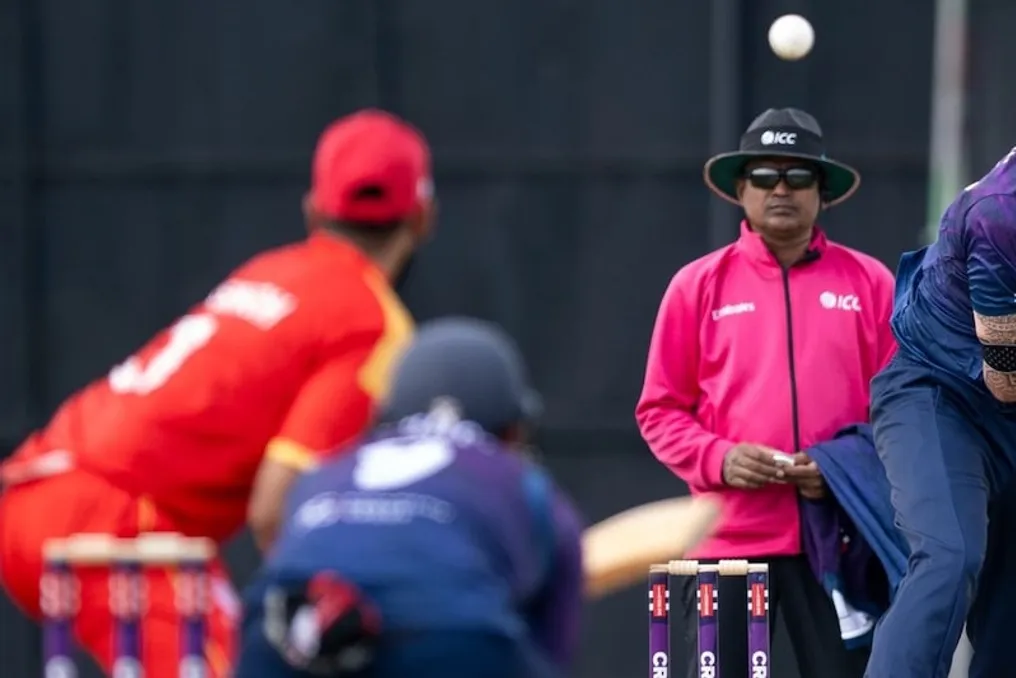
Vaibhav Suryavanshi Disappoints in Dalip Trophy Debut: Unknown Bowler Captures Him After Two Fours
Read more
Aaj Tak
www.aajtak.in

Vaibhav Suryavanshi Disappoints in Dalip Trophy Debut: Unknown Bowler Captures Him After Two Fours

The debut of 15-year-old Vaibhav Suryavanshi in the Dalip Trophy did not meet expectations. In the quarterfinal match against the North Eastern region, Vaibhav, playing for the Eastern region, was dismissed after scoring only 8 runs in the first innings. Although he showed an aggressive attitude by hitting two consecutive fours, he could not sustain this attacking style for long.

The match was held at the Center of Excellence Ground-2 stadium in Bangalore, which is managed by the BCCI (Board of Control for Cricket in India). The North Eastern region won the draw and invited the Eastern region to bat first. It was noted that fast bowling helped during the new ball over, and the Eastern region lost batsmen early in the game.

Vaibhav started his run in the Dalip Trophy in the style he is known for. In the second over of the innings, he sent the ball outside the powerplay zone over the boundary off the third ball bowled by Bishwarajjit Kontaudzama. On the next ball, he also hit a four using a drive through the powerplay. However, the bowler quickly found a response to his aggression.

When Vaibhav attempted another drive through the powerplay on the last ball, the timing was poor. The ball touched the edge of the bat and went into the gully, where Joseph Lalthankhuma caught it. Thus, Vaibhav's first innings in the Dalip Trophy concluded after 6 balls with a score of 8 runs. Despite Kontaudzama allowing two fours, he maintained composure and leveled the score by dismissing the young batsman on the last ball of the over.

Right-arm fast bowler Bishwarajjit Lalthankhuma is from Imphal, the capital of Manipur. He is 30 years old and this is his 48th first-class match. Previously, he took 145 wickets in 47 first-class matches with an average of 27.82. Additionally, Bishwarajjit has taken 66 wickets in 49 List-A matches and 46 wickets in 46 T20 matches.

Although Vaibhav Suryavanshi has recently attracted attention for his explosive batting in T20, the Dalip Trophy presented him with a different challenge. Test cricket, which requires prolonged play and experienced home bowlers, tests his patience and technique. Although the debut innings was short, this tournament is a big platform for Vaibhav to showcase another side of his game.

Similar stories

Pujara warned Gautam Gambhir about possible exclusion of Kuldeep from the squad before the Colombo match
Read more
www.aajtak.in

Pujara warned Gautam Gambhir about possible exclusion of Kuldeep from the squad before the Colombo match

A test match between India and Sri Lanka is scheduled to be held at the Sinhalese Sports Club (SSC) in Colombo on August 23. New discussions regarding the Indian team's squad have begun ahead of the second match of the series.

The Indian team, which won the first match in Galle by 165 runs, may make changes to its spin department. Head coach Gautam Gambhir is considering replacing Chinaman Kuldeep Yadav with off-spinner Saransh Jain, who has not yet played at the international level.

Former Indian batter Cheteshwar Pujara also shared his opinion on the squad composition. He believes such a change would be incorrect, and Kuldeep should be given another chance. Although Kuldeep's performance in Galle did not meet expectations—he conceded 103 runs in 25 overs across two innings and took only one wicket—his personal play became a subject of discussion before the second match.

In an interview with Cricinfo, Cheteshwar Pujara stated that, in his view, India should field a similar lineup to the previous one, but he heard that Kuldeep might be replaced by Saransh because Sri Lanka has many left-handed batters. Pujara opposed this potential change, expressing confidence in Kuldeep's potential.

He emphasized: 'If that happens, I will be disappointed because a player of Kuldeep's caliber should be given another chance. He is a quality bowler. In Test cricket, you don't make too many changes. You don't change a winning combination. I believe Kuldeep should remain in the squad.'

Kuldeep bowled few overs in the first match

In the first match, Kuldeep participated as India's third spin option. Captain Shubman Gill utilized more Ravindra Jadeja and left-arm spinner Manav Sutara. Both these spinners bowled almost twice as many overs as Kuldeep. The underutilization of Kuldeep raised the question of whether the team management values finger spin over wrist spin under current conditions. Nevertheless, Indian spin coach Sairaj Batule explained this due to strategic reasons. According to him, the pitch in Galle favored finger spinners more, so the bowling distribution was adjusted accordingly.

Saransh Jain, who is 33 years old, is an off-spinner and has never played for India. His name emerged as an option for the second match squad due to the presence of several left-handed batters in the Sri Lankan order. The matchup of an off-spinner against left-handed batters could interest the team management.

Manav Sutar demonstrated why his cricket style of play is dangerous
Read more
www.aajtak.in

Manav Sutar demonstrated why his cricket style of play is dangerous

In cricket, a bowler's true value is determined not only by the number of wickets he takes but also by how many different questions he can pose to the batsman. When a bowler constantly changes tactics while using the same motion, it starts tipping the scales in his favor, as the batsman is forced to find answers to new challenges with every delivery.

In the Galle Test match, the Indian team saw exactly this kind of bowler in Manav Sutar. Although two Test matches are not enough for a final judgment on a player's career, the signals given by 24-year-old Sutar in these two games are strong enough to warrant close attention.

It was particularly telling that he used three different approaches against three different batsmen. This convincingly demonstrates that India might gain not just one bowler, but a player capable of posing a new question to the batsman with every ball.

On the fourth day of the Galle Test, Sutar bowled a ball to Pasindu Sobarandera, forcing him to drift in the middle and leg area. The ball did not have much spin and continued its path roughly in the same direction it came from. Sobarandera tried to defend, expecting the ball on the inside edge, but the ball was not there. It hit the player's back leg. India utilized the review option, and ball tracking showed three red flags—LBW.

Sutar defeated the batsman not through spin, but through a straight delivery.

The situation changed when Sonal Dinusha came onto the field, who was only 16 runs away from a century in his second innings. Sutar bowled the ball outside off stump this time, giving it flight, thereby inviting the left-handed batsman to attack. Dinusha attempted to clip the ball, but it struck the inside edge of the bat, went into the pad, and rebounded into the leg-side. The ball was caught. Here, Sutar did not attack the wicket directly; he forced the batsman to play and waited for a mistake, creating the conditions for it himself.

Next up was Prabhat Jayasuriya. This time, Sutar increased the pace and used drift. The ball speed was 92.7 km/h. This drifting ball looked like it could be easily defended with the back foot for a left-handed batsman. However, the ball landed on the pitch, gripped it, and deviated slightly. This was enough: the ball hit the outside edge of the batsman and struck the off-stump.

Three balls. Three different speeds and lengths. Three different questions... and the answer to all three—wicket. This might be the most interesting part of Sutar's story.

Indian batsman K.L. Rahul very accurately grasped this characteristic of Sutar. In his opinion, Sutar's true strength lies in the 'subtle variations' achieved by using the same motion and angle. He can slow down or speed up the ball without making large changes to his arm speed. In conditions like Galle, he also brilliantly utilized the drift provided by the air.

This difference is hugely significant. For an orthodox slow left-arm spinner, it is rare to be able to make the ball move in for an LBW and also move out to touch the bat's edge, using the same motion.

Usually, when talking about such spinners, the first thing that comes to mind is bowling to one spot, letting the pitch do the work, and waiting for the batsman's error under pressure. However, Sutar's initial story is different. He can create the impression that there is nothing special about the ball, but at the next moment, by changing the speed, drift, length, or spin of the ball, he completely changes the entire question.

In two Tests, Sutar took 17 wickets, including two five-wicket hauls, 10 wickets in one match, and an average speed of 27.2. His economy rate is only 2.49 runs per over. The statistics are impressive, but even more important is the way he secures these wickets. Sutar does not dismiss batsmen in the same way; he finds different paths using the same bowling action.

K.L. Rahul also pointed this out. He believes that Sutar's consistency gradually puts the batsman in a difficult mental situation. If the ball doesn't spin, the batsman thinks he needs to do something... and as soon as the batsman gets into such a state, the bowler is in a position to win the match. Thus, Sutar's greatest strength is not just the ball's spin; his strength is that he does not allow the batsman to be confident about the next ball.

Sutar's appearance in Test cricket was not sudden. His experience playing first-class cricket, in India A tours, as well as in various conditions such as Australia, Sri Lanka, and England, prepared him for international cricket.
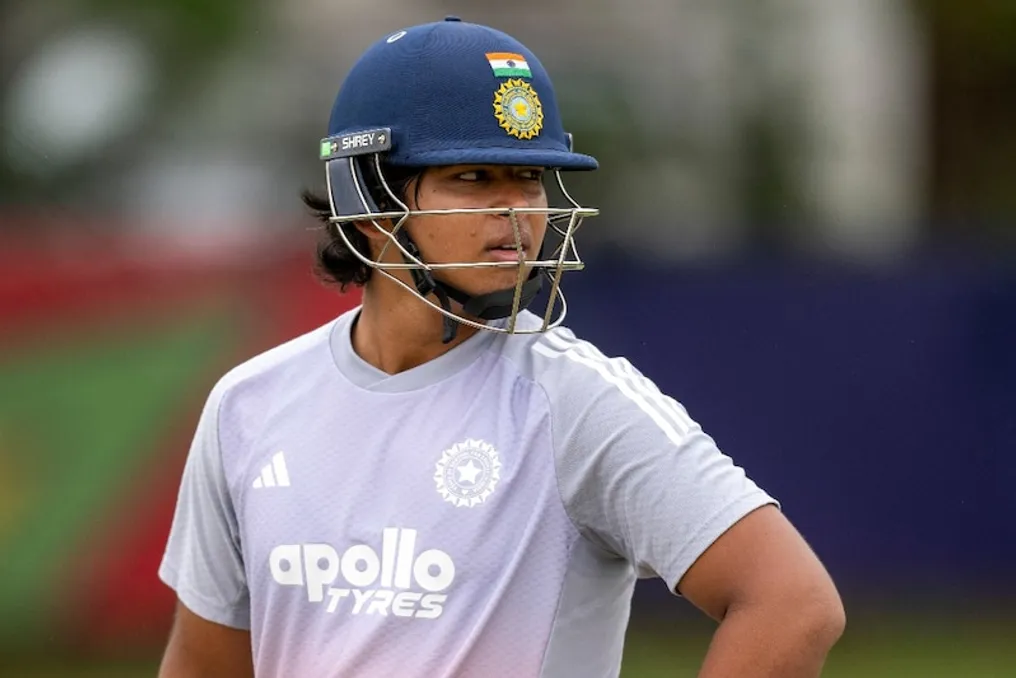

23-year-old spinner Lyle Robertson breaks world record of Pakistani bowler by taking 6 wickets on ODI debut
Read more
www.aajtak.in

23-year-old spinner Lyle Robertson breaks world record of Pakistani bowler by taking 6 wickets on ODI debut

Scottish spinner Lyle Robertson achieved a historic feat on his One Day International debut. In the match against Canada, Robertson took six wickets for just 52 runs in 10 overs. This is the best bowling performance by a spinner on an ODI debut. Due to his impressive bowling, Scotland defeated Canada by a large margin of 170 runs.

Robertson broke the record set by Arafat Minhas of Pakistan. Minhas had taken five wickets for 32 runs in his ODI debut against Australia this year. In this match on August 13th at Forthill ground in Dundee, Scotland set a massive target of 348 runs against Canada. However, the Canadian team was all out for 177 runs in just 35 overs.

Robertson got his first wicket in the 23rd over when he dismissed Harsh Thacker. Subsequently, he also sent Sad Bin Zafar and Shivam Sharma back to the pavilion. Robertson concluded his spell in a spectacular fashion; in his final over, he dismissed Shreyas Mowa and Zahid Shirzad consecutively. The next ball was a dot, and then he completed his six-wicket haul by taking the wicket of Kaleem Sana.

With this performance, Robertson became the fourth bowler in the world to take six or more wickets on an ODI debut. The world record in this category is held by Charlie Ceesell of Scotland. Ceesell took seven wickets for 21 runs on his debut against Oman at the same ground in 2024. Additionally, Kagiso Rabada of South Africa took six wickets for 16 runs in his first ODI against Bangladesh in 2015. Meanwhile, Fidel Edwards of West Indies took six wickets for 22 runs on his ODI debut against Zimbabwe in 2003.

In the match, Scotland's captain Richie Barrington decided to bat first after winning the toss. Despite the early loss of two wickets, Barrington and Brandon McCullum stabilized the innings. A crucial partnership of 140 runs was formed between these two batsmen for the third wicket. McCullum scored 64 runs off 59 balls, which included eight fours and three sixes. On the other hand, Barrington scored a brilliant century with 120 runs off 103 balls, including 15 fours and four sixes. Matthew Cross and Jack Jarvis added quick runs in the final overs. Cross remained unbeaten on 51 runs, while Jarvis contributed 30 runs off just 14 balls. Scotland posted a huge total of 347 runs losing seven wickets.

Canada's chase of the massive target did not start satisfactorily. Aaron Johnson was dismissed early, and Yuvraj Samara managed only 16 runs. Paragat Singh tried to stabilize the innings by scoring 42 runs. Anup Cheema played an explosive innings of 42 runs off just 16 balls, but Robertson dismantled the middle and lower order batsmen, ending all possibilities of a Canadian comeback. From a run-scoring perspective, this was Scotland's biggest win in ODI cricket jointly. Previously, Scotland had defeated Canada by 170 runs in 2014.

Popular