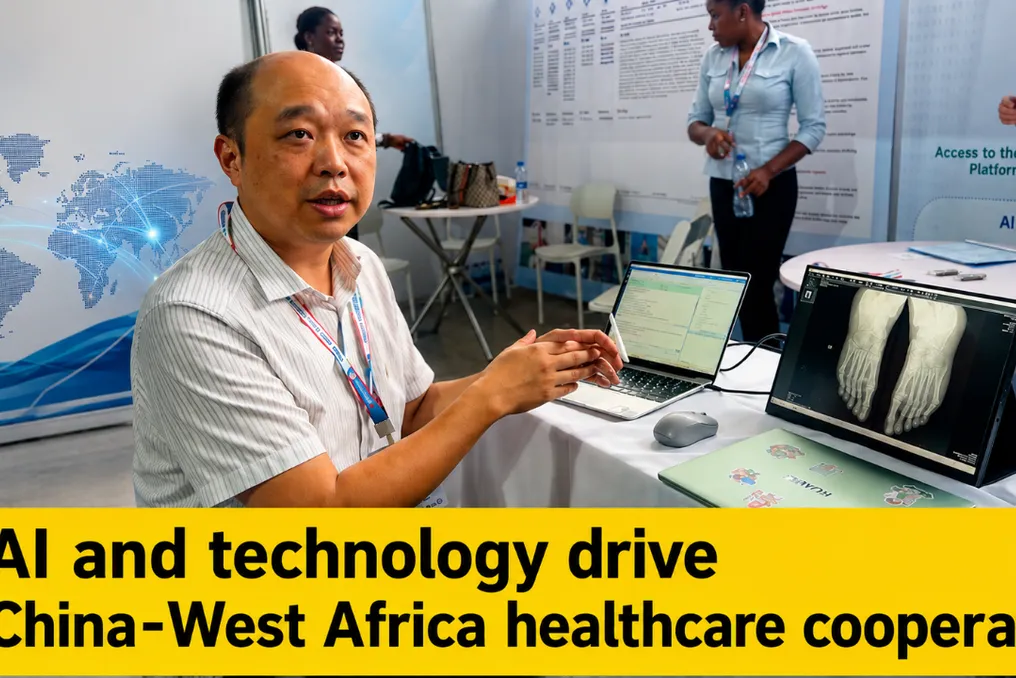
The third China-West Africa Medical Summit and Exhibition took place in Accra, the capital of Ghana. The event gathered healthcare specialists, technology companies, and industry participants for a three-day event dedicated to innovations and medical technologies.
This summit comes against the backdrop of African countries' increasing reliance on digital solutions and artificial intelligence to improve healthcare delivery and solve long-standing sector problems.
Among the exhibitors is Vincent Zhang, who is presenting a range of AI-based medical devices for the Ghanaian market. He explained that one such device allows for monitoring a patient's vital signs, with artificial intelligence being used to analyze the collected data.
Connecting Hospitals Through Technology
Other exhibition participants are focused not only on individual medical instruments but also on comprehensive systems capable of linking medical institutions and improving the exchange of medical information. Liu Xianbo, Deputy General Manager of Goldisc Healthcare, is demonstrating a cloud platform designed to unite hospitals and clinics, allowing patient records and other medical information to be stored in a single system.
He stated that this software, presented in Ghana, is called the '123' program and can connect over 20 hospitals and more than 300 clinics.
Dozens of Chinese companies are participating in the exhibition, exploring opportunities in the Ghanaian market and the wider West African region. Exhibitors assert that technologies, ranging from AI-powered diagnostics to digital medical management systems, can help healthcare workers make faster and more informed decisions.
Transitioning from Exhibitions to Hospital Practice
However, for healthcare experts in Ghana, the possibilities extend beyond simply demonstrating new technologies. They believe that deepening cooperation between China and West Africa will help integrate artificial intelligence from exhibition halls into daily healthcare practice, but this requires investment in infrastructure and skills.
Dr. Edem Kojo Hazi, a fertility specialist from Lister Hospital, emphasized the importance of early adoption, noting that the pace of AI penetration into all aspects of life, not just medicine, is enormous. He added that without participation now, they risk falling behind.
The drive for broader AI use occurs as healthcare systems across Africa face shortages of medical personnel, limited resources, and growing demand for specialized services. Experts note that developing local capacity will be crucial to ensuring that healthcare workers can effectively develop, implement, and utilize AI technologies while maintaining proper standards of patient care and data protection.
As the partnership between China and West African countries in healthcare strengthens, summit participants in Accra are also seeking local partners who can help disseminate their technologies throughout Ghana and the entire region.
The exhibition underscores the growing desire to make digital innovation and artificial intelligence a more practical part of the future of African healthcare.