NASA has selected the space company Gravitics to develop the concept of an orbital hangar. This hangar would be designed to receive vehicles that transport materials from space back to planet Earth. This initiative is part of an award from the Small Business Innovation Research program, in the initial phase scheduled for 2026.
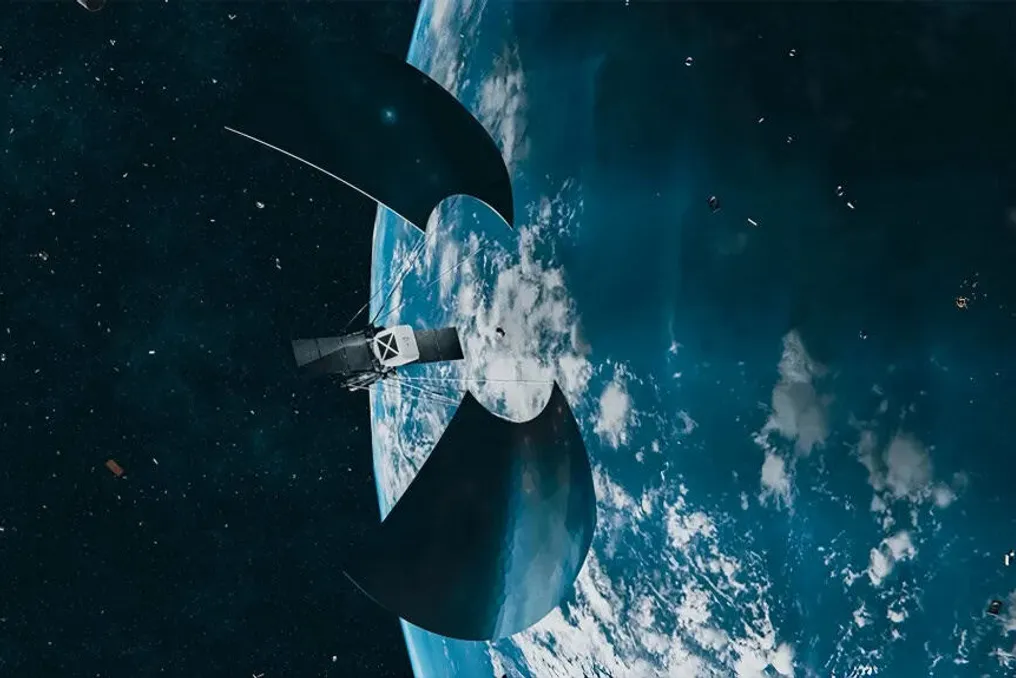
The project was named Multiple-Downmass Hangar and aims to create a structure capable of housing several return vehicles. This would allow cargo collected or produced in orbit to have a more frequent option for delivery to the surface.
The need for this proposal arises due to the growing expectation of more missions returning space samples and materials. In addition to future trips to other celestial bodies, the solution also meets the demands of companies planning to conduct research and manufacturing in the orbital environment.
Traditionally, sample return missions require a spacecraft to travel into space, collect the desired material, and make the journey back. The model conceived by Gravitics proposes to dissociate this need from an exclusive mission, establishing a concentration point for vehicles ready to descend within the orbital environment itself.
The hypothetical structure would have the capacity to accommodate an unspecified number of return vehicles. These equipment would remain in the hangar until the opportune moment to transport their cargo to the surface, which could eliminate the wait for an operation dedicated solely to material recovery.
This idea responds to a gap that becomes more relevant with the expansion of commercial activity beyond Earth. Companies involved in orbital operations might need a practical method to return their results, products, or materials to the planet without depending on a specific mission for each return.
Gravitics already operates in the manufacturing of modules for space stations and other equipment intended for the orbital environment. With NASA's support, the company must now evaluate whether its architecture can offer a more economically advantageous and compatible alternative with a regular cadence of returns.
The contract was granted within the SBIR Phase I of 2026. In this phase, the company needs to prove that the concept has technical merit and that its implementation is feasible, in addition to studying a configuration that could have a lower cost than other ways of transporting cargo back to Earth.
NASA has not yet disclosed the amount allocated to the project, nor has it defined which vehicle model will be used to occupy the hangar and execute the cargo descent. The concept is not limited only to commercial activities in low Earth orbit; the history of space exploration includes 18 missions returning materials from other celestial bodies.
Six of these operations were crewed, covering the Apollo 11, 12, 14, 15, 16, and 17 missions. The remaining ones were conducted by robotic systems. During these initiatives, samples were brought back from the Moon and the asteroids Itokawa, Ryugu, and Bennu.
Although new projects of this type are expected, the Mars Sample Return initiative has not yet been defined. Simultaneously, the expansion of private activities in space generates another demand for systems capable of transporting materials back to the planet. It is in this context that the orbital hangar proposed by Gravitics gains importance, seeking to gather different vehicles in orbit to offer a higher frequency infrastructure, instead of relying solely on a return operation prepared for a specific cargo.
The American agency's support does not imply that the system is ready to operate. The first phase of the program focuses on verifying the technical functionality of the proposal and whether it achieves the stipulated economic goal. Among the points to be analyzed is the possibility of creating a more accessible system that maintains the capacity to support periodic returns.
The project is still in its initial stage, leaving crucial questions open. The exact quantity of vehicles the hangar can receive and the type of vehicle responsible for transporting the cargo to the surface have not yet been communicated. If the proposal moves forward, the structure could change the organization of space material returns, especially in a scenario where scientific missions and commercial activities demand more recurrent solutions to bring cargo back to Earth.