Seasonal sale for the academic year has started in the UAE: discounts up to 80% and scholarships up to 200,000 dirhams
Read more
Khaleej Times
www.khaleejtimes.com

Seasonal sale for the academic year has started in the UAE: discounts up to 80% and scholarships up to 200,000 dirhams

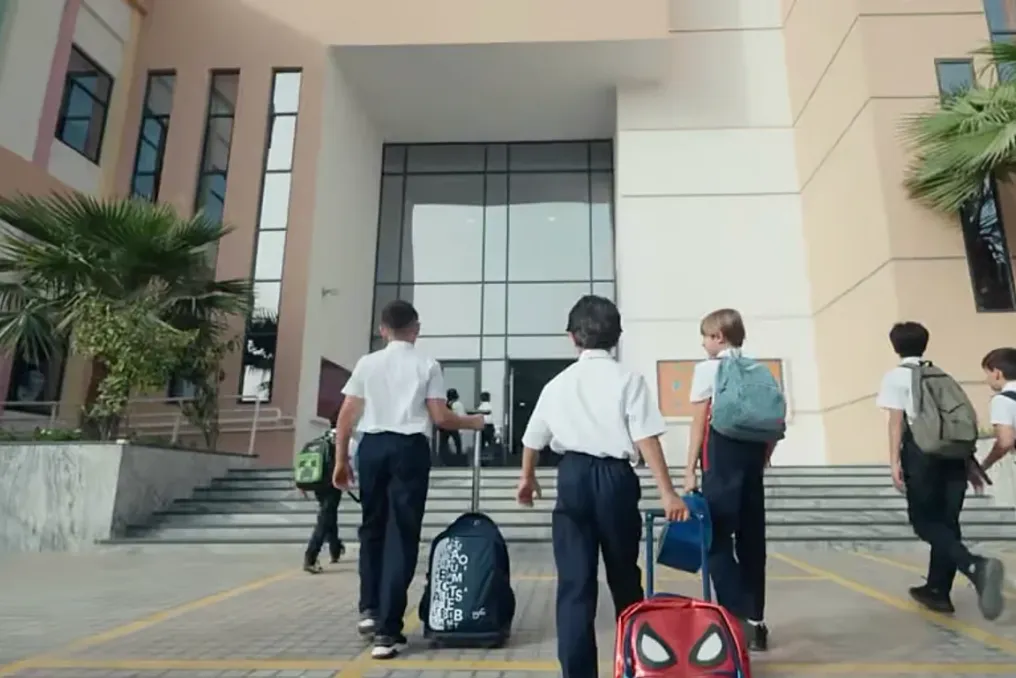
As the new academic year approaches, residents of the United Arab Emirates (UAE) are concluding their back-to-school shopping period, purchasing everything necessary: from backpacks and shoes to lunch boxes, stationery, clothing, and electronics.

Retailers in the UAE are offering numerous promotions this year, including discounts of up to 80 percent, free gifts, scholarship giveaways, and children's events to turn school shopping into a family entertainment experience.

Among the sellers offering special deals for the start of the school year, Noon stands out, providing discounts of up to 80 percent on school supplies. This promotion covers stationery, backpacks, lunch boxes, water bottles, clothing, electronics, and groceries and will run until September 2nd.

Amazon.ae is also holding its back-to-school sale, offering discounts of up to 50 percent on selected items until August 23rd. Deeper discounts are available on certain categories of school clothing and other goods.

At Union Coop, families can benefit from discounts of up to 50 percent on over 1000 items, including school supplies, bags, lunch boxes, bottles, groceries, and electronics. This campaign runs until September 13th.

Parents buying study furniture can find favorable offers at Ikea UAE. Ikea Family members can receive a discount of 25 to 50 percent on selected tables and organizers until September 6th.

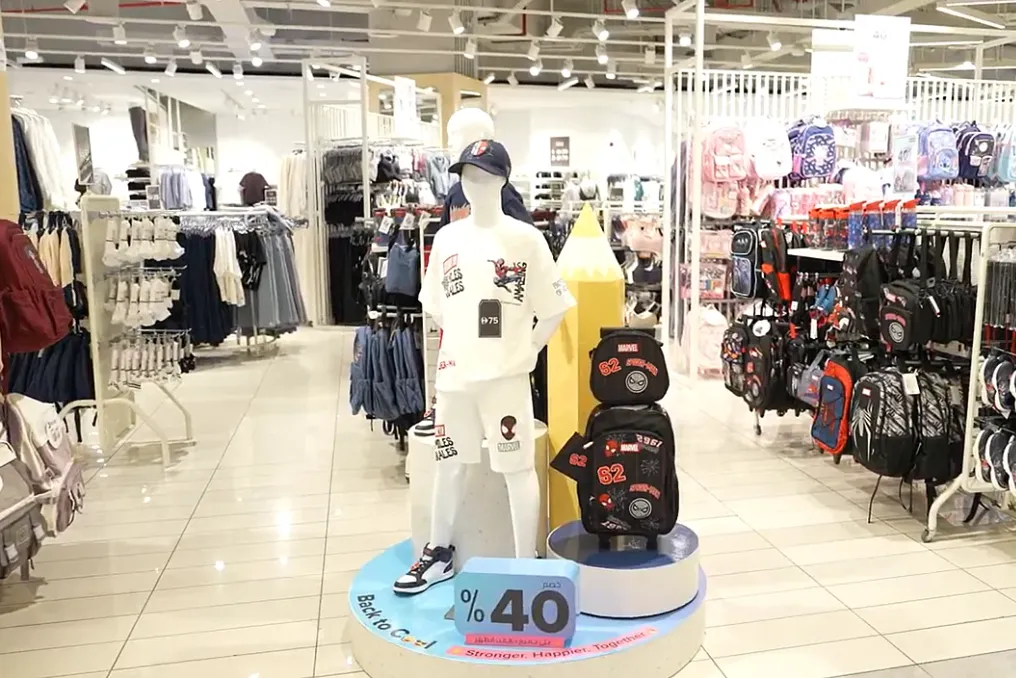
Fashion and electronics retailers have also joined this race. Max Fashion offers a 40 percent discount on backpacks until the end of August, while Jumbo Electronics advertises discounts of up to 35 percent on selected laptops and tablets.

Sharaf DG is also targeting students and teachers during the school season, offering an additional five percent discount on some purchases as part of its 'Back-to-School' campaign.

For residents who prefer fixed prices over percentage discounts, Redtag has launched a school collection across the GCC. This collection includes backpacks, travel bags, lunch boxes, bottles, stationery, shoes, and clothing. 5-in-1 sets are priced at 99 dirhams, backpacks start from 59 dirhams, shoes from 55 dirhams, and water bottles from 29 dirhams. Dresses in the UAE start from 29 dirhams.

Some sellers go beyond price reductions by offering free items with the purchase of school supplies. Asics gives away a CamelBak bottle with the purchase of selected children's shoes, and New Balance customers who spend 300 dirhams receive a free pouch.

Scholarship giveaways have also become part of the 'Back-to-School' season. At Arabian Center in Dubai, shoppers who spend 200 dirhams or more can participate in a draw for a share worth 200,000 dirhams under the Modesh scholarship program. Ten winners will receive 20,000 dirhams each, and the campaign runs until August 29th.

Shopping malls are also trying to make annual shopping more exciting for children. Bawabat Al Sharq Mall in Abu Dhabi is hosting the 'Big Dreams Take Flight' event as part of 'Back-to-School' from August 21st to 30th, from 4:00 PM to 10:00 PM. The program includes a giant balloon installation, as well as games such as 'Hop to the Top', 'Adventure Chase', 'Catch Your Dream', and 'Sky Runner'. A special creative and handicraft zone is also provided.

The mall reported that families can combine participation in events with shopping at more than 350 local and international brands offering stationery, electronics, fashion, footwear, and accessories.

Other retailers, including Nesto, Day To Day, Ansar Mall, Night to Night, Miniso, and Mumuso, are also running collections or promotional catalogs during the school season in August and early September.

Similar stories

UAE Students Include Cosmetics and Recycled Material Goods in Back-to-School Shopping Lists
Read more
www.khaleejtimes.com

UAE Students Include Cosmetics and Recycled Material Goods in Back-to-School Shopping Lists

The back-to-school shopping list has undergone significant changes over the past five years: students are now purchasing not only notebooks and pencils. According to a representative from Landmark Group, cosmetics, skincare products, and accessories that align with current trends have become part of the annual ritual.

Beauty has become an increasingly important part of the preparation period for school, especially among high school students and young people preparing for a new academic year. Mimi, a sixteen-year-old student from Dubai, spent the last week browsing cosmetic items for school. She mentioned looking for various brands of her favorite liner, which had run out, and is looking forward to using it at school.

The representative also noted that consumers prefer products that allow them to perform daily routines quickly and effortlessly, rather than creating elaborate looks. Basic skincare products, lipsticks, concealers, mascara, and light facial products are highly sought after.

He emphasized that there is demand for items that provide a natural look and fit easily into a busy school or university schedule. According to Mimi, many girls in her school wear makeup daily; some do so for special occasions, others maintain a simple no-makeup look every day, while some younger students apply full makeup daily, which she estimates takes them at least an hour per day.

The representative added that back-to-school shopping is no longer purely utilitarian. For many students, especially teenagers and older children, it is an opportunity to express their individuality, interests, and style. As a result, collections featuring brands and characters continue to be in high demand, especially if they align with popular trends in entertainment, gaming, and lifestyle. Stores feature hundreds of items with brands such as Spider-Man, Minecraft, Stitch, and Minnie Mouse.

He stated that over the past five years, the shopping season has become more thoughtful, more value-oriented, and much more influenced by lifestyle trends. Students play a more active role in purchasing decisions, stimulating demand for designs and products that reflect their personal preferences. Social media now shapes everything—from colors and design to product preferences across all categories.

An expert from Centerpoint noted that students have also become more conscious in their choices. Ashwini Kharkhadkar reported that there are school bags made from recycled plastic bottles, as young people today care much more about the environment and strive to reduce their carbon footprint. She also added that retail interest in products with recycled content, reduced packaging, and more sustainable sourcing methods is growing.

Many families are also increasingly choosing sets and ready-made solutions that eliminate the need to guess when shopping. The Landmark representative explained that such collections offer both savings and simplicity, helping parents save time and ensure a smoother shopping process. He also noted that convenience is one of the main factors influencing purchases.

Convenience

School backpacks, lunch accessories, and stationery remain key categories. However, for parents who prioritize comfort and ergonomics, features such as reinforced seams, sturdy straps, and lightweight yet durable materials are becoming increasingly important.

Families in the UAE are cutting back on school supply costs through budgeting and reusing items
Read more
www.khaleejtimes.com

Families in the UAE are cutting back on school supply costs through budgeting and reusing items

As the 2026-2027 academic year approaches, parents are seeking ways to manage the expenses associated with the start of the school year. These methods include price comparison, budgeting, reusing school supplies, and utilizing discounts.

Om Hasher, a mother of two children from Dubai, begins the process by checking the school supplies already available at home before visiting stores. She reviews her children's items from the previous year and creates a list only of what needs replacement. She notes that she separates purchases into necessary and optional items, setting a budget for each child to avoid buying unnecessary or duplicate goods. Sometimes she buys certain supplies in bulk if it is more cost-effective, especially those that will be used throughout the year.

Planning has also helped other parents distribute costs and avoid spontaneous purchases. Maryam Hajji Mohammed, a mother of two daughters entering the 7th and 4th grades in Ras Al Khaimah, began preparing for the new academic year as early as July. Before ordering uniforms, she checked with the school and teachers whether the uniform and logos would remain unchanged. She then ordered official and sports uniforms according to her daughters' measurements, which allowed her to choose a longer and more modest style instead of buying ready-made clothes in a larger size.

Maryam also donated her daughter's old school uniform to a local Charity Fund that organizes exhibitions for needy students, thereby giving the clothing a second life instead of letting it sit unused at home. Regarding stationery, bags, labels, and other accessories, she preferred to shop online. This allowed her daughters to choose what they wanted using filters to compare prices. Living in an area with limited access to nearby shops, she noted that online shopping also helped avoid crowded stores, parking issues, and long queues during the rush at the beginning of the school year.

Price comparison across different stores and online platforms is part of Om Hasher's approach. She has noticed significant differences in the prices of school bags, lunch boxes, colored supplies, and stationery featuring popular characters. She emphasizes that sometimes items of the same quality are available much cheaper in another store, so she does not buy from the first place she finds.

For Amna, another mother from Dubai with five daughters, checking last year's supplies is also the starting point for her back-to-school purchases. She first inspects all the items from the previous year, separating damaged or unnecessary ones, and then buys only what is missing. Amna also monitors online promotions and recently took advantage of discounts on school bags, lunch boxes, and other necessities. However, she believes that product quality remains an important criterion when deciding if a discount is worth it.

Om Hasher warns parents against blindly following large discounts, advising them to check the original price and compare it with prices elsewhere before making a purchase decision. She argues that not every discount means the price is truly lower. Furthermore, she asks herself questions about the actual necessity of the item, its quality, and its potential use. If the item is already owned or not needed, she will not buy it, even at a big discount, because buying something unnecessary is not saving money.

Reusing supplies is another common way to reduce costs. Om Hasher says that school bags, pencil cases, and lunch boxes can often last for more than one year if they are in good condition, and leftover paints, pens, folders, and rulers can also be reused. Amna agrees that this applies to school bags, although children sometimes want to change them. She adds that bags can remain useful outside of class, for example, for carrying toys and other items during family outings.

Maryam also tries to minimize school supply waste. At home, she keeps partially used notebooks, colored pencils, stationery, and craft materials in a special corner for her daughters' drawing and other activities. Items that are in good condition but no longer needed are either donated or given to relatives and friends. Such habits help extend the lifespan of school supplies and reduce the need to replace everything at the beginning of each school year.

Overall, the approach in these three families is not about completely foregoing spending, but about making every purchase meaningful: by checking existing stock, planning ahead, comparing prices, evaluating discounts, and finding ways to reuse or pass on items that are still in good condition.

Five Ways Students Can Use AI for Learning Without Having Homework Done For Them
Read more
www.khaleejtimes.com

Five Ways Students Can Use AI for Learning Without Having Homework Done For Them

The new academic year is beginning in the United Arab Emirates (UAE), and students are returning to school with their backpacks and notebooks. This raises the question of how students can apply artificial intelligence (AI) in the learning process. According to the UAE's approved academic calendar, the 2026-27 academic year starts on August 31st.

Artificial intelligence is no longer something external to the classroom; it is now an official subject in UAE public schools, covering all levels from kindergarten to grade 12. However, using AI in studies does not mean asking a chatbot to write an essay or solve homework. Previously, the Khaleej Times reported that approaches to using generative AI vary across UAE schools: some allow controlled or teacher-guided use, while others restrict access to public tools or require the use of approved school platforms. Schools also emphasize fact-checking and student data protection.

For families preparing for the new semester, there is a clear distinction: AI can help a student understand material or simply do the work for them. Below are five methods that help utilize AI in a beneficial way.

Sometimes the problem is not the student lacking an answer, but rather that the explanation from the textbook or lesson was not understood. AI tools can reiterate a concept using simpler language, a different example, or by breaking it down into smaller steps. For instance, a student struggling with photosynthesis might ask: 'Explain photosynthesis at an 8th-grade level. Use a simple real-life example, and then ask me three questions to check my understanding.' If the explanation remains unclear, they should ask the AI to try another approach. Features like Study Mode in ChatGPT and Guided Learning in Gemini are designed for this step-by-step learning, including posing questions instead of immediately providing the final solution.

Instead of relying on highlighted pages that create the illusion of reviewing material, AI can transform these notes into questions. Students can upload or paste their study material and ask to be tested on it one question at a time. A suitable prompt could be: 'Quiz me on these notes with ten questions. Ask one question at a time and do not show me the answer until I respond. At the end, tell me which topics I got wrong.'

Both ChatGPT and Gemini support the creation of quizzes, tests, or study guides based on learning materials. There is a significant difference between asking AI to solve a math problem and asking for help to overcome a difficult stage. Students can inform the chatbot beforehand that they do not need the final answer. Instead, they can ask: 'Do not solve this problem for me. Look at my work so far and give me one hint about what I should try next.' If that is not enough, they can request another hint.

Especially for math and science tasks, a student can ask the chatbot to explain the necessity of a specific step before proceeding. The goal is to continue working without eliminating the part of the homework that requires the student's thinking. Instead of asking the chatbot to draft an essay, report, or presentation, the student can first attempt it and then ask the tool to critically evaluate it. An example prompt: 'Do not rewrite my paragraph. Identify the three weakest parts, explain what is wrong with them, and ask me questions that will help me improve them myself.'

This same principle applies to all subjects. A language student can ask AI to point out grammatical errors without immediately correcting them. A mathematician can provide their calculations and ask AI to identify the first step where a calculation error occurred. In this case, the initial attempt always remains the student's own work.

The phrase 'Study science tonight' is just a plan that is largely ineffective. Before creating a review schedule, students can ask AI to test their current knowledge. For example, they could enter the query: 'I have an exam next week on these four topics. Test me first. Then create a five-day review plan that dedicates more time to the topics where I am struggling.'

This allows turning a long list of chapters into a more targeted plan. Gemini, for instance, can create quizzes from uploaded study materials and use the results to identify gaps, while Study Mode in ChatGPT can analyze notes, generate practice questions, and review incorrect answers. Ultimately, the most important question for parents this academic year may be: did AI help my child understand the material, or did it just do it for them? The difference may depend less on the chosen chatbot and more on what the student asks it to do.

Popular