Sudden Adult Death Syndrome, known as SADS, is a condition in which a seemingly healthy person dies suddenly. This case became known after Mark Hughes lost his 38-year-old son, whose death was attributed to SADS.
For the family, this combination of circumstances is extremely difficult to understand: how can a person die from a heart condition if even an autopsy finds no pathology in the heart? The answer lies in the fact that the heart functions not only as a pump but also as an electrical organ.
Every heartbeat is initiated by a signal that spreads through the heart in a strict sequence, telling each chamber when to contract. In SADS, the failure usually occurs in this electrical system, not in the physical structure of the heart.
If this signal becomes unstable, an abnormal rhythm—arrhythmia—can develop. While most arrhythmias are harmless, some that occur in the lower chambers of the heart, the ventricles, can be fatal. During ventricular fibrillation, electrical activity becomes chaotic, and the heart begins to quiver instead of pumping blood. This leads to a cessation of blood flow to the brain, causing loss of consciousness.
Without cardiopulmonary resuscitation (CPR) and a defibrillator shock, a person can die within minutes, which constitutes cardiac arrest. It is important to note that cardiac arrest differs from a heart attack, although the terms are often used as synonyms. A heart attack occurs when an artery blockage deprives part of the heart muscle of blood, whereas cardiac arrest happens when the heart suddenly stops pumping blood throughout the body.
A heart attack can trigger cardiac arrest, but they are not the same phenomenon. In the case of SADS, an electrical rhythm disturbance is more often suspected than an arterial blockage. It is this electrical malfunction that makes SADS so difficult to investigate. Autopsy is effective at detecting structural problems—such as arterial occlusion, muscle damage, or heart dilation. However, electrical disturbances often leave no trace.
After death, the activity controlling the heart rhythm simply ceases. Thus, a pathologist may examine a completely normal heart, even if it demonstrated fatal dysfunction just minutes before.
SADS is defined as sudden and unexplained death caused by cardiac arrest. Approximately 500 people die from this condition annually in the UK. Some cases have a hereditary origin, affecting microscopic channels responsible for transporting charged particles into and out of heart cells—the mechanism underlying every beat.
Conditions related to SADS include Long QT syndrome, Brugada syndrome, and polymorphic catecholaminergic ventricular tachycardia. These names are complex, but they share a common trait: they can destabilize the heart rhythm without leaving structural traces.
Here, genetics can succeed where a standard autopsy fails. DNA collected after an unexplained death can be analyzed for variants associated with inherited heart diseases, sometimes called molecular autopsy. A genetic variant is found in up to 13% of SADS cases.
Identifying the cause is important not only for explaining the death but also for protecting surviving individuals. Warning signs, when they exist, are easily overlooked. Some people lived completely normal lives, exercising or working, until cardiac arrest occurred. Others showed symptoms without understanding their significance: unexplained fainting, especially during physical exercise, or recurring rapid heartbeat and dizziness. Fainting caused by arrhythmias can be mistaken for seizures.
Family history also plays a huge role. Sudden, unexplained death of a parent, sibling, or child, especially at a young age, may indicate a hereditary disease, as many causes of SADS are inherited. This does not mean that anyone with a fast heartbeat or dizziness has a serious heart problem; such symptoms are common and usually harmless. However, fainting during exercise or symptoms related to a family history of premature sudden death require thorough investigation.
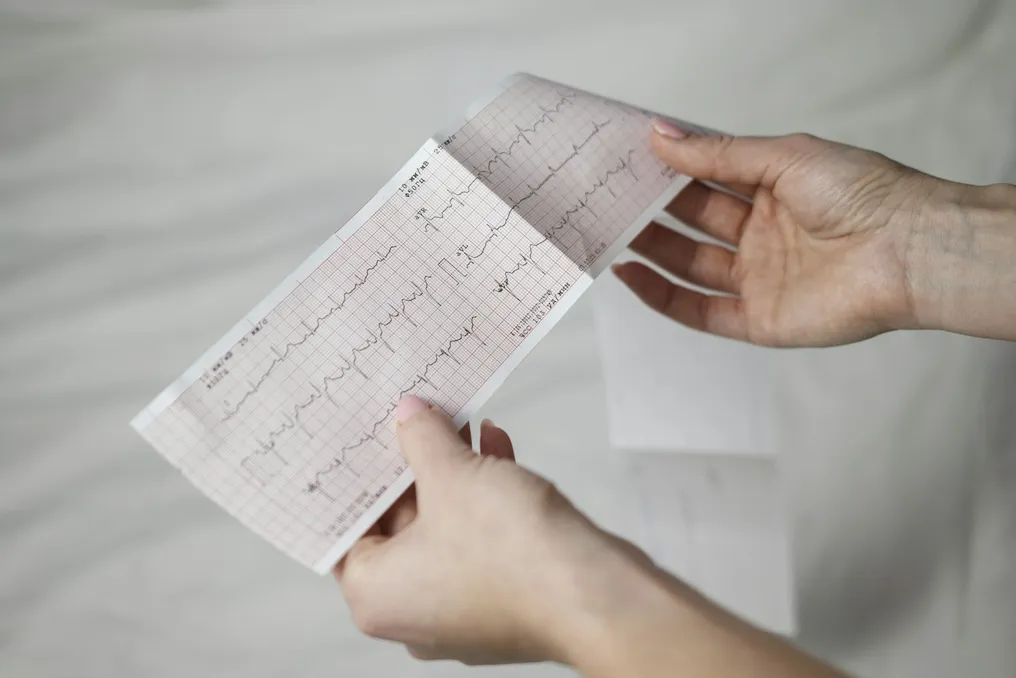
Investigating one death case is not necessarily limited to the deceased individual. Since many conditions related to SADS are hereditary, close relatives may be referred for examination at a specialized cardiology clinic. These examinations may include electrocardiogram (ECG) to check heart electrical activity, echocardiography to assess structure, stress tests, heart rate monitoring, and, in some families, genetic testing.
This approach proves effective. A study conducted on 304 families affected by sudden cardiac death showed the presence of inherited heart disease in 47% of all families, with 11% of examined relatives receiving a final diagnosis. In cases where the initial death was classified specifically as SADS, the investigation revealed an inherited condition in approximately one out of five families.
A more recent study involving 686 relatives established that most diagnoses made over a ten-year observation period were made within the first five years, highlighting the importance of timely investigation. Identifying risk before symptoms appear can save lives.
Treatment depends on the specific condition and may include medication, exercise recommendations, or avoiding certain drugs. People at high risk may be offered an implantable cardioverter-defibrillator—a device that constantly monitors heart rhythm and can deliver an electrical shock to restore a normal rhythm if necessary.
There is some confusion even in terminology. The media often uses the term 'sudden adult death syndrome,' but in cardiology, the preferred term is 'sudden arrhythmic death syndrome,' as it describes what doctors believe happened: a fatal abnormal heart rhythm without an obvious physical or medicinal cause. Nevertheless, SADS is not just a label for an inexplicable death. It reflects the limits of what a standard autopsy can reveal about a heart whose electrical system might have been functioning normally just minutes before.
These limits are gradually decreasing. A combination of specialized post-mortem studies, genetic analysis, and investigations with surviving relatives can sometimes uncover a hidden disease behind such a death. This will not alleviate the loss for the family, but it can change the future. And discovering the reason why a seemingly healthy person died can show that other family members carry the same hidden risk, allowing them to take action before it is too late.