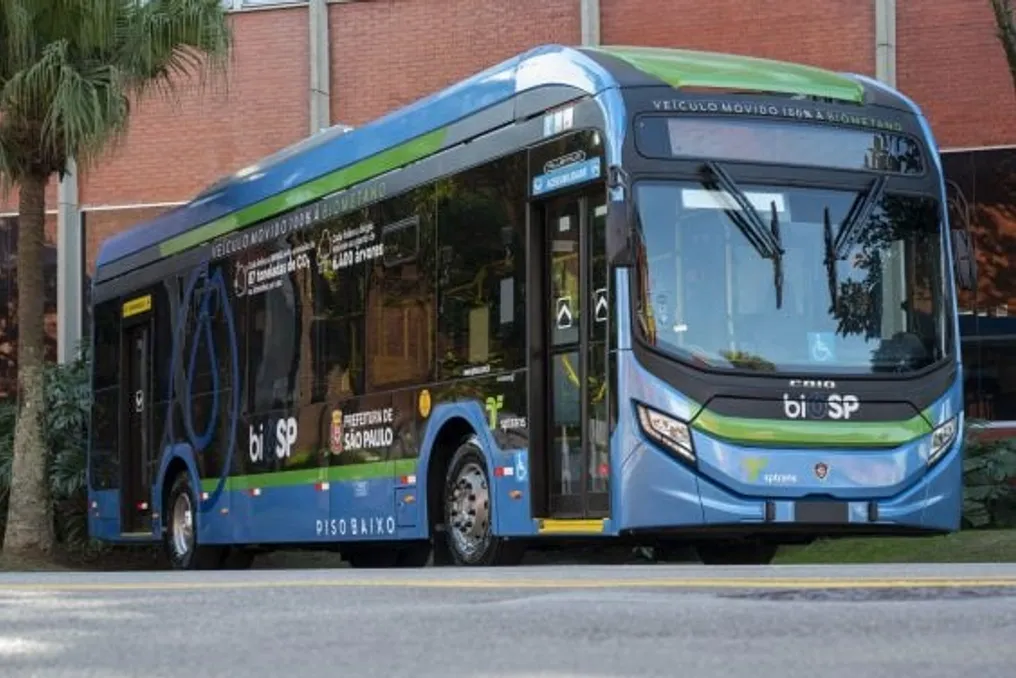
Scania is preparing to begin testing its bus that runs entirely on biomethane. This model has been adapted to the SPTrans standard and will be used on the streets of the capital city to collect data under real-use conditions.
This new prototype, which is in its final approval phase in the city of São Paulo, is the result of a collaboration between Scania and Caio. The project combines the K chassis with the OC09 104 engine, which generates 280 horsepower and a maximum torque of 135 kgfm, coupled with the ZF automatic transmission, model 6AP1420.
The body used is the Millennium, developed by Caio, in the low-floor version, although it can also be built with a conventional floor. It measures 13 meters in length and has a capacity to transport up to 88 passengers. The chassis includes pneumatic suspension on both the front and rear axles, as well as safety systems such as Autonomous Emergency Braking (AEB), adaptive cruise control, and Lane Departure Warning (LDW).
A significant technological advancement in this model lies in the new gas storage cylinders, manufactured entirely from carbon fiber, a material common in high-performance sports vehicles like Ferrari and McLaren. According to the manufacturer, these reservoirs are 70% lighter than traditional ones, allowing them to be installed on the vehicle's roof without affecting stability. The four cylinders hold 235 liters of gas each, totaling 940 liters (equivalent to 220 m³ of gas), ensuring an autonomy between 300 and 350 kilometers, depending on the intensity of operation.
Scania demonstrates a strong investment in the gas matrix in Brazil. In addition to consolidating its road truck line with this technology, the company has a diversified portfolio of buses. In 2014, the manufacturer introduced an imported unit from Sweden for testing, marking the beginning of CNG/Biomethane buses on Brazilian roads. Two years later, it produced the first national CNG bus, and the first commercial sales occurred in 2019.
Currently, Scania offers four urban and intercity gas options in the Brazilian market. Globally, the brand reports having sold over 6,000 gas buses in the last ten years, with 40% of that volume going to Latin American countries.