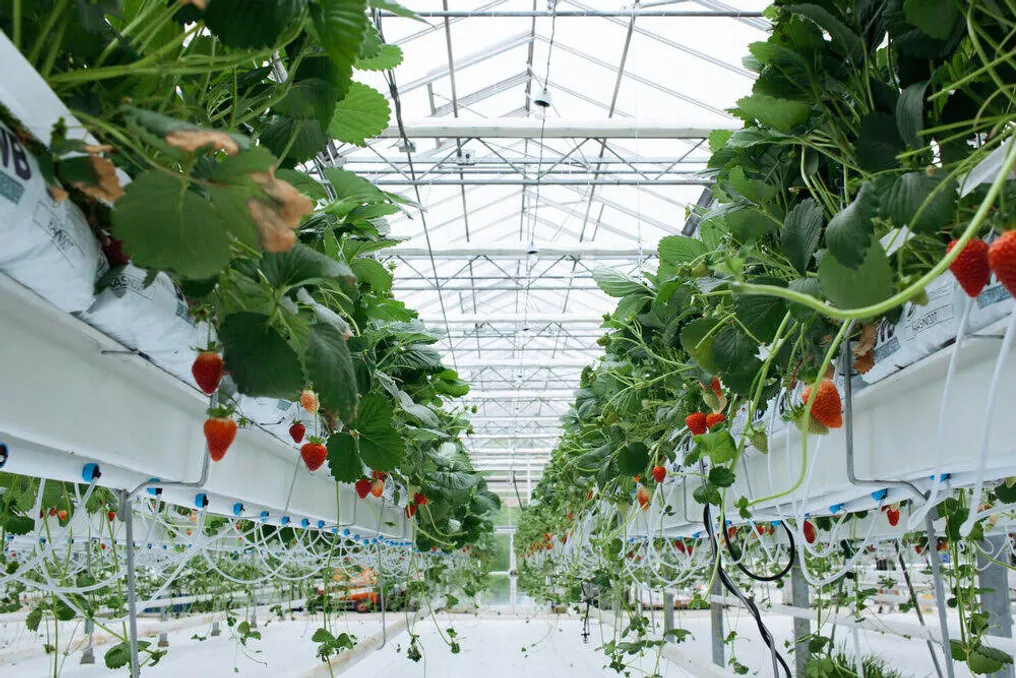
Despite international tensions and sanctions, Iran's greenhouse produce exports exceeded 770,000 tons last agricultural year, demonstrating a 12% growth.
According to the Director of the General Directorate of the Greenhouse, Medicinal Plants, and Edible Fungi Department of the Ministry of Agriculture, this success is attributed to the implementation of modern technologies, an emphasis on energy and water efficiency, and targeted planning for the development of suitable regions.
Elham Fatakihfar told IRNA in an interview that the total volume of greenhouse produce exports exceeded 770,000 tons, bringing approximately 390 million US dollars in foreign currency to the country. She noted that the 12% growth was achieved while only 20% of the total greenhouse production is currently exported, indicating significant potential for increasing the export share.
Fatakihfar recalled that under the Seventh Development Plan, the ministry is obligated to increase national greenhouse produce production to 10 million tons annually by the end of the plan. Currently, total production is less than 4 million tons, requiring a deficit of 6 million tons to be covered through careful provincial planning, especially in the well-suited Fars province. She emphasized that achieving this goal will require fundamental planning and targeted investments, where the private sector and greenhouse owners play a key role.
The Director of the General Directorate identified energy imbalance and the need to improve water use efficiency as two main problems and barriers to the development of horticulture. She insisted that any new expansion must be concentrated in regions with adequate energy infrastructure and water resources to ensure sustainable production while managing the crisis.
Fatakihfar also highlighted the crucial role of science-oriented companies in modernizing production methods, noting that a significant part of the country's export success is linked to the introduction of new technologies that increase productivity, reduce water consumption, and improve the quality of exported products.
Regarding the composition of the export basket, she reported that bell peppers, tomatoes, cucumbers, and eggplants grown in greenhouses are the largest items in exports. Export markets are gradually accepting and positively responding to greenhouse strawberries and other commercial vegetables, reflecting a growing diversity of the export portfolio.
Fatakihfar stressed that thanks to scientific solutions and support from the private sector—especially from greenhouse operators—Iran is capable of ensuring both sustainable food security and expanding its share in regional and global greenhouse produce markets. She also described major scientific events and modern methodologies as valuable opportunities to establish links between universities, research centers, and the greenhouse community, expressing hope that such interactions will trigger a new leap in Iran's horticultural industry.
The Deputy Minister of Agriculture for Horticulture announced the goal of reaching a production volume of 10 million tons in the country's greenhouse sector and emphasized the importance of transitioning from traditional methods to advanced agriculture, as well as removing infrastructural obstacles and active trade diplomacy for sustainable foreign currency earnings.
Mohammad Mehdi Borumandi stated at a specialized conference for greenhouse growers in Shiraz the planned production volume of 10 million tons in the country's greenhouse sector, stressing the need to transition from traditional farming to modern methods.
He stated that, relying on active trade diplomacy and overcoming infrastructural problems, the country is confidently moving towards sustainable foreign currency earnings through the export of high-quality Iranian products. The Deputy Minister, commenting on the results of the past agricultural year, reported that over 390 million US dollars in export revenue were earned from the country's greenhouse production during this period.
Borumandi added that last year, the European Union disrupted the export situation and did not allow the export of our products, especially pistachios—which are among the best and most beneficial products of the country—to target countries. According to him, pistachios, valued at $1.7 billion, generate the highest income from the country's agricultural products.
This official also specifically noted: 'We must dispel people's concerns about producing healthy greenhouse produce through coordinated planning.' Borumandi clarified that the country currently exports agricultural products to more than 80 countries worldwide, but only 20% of the country's greenhouse produce is included in the export basket. He also noted that Iran is among the countries that consume the least amount of fertilizers and pesticides in its production.