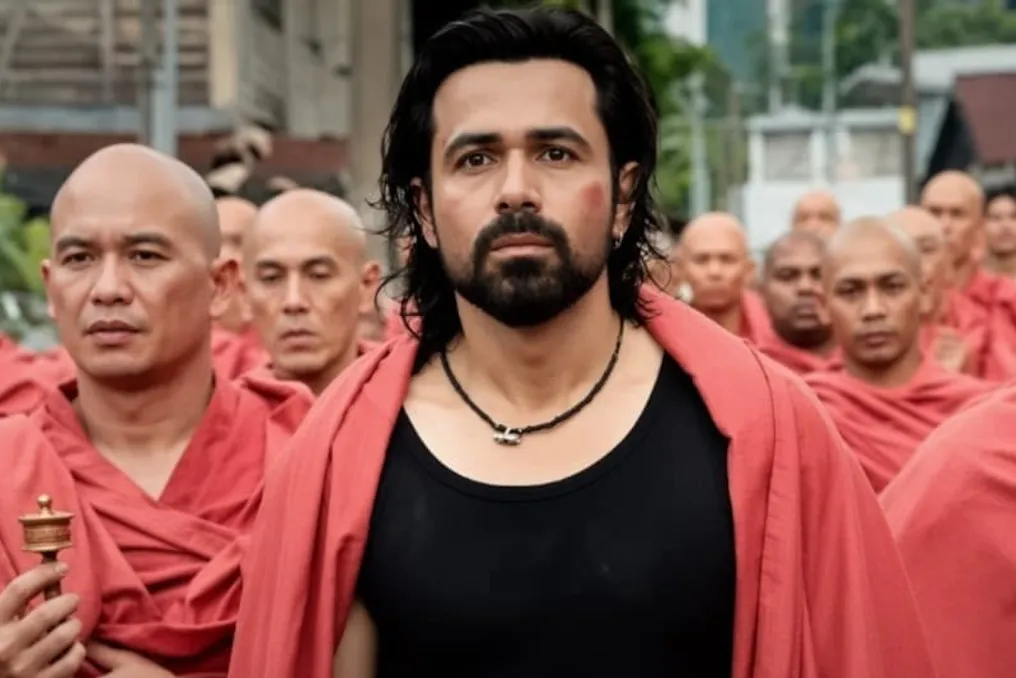
A scene from the film 'Avarapan-2' has become a turning point for Imran Hashmi, as it not only redefined his cinematic image but also drew attention to old memories of fans connected to his debut film 'Avarapan' from 2007.
This episode in the second part of the film unexpectedly transports viewers back into the world of 'Avarapan-1'. Although the first movie was not a box office success, it gradually gained cult status, and many scenes from it remain forever in the memory of Imran Hashmi's fans.
As in the original film, this scene revolves around a dialogue or confrontation between God and Shiva Pandit. Imran Hashmi's character, Shiva Pandit, once again faces the same question. This scene is distinguished by its special beauty and temporarily elevates the film above its ordinary plot.
Perhaps this is the main strength of the scene: even if the plot of 'Avarapan-2' does not evoke the same response in everyone, this moment explains why viewers return—for Shiva Pandit, for the pain that lives within him, and for the feeling that some invisible force is still guiding his path.
The scene begins after Shiva escapes from prison and successfully flees in an ambulance, feigning injury. Two Thai police officers pursue him. Soon, Shiva is surrounded, and he has no way to escape. He raises his hands, and the police approach. At this moment, something resembling a miracle occurs.
A group of Buddhist monks in red robes suddenly surrounds Shiva. His eyes are closed, and his hands are still raised. When he opens his eyes, he realizes that the monks are standing around him not to stop him, but to help him move forward. They push him ahead. Shiva starts walking, naturally at first, and then he begins to realize that this is not just a coincidence. Perhaps it is a sign from God that he is not alone, and there is a path before him, even if it is currently unseen.
At this moment, the music intensifies, the melody reaches its peak, and the words sound: 'Do not torment yourself like this, let it fade, the sky desires this, in your love, in the peace of your heart, include yourself in the world.' As the song 'Tera Mera Rishta Purana' begins, the camera slowly rises, showing a huge golden Buddha statue in the distance. Shiva looks at it and continues walking forward with the monks, away from the police and perhaps towards his destiny. This sight is impressive in itself, but its significance increases when one remembers what 'Tera Mera Rishta Purana' meant in the first film.
In the original film, this song plays when Shiva finds refuge among the monks. They teach him to pray and bow before some great, invisible power, but Shiva is not the type of character who will believe God without question. His relationship with God is complex: it contains faith, dissatisfaction, confusion, and deep pain.
The song contains the words: 'Why did I believe you, why did my path diverge from you, this life caused me suffering, you gave me shelter, our bond is old.' This is more like a conversation between a person and God than a hymn of worship. It reminds one of a person who has lost much in life and is seeking answers from their God, and this is what makes the scene from 'Avarapan-2' so captivating.
This time, the song addresses Shiva: 'Admit, you are broken, you are torn from yourself, you have met yourself, you are a wounded bird, but you are still alive, accept my words.' In the first film, Shiva asked questions to God, while Shiva in the second film seems to hear the answer to the same question. Perhaps this is why this scene transcended its plot. From above, it looks like a stylish escape from the police, but inside lies a dialogue that lasted almost two decades.
The internet has also created its own narrative about this scene. For people, these monks become intermediaries of God, leading Shiva out of danger onto a path that may be predetermined by his fate. Regardless of whether this was the director's intention or not, because the beauty of cinema is that viewers can go beyond the shown story and find their own meaning, and this scene does exactly that. Its strength lies not only in the music, Imran Hashmi's acting, or his role in the plot, but in the meaning the viewer invests in it.
}} , {